
A Historical In-depth Discovery of Trade in West Africa Since 1896
Here’s what you need to know,
- ECOWAS reaffirms 2027 launch of the Eco single currency — heads of state meeting in Lungi, Sierra Leone (July 2026) confirmed a phased rollout, with countries meeting convergence criteria adopting first. (July 2026)
In July 2026, ECOWAS leaders stood up and reaffirmed, once again, that a single West African currency called the Eco is coming in 2027.
Here’s the twist. A currency with that exact same name already exists. It’s been circulating since December 2019. And it isn’t ECOWAS’s.
France and Côte d’Ivoire’s president took the name of a currency 15 countries had spent nearly 20 years planning together, slapped it on a rebranded version of the CFA franc, and announced it without most of those 15 countries in the room.
This isn’t just a currency delay. It’s a currency that got its name stolen before it was even born.
Here’s What Actually Happened
The idea of a single West African currency isn’t new. ECOWAS members first floated it nearly 30 years ago, aiming to boost cross-border trade and deepen regional economic integration across the bloc.
The real groundwork was laid in 2019. In May and June of that year, ECOWAS’s Authority of Heads of State formally agreed to name their planned single currency “Eco” — a name meant to belong to an independent currency for all 15 ECOWAS members, anglophone and francophone alike.
Here’s the myth-check. Most people assume “the Eco” is one single, continuous currency project, slowly working its way toward launch. It isn’t. There are two competing histories wrapped up in that one name, and understanding the difference is the key to understanding why 2027 keeps getting reaffirmed instead of arriving.Paste the first body section here.
The Scandal: How France & Ouattara Hijacked a Name
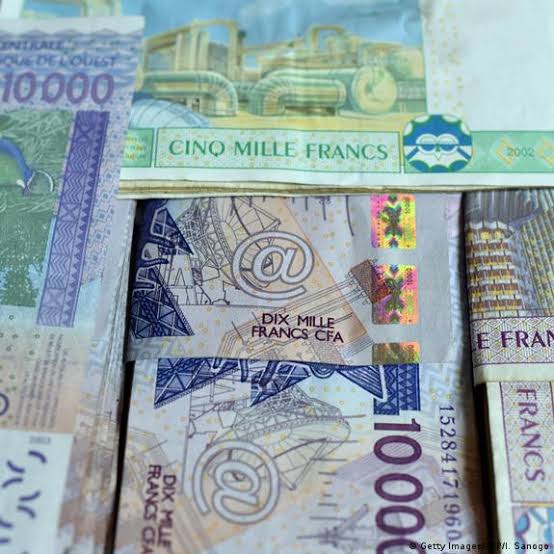
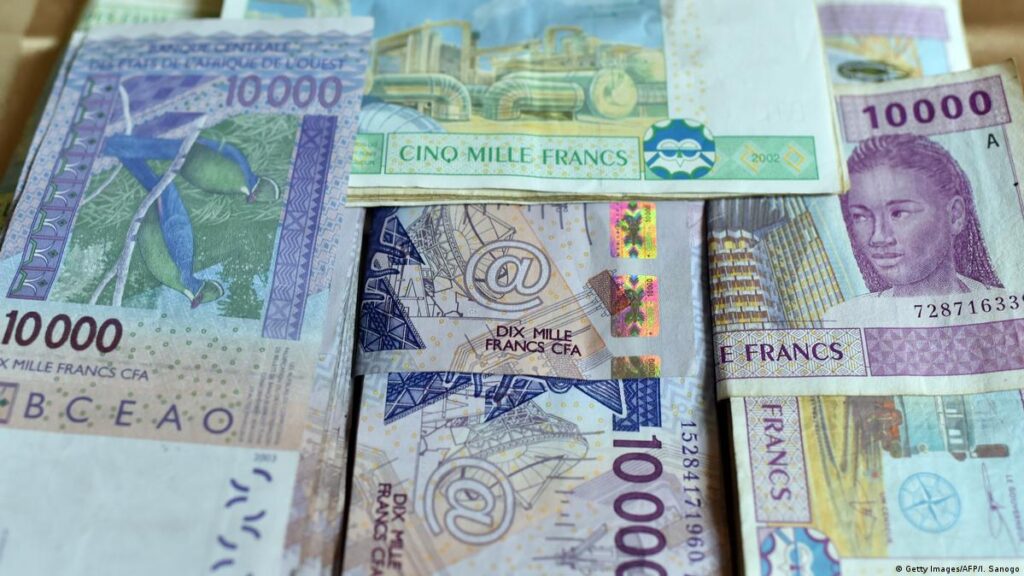
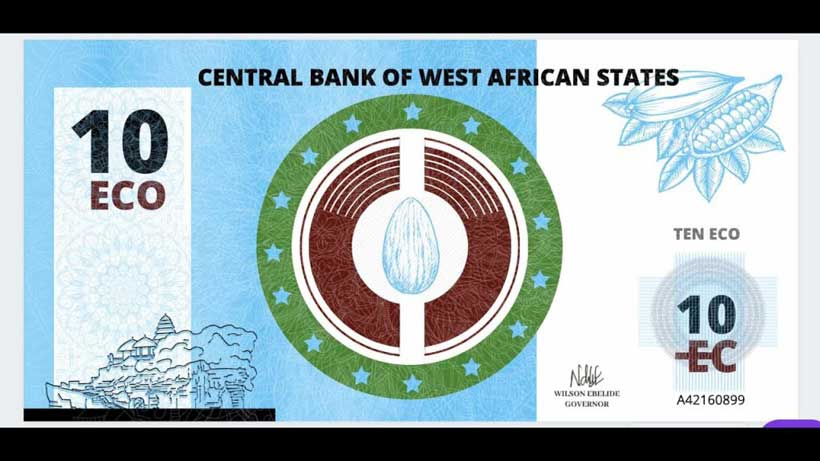
Here’s where this story gets genuinely contentious. On December 21, 2019, in Abidjan, Côte d’Ivoire’s President Alassane Ouattara, with French President Emmanuel Macron standing beside him, announced that the eight-country West African CFA franc zone would rename its currency “Eco” — using the exact name ECOWAS had already claimed for its own, separate, 15-country project just months earlier.
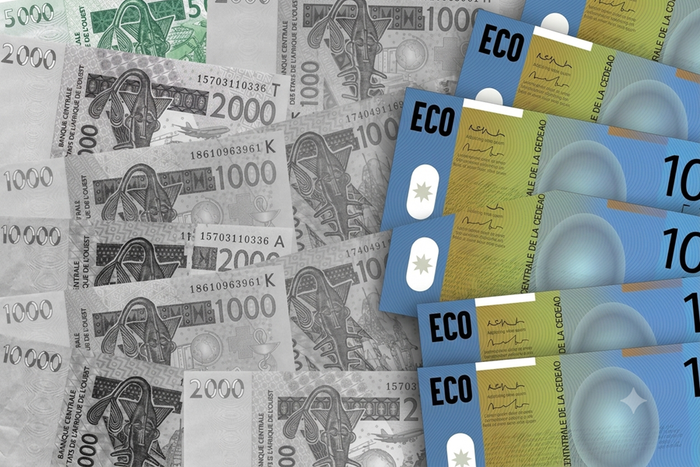
It’s worth being precise about what actually changed in this CFA franc reform, and what didn’t. France agreed to drop the long-standing requirement that CFA countries keep 50% of their foreign reserves in the French Treasury, and removed French representatives from the currency’s governing boards. But the currency stayed pegged to the euro, and France retained its central role guaranteeing its stability. This was a rebrand with some real reforms attached — not a clean break.
The fallout was immediate and pointed. On January 16, 2020, the finance ministers of Nigeria, Ghana, Sierra Leone, Liberia, Guinea, and The Gambia — the anglophone West African Monetary Zone (WAMZ) — met in Abuja and formally rejected the move, stating plainly that it was “not in line” with ECOWAS’s own decision on what the Eco was supposed to be.
The reaction from people close to the talks was even sharper. Sources described the anglophone governments as having been “blindsided” by the announcement, with one source in Ghana’s government saying France was trying to “arm-twist the sub-continent into kowtowing to it’s terms.”
The deeper accusation critics have made ever since isn’t subtle: that this wasn’t a coincidence or an innocent naming overlap. It was a calculated move to get ahead of Nigeria, sideline it from leading the region’s monetary future, and keep West Africa’s Francophone economies anchored to France rather than to a genuinely independent, Nigeria-centered regional currency.
Why This Scandal Still Matters in 2026
Connect this back to the announcement that opened this piece. The “Eco” ECOWAS reaffirmed in Lungi, Sierra Leone in July 2026 isn’t the same project that got hijacked in 2019. It’s ECOWAS trying to reclaim and finally deliver its own original vision — years behind schedule, and still shadowed by the earlier controversy.
The practical fallout from the 2019 rift didn’t stay contained to a diplomatic spat. It produced years of mistrust between Francophone and Anglophone blocs, left unresolved questions over whether CFA franc-zone countries even join the ECOWAS Eco at launch, and left a currency name that, in parts of the world, still gets associated with the wrong project entirely.
The current convergence criteria hurdle shows the practical cost of years lost to this dispute. Almost none of ECOWAS’s member states currently meet the basic economic thresholds required to adopt a shared currency: a deficit under 3% of GDP, inflation at or under 10%, and debt under 70% of GDP.
ECOWAS’s response to this — the phased approach now on the table — is a direct answer to years of stalling. Rather than waiting for every country to qualify at once, as originally planned, ECOWAS now intends to launch with whichever countries are ready first, letting others join later as they meet the required standards.
The Myth vs. The Reality
| The Eco has just been delayed by ordinary technical and economic hurdles | There were two separate “Eco” projects competing for the same name starting in 2019 — one ECOWAS’s, one France and Côte d’Ivoire’s |
| The Eco is one continuous ECOWAS project finally nearing completion | The CFA franc rebrand was announced unilaterally in Abidjan, without most ECOWAS members present or consulted |
| The naming dispute was a minor diplomatic disagreement | Six anglophone nations formally rejected the move in writing, calling it inconsistent with ECOWAS’s own decisions |
| The 2027 target is simply the next step in a steady rollout | It’s a years-delayed attempt by ECOWAS to recover its own original vision after that vision’s name was taken first |
Why This Still Matters
A currency meant to symbolize West African economic sovereignty spent its first year mired in a dispute over who actually got to name it — a small but telling preview of exactly how hard genuine regional monetary independence is to achieve, even among countries nominally working toward the same goal.
Whether the Eco actually launches in 2027, on schedule, for the first time in nearly three decades of promises, will say a lot about whether ECOWAS can move past a scandal that, in many real ways, it’s still recovering from.
Sources and further reading.
A currency meant to symbolize West African economic sovereignty spent its first year mired in a dispute over who actually got to name it — a small but telling preview of exactly how hard genuine regional monetary independence is to achieve, even among countries nominally working toward the same goal.
Whether the Eco actually launches in 2027, on schedule, for the first time in nearly three decades of promises, will say a lot about whether ECOWAS can move past a scandal that, in many real ways, it’s still recovering from.