

A Historical In-depth Discovery of Trade in West Africa Since 1896
Here’s what you need to know:
- Barclays Bank (DCO) and its sister institution BBWA operated a documented pattern of discriminatory lending in colonial Nigeria — internal bank correspondence itself admits managers had to “flout controls” for “political reasons” when African customers sought credit, a system that shut most indigenous entrepreneurs out of formal banking entirely.
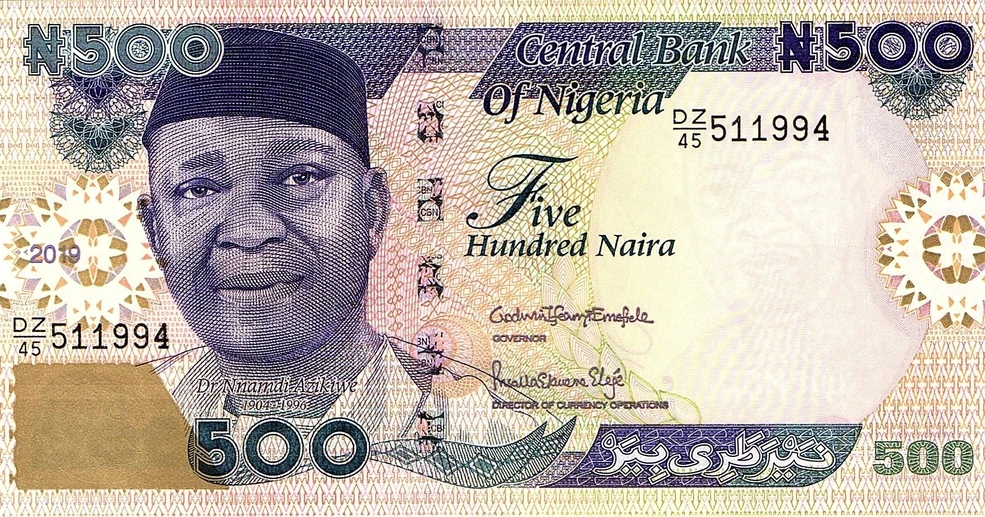
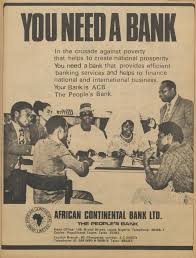
- That exclusion directly fueled the creation of African Continental Bank (ACB), founded by Nnamdi Azikiwe specifically, in his own words, to “break the expatriate banking monopoly and liberate credit for ordinary Africans.”
- The scandal: ACB became entangled in a public money crisis serious enough that Britain’s Colonial Secretary announced a formal tribunal of inquiry in July 1956, investigating Azikiwe — then Premier of Nigeria’s Eastern Region, and later the country’s first president — with the resulting political crisis directly delaying the constitutional conference meant to advance Nigeria toward self-government.
Colonial banks built a system that kept African entrepreneurs out of formal credit. That exclusion helped produce the alternative bank that a future Nigerian president founded to fix it — and that same bank became the center of a scandal serious enough to postpone Nigeria’s own path toward independence.
The Exclusion: Why African Entrepreneurs Needed an Alternative in the First Place
It’s worth understanding the underlying credit system directly, since it’s the foundation everything else in this story builds on. Barclays DCO and BBWA, the two dominant colonial-era banks across British West Africa, operated lending practices that systematically favored European merchants and firms while treating African-owned businesses as inherently higher risk, regardless of the actual quality of the individual borrower or venture in front of them.
The internal evidence for this isn’t circumstantial. Academic research drawing on Barclays’ own archived correspondence found that when managers did occasionally extend credit to African customers outside the bank’s normal lending criteria, they had to “flout controls, which inevitably resulted in bad debts.” The bank’s own internal assessment concluded that “political reasons had prompted the management to depart from old standards” — meaning even the bank’s own leadership understood, at the time, that lending decisions involving African borrowers were being shaped by racial and political considerations rather than a straightforward, colorblind assessment of creditworthiness.
Nnamdi Azikiwe experienced this gap directly and personally, well before he became a politician. Already a prominent journalist and newspaper publisher, Azikiwe entered banking almost by accident in 1944, acquiring a small property company called Tinubu Properties for the modest sum of £250 — partly, as later accounts describe it, to shore up his own newspaper group’s finances, and partly to help address what he saw as the chronic credit problems facing indigenous Nigerian businessmen.
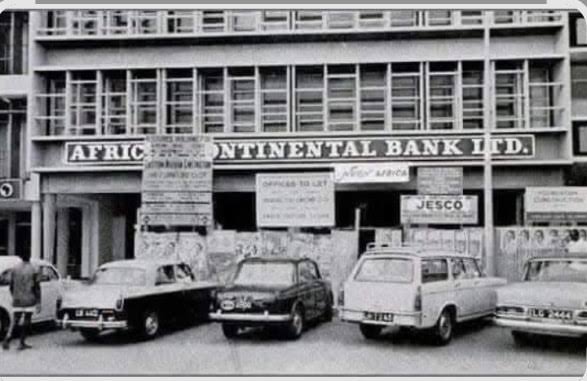
The company was renamed Tinubu Bank in 1946, and by 1947 it had become African Continental Bank. Azikiwe was direct about his motivation for building it: he defended his banking activities as necessary “to break the expatriate banking monopoly and liberate credit for ordinary Africans.” By 1949, ACB had grown to a nominal capital of roughly £250,000, financing both outside indigenous businesses and, notably, ventures within Azikiwe’s own “Zik Group” of companies.
The Entanglement: How a Private Bank Became a Public Money Crisis
This is where the story shifts from a defensible business response to colonial credit discrimination into something considerably murkier. In 1954, an Eastern Nigeria economic development mission — led jointly by Azikiwe and businessman Louis Ojukwu — recommended establishing a regional finance corporation with broad discretionary powers to stimulate economic development. The Eastern House of Assembly acted on that recommendation, creating the Eastern Nigeria Finance Corporation as a public body. That corporation then invested a substantial sum of public money — reported at roughly £750,000 by some accounts, and £877,000 according to a 1956 statement in the British Parliament — directly into African Continental Bank, the private bank Azikiwe himself had founded.
The conflict of interest this created was not subtle. When Azikiwe became Premier of the Eastern Region, he formally informed the colonial Governor that he had resigned his directorship of ACB. But he and companies affiliated with him remained large shareholders in the bank regardless. According to the same 1956 parliamentary statement, documents existed contemplating that the sitting Premier should become the bank’s “life Chairman,” with the right to personally nominate other directors — an arrangement that would have kept Azikiwe in effective control of an institution now substantially capitalized with public money, even while he held the region’s highest political office.
The specific transaction that turned suspicion into a formal crisis was a loan of over £163,000 from ACB to Azikiwe’s own Zik Group of Companies, extended at what one account describes as a “drastically low” interest rate, with repayment not required until 1971 — terms that would have been difficult for the group to secure from any bank operating on ordinary commercial criteria, let alone one whose capital base depended so heavily on public deposits.aste the second body section here.
The Tribunal: What the Inquiry Actually Found
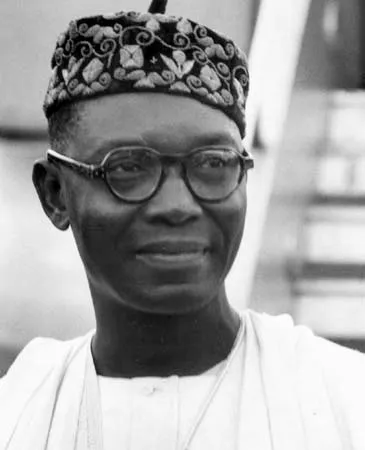
Britain’s Colonial Secretary formally announced a commission of inquiry into the ACB affair on July 24, 1956. The resulting tribunal, chaired by Sir Stafford Foster-Sutton — then Chief Justice of Nigeria — investigated Azikiwe’s conduct through the remainder of 1956, publishing its report on January 16, 1957.
The tribunal’s actual findings are worth stating precisely, since the historical record here is more nuanced than a simple guilty verdict. Investigators found that ACB had been effectively insolvent on multiple occasions and had only survived because of government patronage that Azikiwe himself had secured on the bank’s behalf. The tribunal further concluded that Azikiwe had failed to properly disconnect himself from the bank’s affairs as required of a sitting public official, and that he had used his political influence and position to actively strengthen the bank’s interests. Yet the tribunal notably did not find that Azikiwe had acted from a straightforwardly corrupt personal motive — its assessment was that his primary driving purpose had genuinely been to ensure Eastern Nigeria had a functioning, indigenous-controlled bank of its own, even as his specific conduct in pursuing that goal crossed clear lines around public office and private financial interest.
The colonial administration’s own private assessment of the episode adds a genuinely revealing layer of context. Eastern Region Governor Sir Clement Pleass observed bluntly that “the exercise of public power for private profit is established in the East,” while separately noting a strikingly cynical calculation running through Colonial Office correspondence at the time: officials believed the ruling NCNC party would collapse without Azikiwe as its leader, and that “the national interest of the country demanded that Zik continue as leader of the party” regardless of the tribunal’s findings against him.
The Consequence: A Scandal That Delayed a Nation’s Path to Independence
Rather than resign in the face of the tribunal’s findings, Azikiwe called for a fresh general election in the Eastern Region as his political response. On January 19, 1957 — the same day Regional Governor Stapledon issued the proclamation dissolving the Eastern House of Assembly and calling that election — the NCNC announced that Azikiwe had agreed to “transfer all of his rights and interest in the Bank to the Eastern Nigerian Government,” which would thereafter own African Continental Bank outright. In the subsequent March 1957 election, the NCNC won a reduced but still commanding majority, and Azikiwe retained his position as Premier.
The episode’s consequences extended well beyond Eastern Nigeria’s regional politics. Nigeria’s broader Constitutional Conference — the formal negotiation process meant to advance the country toward eventual self-government and independence — had originally been scheduled for 1956. It was postponed specifically because of what one contemporary account calls “Zik’s Foster-Sutton palaver,” pushing the conference back to May-June 1957 instead. A scandal rooted directly in colonial banking discrimination — the very system that had made an indigenous alternative bank like ACB necessary in the first place — ended up providing colonial and rival Nigerian political interests with real, usable grounds to slow the country’s own path toward self-rule.
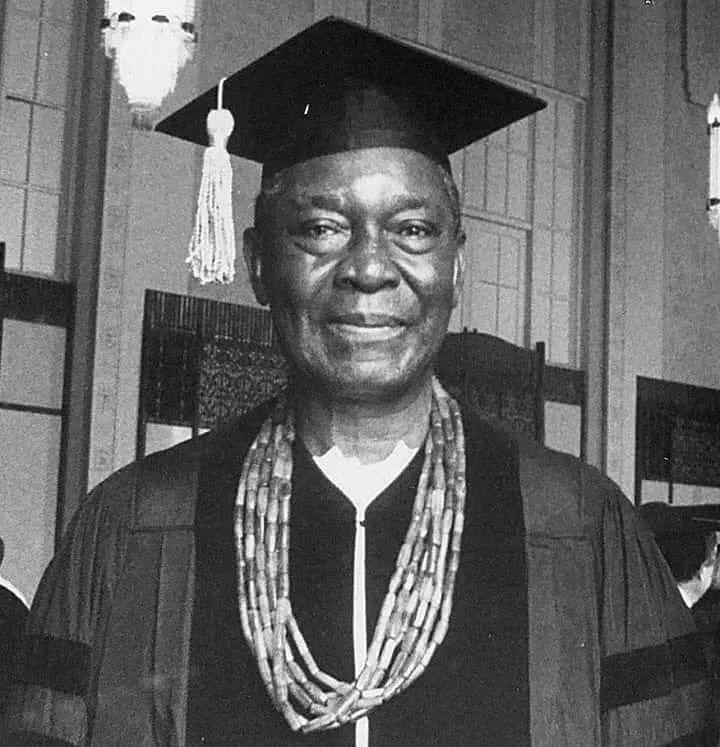
Azikiwe would go on to become Nigeria’s Governor-General at independence in 1960, and the country’s first President when it became a republic in 1963. The bank that nearly derailed his political career along the way — nationalized into full Eastern Region government ownership as a direct consequence of the crisis — outlived the controversy that had once threatened to define it.
The Myth vs. The Reality
| What people assume | What actually happened |
| African Continental Bank’s founding reflected purely opportunistic business ambition, unrelated to genuine credit discrimination by colonial banks | Barclays’ own internal correspondence documents managers “flouting controls” and departing from “old standards” specifically for “political reasons” when lending to African customers |
| The Foster-Sutton Tribunal found Azikiwe guilty of straightforward personal corruption | The tribunal found genuine impropriety and a failure to properly separate public office from private banking interests, but explicitly did not find a corrupt personal motive, crediting his primary aim as securing Eastern Nigeria a functioning indigenous bank |
| This banking scandal was a purely regional, Eastern Nigerian affair with no broader national consequence | It directly caused the postponement of Nigeria’s 1956 Constitutional Conference — the process meant to advance the country toward self-government — to 1957 |
| Colonial administrators straightforwardly condemned Azikiwe once the tribunal’s findings emerged | Colonial Office correspondence reveals officials believed Azikiwe’s continued leadership served “the national interest,” complicating any simple narrative of colonial disapproval |
Close: A Scandal Born From the System It Was Trying to Fix
African Continental Bank exists in the historical record as a genuine irony: an institution created specifically to correct a documented, internally-acknowledged pattern of discriminatory lending by Britain’s colonial banks became, within less than a decade of its founding, the center of a scandal serious enough to reach the desk of Britain’s Colonial Secretary and delay Nigeria’s own constitutional progress toward independence. The discriminatory credit system Barclays and BBWA operated didn’t simply harm African entrepreneurs by excluding them from capital — it helped produce the exact conditions, and the exact institution, that would later hand colonial and rival political interests genuine grounds to slow down the very process of African self-governance those same discriminatory practices had already done so much to obstruct.
This adds a genuinely essential chapter to this blog’s ongoing coverage of Barclays DCO’s West African history — proof that the consequences of an institution’s founding priorities rarely stay contained to that institution alone, rippling outward into the political fortunes of the very people its practices excluded.
Sources and further reading.