

A Historical In-depth Discovery of Trade in West Africa Since 1896
Here’s what you need to know:
- Tanzania nationalized its entire banking sector overnight under the February 1967 Arusha Declaration — Barclays’ full Tanzanian operation, 28 offices including 12 branches, passed immediately to state ownership, with the final compensation settlement landing well below what Barclays itself had claimed was owed.
- Nigeria took the opposite approach entirely: a slow, negotiated, multi-decade process running from the 1969 Banking Decree through the bank’s 1979 renaming to Union Bank, to Barclays’ full exit only in 1989 — twenty years of gradual dilution rather than a single declared transfer.
- The scandal, worth asking directly: after two decades of patience, did Nigeria actually secure more genuine African control over its own banking sector than Tanzania achieved in a single year — or did gradualism simply delay arrival at a similarly compromised outcome?
Two African nations inherited the same colonial-era bank. One reclaimed it overnight. The other took twenty-two years. Understanding what each approach actually delivered — and what each approach actually cost — reveals something neither country’s own founding rhetoric fully prepared its citizens for.
The Overnight Model: What Tanzania Actually Did
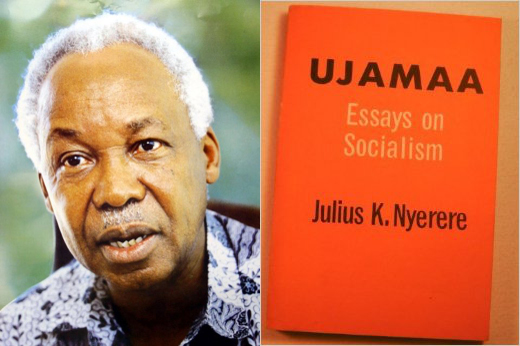
It’s worth explaining the Arusha Declaration’s banking provisions directly, since it’s the foundation for understanding how dramatically Tanzania’s approach differed from Nigeria’s. On February 5, 1967, Julian Nyerere’s government issued the Arusha Declaration, articulating Ujamaa — a distinctly Tanzanian form of African socialism built around national self-reliance and a deliberate reduction of foreign economic dominance. Among its most consequential provisions was the immediate nationalization of every commercial bank operating in the country. There was no phased timeline, no negotiated ownership percentages, no years-long transition period. The declaration simply transferred ownership, effective that year.
It’s worth understanding why a decision like this can move so much faster than what Nigeria would later attempt. Nationalization is fundamentally a unilateral exercise of sovereign state power — a government declares ownership transferred, and compensation terms, if any, get worked out afterward through negotiation or arbitration. A negotiated indigenization process, by contrast, requires an ongoing back-and-forth between the state and the existing foreign shareholders, with every stage — ownership percentages, valuation, timing — subject to renegotiation, delay, and partial compliance. Tanzania simply removed that entire negotiating apparatus from the equation by acting first and settling terms second.
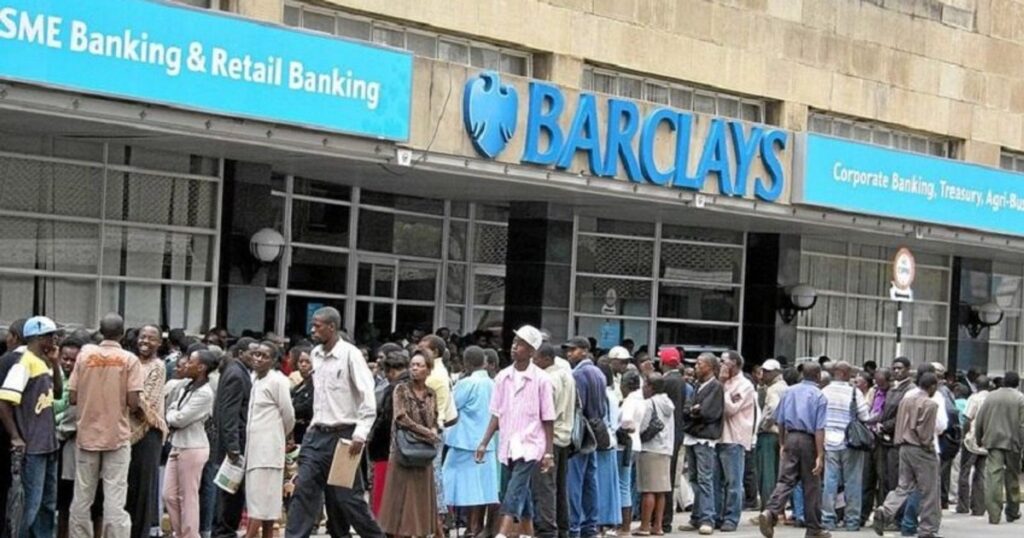
The scale of what changed hands in a single stroke was genuinely significant. Barclays’ entire Tanzanian operation — 28 offices, including 12 full-service branches — passed immediately into the newly created, state-owned National Bank of Commerce, alongside the holdings of six other foreign banks operating in the country at the time. For an institution that had operated continuously in the territory since the colonial era, this was a complete and instantaneous reversal of ownership.
The Compensation Scandal: What “Overnight” Actually Costection Heading
Speed, however, did not mean the process was uncontested — and this is where the genuine scandal in Tanzania’s story sits. Barclays claimed that its exposed London holdings of funds belonging to Tanzanian depositors amounted to approximately £650,000. Tanzanian negotiators directly disputed this figure as an understatement of what the bank actually owed the newly nationalized institution and its depositors.
The eventual settlement fell well short of even Barclays’ own claimed figure. A Tanzania Standard report from December 22, 1967 documented a bank compensation settlement of just £300,000 — less than half of what Barclays itself had stated was exposed, let alone any broader accounting of the full value of the branches, infrastructure, and ongoing business relationships that had simply been absorbed into state ownership.
What makes this settlement worth scrutinizing as a genuine scandal, rather than simply an unfortunate outcome of hard bargaining, is the documented role external pressure played in shaping it. Peer-reviewed historical research specifically found that “the negotiating position of the British banks was further strengthened by the overt and covert support they received from the British Government” throughout these compensation talks. In other words, a newly independent African nation, attempting to reclaim control over its own financial sector, found itself negotiating compensation not simply against a private bank’s own commercial interests, but against the diplomatic weight of the departing colonial power actively working to protect that bank’s position. Tanzania got its bank back quickly — but the price it paid to get there was shaped by exactly the kind of asymmetric power relationship independence was supposed to have already ended.

The Gradual Model: What Nigeria Actually Did, Step by Step
Nigeria’s approach unfolded along an entirely different timeline, worth tracing in full because each stage reveals just how incremental — and how long-delayed — genuine African ownership actually was. The process began with the 1969 Banking Decree, which required all banks operating in Nigeria to incorporate locally and publish audited accounts domestically — a first, modest step toward accountability, but one that changed nothing about actual ownership.
The 1972 Nigerian Enterprises Promotion Decree pushed further, beginning to require foreign firms operating in the country to add genuine Nigerian ownership stakes. Yet even this landmark indigenization legislation didn’t immediately transfer control of Barclays’ Nigerian subsidiary. The federal government did not take a controlling interest in the bank until 1976 — seven years after the initial Banking Decree — and even at that point, Barclays retained a substantial 40% ownership stake.
The bank’s actual renaming to Union Bank of Nigeria didn’t occur until March 12, 1979, a full decade after the process had formally begun. And even this symbolically significant moment — an institution now bearing an entirely Nigerian name — still involved continued foreign ownership: Barclays’ interest was reduced further, but only to 20%, meaning a British bank retained a real, meaningful equity stake in an institution that, on paper and in branding, now belonged to Nigeria.
Barclays did not fully divest its remaining minority interest until 1989 — twenty years after the process began, and twenty-two years after Tanzania had already completed its own transition in a single calendar year.
The Question: Did Twenty-Two Years of Patience Actually Buy More Control?
This comparison raises the central analytical question worth sitting with honestly, rather than assuming either country’s approach was obviously superior. Tanzania achieved full state ownership within a single year — an unambiguous, complete transfer, even if the compensation attached to it was disputed and, by most reasonable measures, shortchanged. Nigeria spent two full decades achieving what was, for much of that period, still only partial Nigerian ownership, with a foreign shareholder retaining real equity and real influence well past the point where the institution had already been renamed and rebranded as Nigerian.
There’s a genuine, fair case to be made for Nigeria’s gradualism. The slower approach avoided the kind of abrupt institutional disruption a full, immediate nationalization can cause — sudden management turnover, capital flight, operational discontinuity. And when Nigerian ownership was finally, fully achieved in 1989, it arrived without the disputed, lowball compensation settlement that shadowed Tanzania’s own transition, negotiated as it was under active British governmental pressure.
But there’s an equally genuine case against it, worth stating with the same force. For roughly twenty years, Nigerians watched a bank operating first under the Barclays name, then under the deceptively complete-sounding Union Bank name, while a foreign shareholder retained real ownership stakes throughout nearly the entire process. Gradualism didn’t avoid the underlying compromise Tanzania’s approach also produced — it simply stretched that same compromise across two full decades rather than confronting it, and resolving it, all at once.
The Myth vs. The Reality
| What people assume | What actually happened |
| Tanzania’s 1967 nationalization represents a clean, complete, one-time transfer of full local control | Even this “overnight” transfer involved a disputed compensation settlement of just £300,000 against Barclays’ own claimed £650,000 in exposed deposits, shaped by documented British government support for the bank’s negotiating position |
| Nigeria’s gradual, negotiated approach delivered faster or more complete local ownership than Tanzania’s method | Nigeria’s process took twenty-two years from its 1969 Banking Decree to Barclays’ full 1989 divestment |
| The bank became genuinely, fully Nigerian-owned as soon as it was renamed Union Bank in 1979 | Barclays retained a 20% ownership stake even after the bank carried an entirely Nigerian name and identity |
| Tanzania’s nationalization is often dated to 1969 | It actually occurred in 1967, under the Arusha Declaration |
Close: Two Roads, One Similarly Compromised Destination
Tanzania and Nigeria took genuinely opposite approaches to reclaiming control over the same colonial-era financial institution, and neither approach delivered a clean, fully satisfying outcome by the time the dust settled. Tanzania traded speed for a disputed, underpaid settlement negotiated under real British diplomatic pressure. Nigeria traded patience for two full decades of continued, gradually shrinking, but genuinely persistent foreign ownership — a slower path to substantially the same fundamental transfer of control Tanzania had simply declared complete in a single year.
This comparison sits naturally alongside this blog’s broader coverage of Barclays DCO’s founding as an explicitly Britain-serving “empire bank” — whichever path a former colony chose to reclaim genuine control over that institution, the process of actually arriving there proved considerably harder, and considerably more compromised, than either country’s founding rhetoric about economic independence initially suggested it would be.

Sources and further reading.