

A Historical In-depth Discovery of Trade in West Africa Since 1896
Here’s what you need to know:
- Barclays entered the West African banking market in 1917, through a working arrangement with the Colonial Bank — arriving just five years after the West African Currency Board (WACB) itself was established in 1912, meaning Barclays’ entire regional presence developed inside a monetary system it had no role in designing.
- The WACB operated as a currency board, not a central bank — issuing the British West African pound at a fixed 1-to-1 rate with sterling, fully backed by reserves held in London, a structure academic research describes as letting Britain “act as an ‘international banker’” using West African deposits.
- The honest limitation worth stating directly: detailed, itemized internal Barclays correspondence specifically describing how the bank’s own management understood its function within the currency board system isn’t something this research surfaced in a single, quotable document — what’s well documented instead is Barclays’ structural position as one of the two dominant sterling-area commercial banks operating inside a monetary architecture built entirely around channeling West African money back to London.
Understanding Barclays DCO’s West African operations requires understanding the currency system it operated inside — because that system, more than any single bank’s own individual policy, determined where West African money actually ended up.
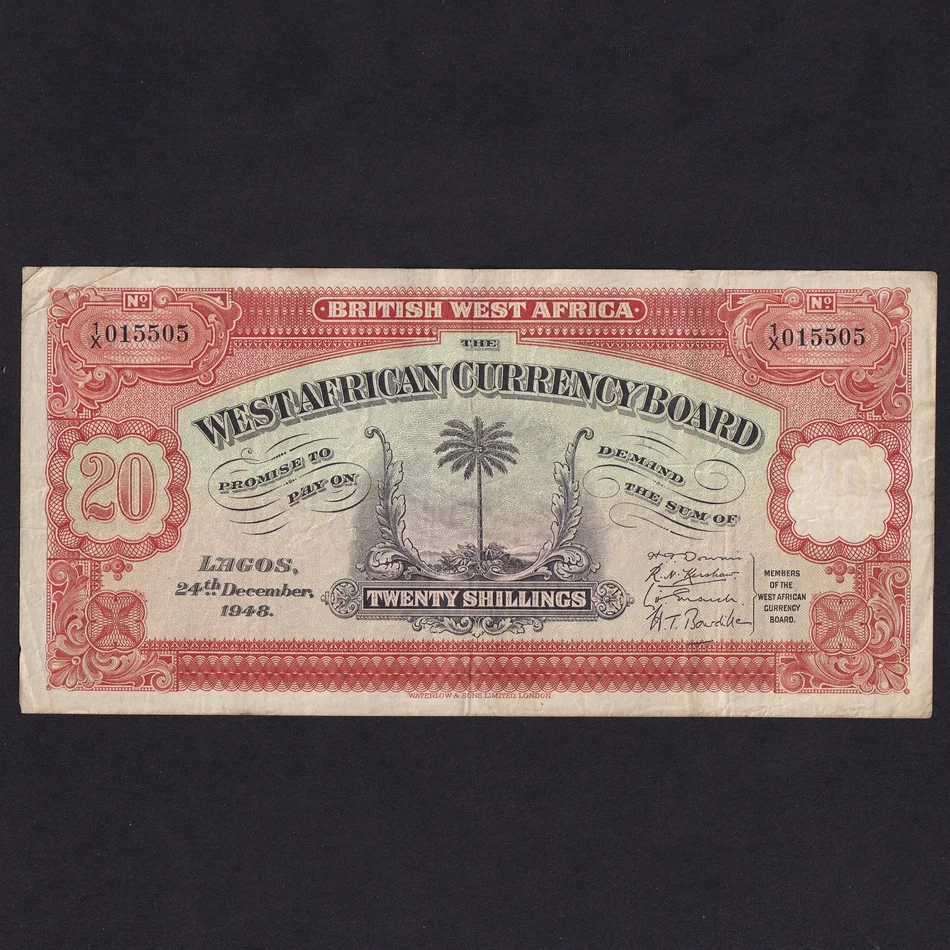
The System: What the West African Currency Board Actually Did (Educational/explanatory core)
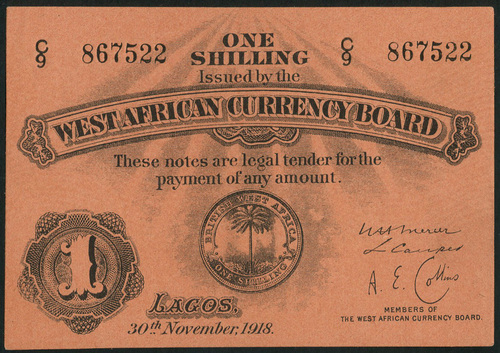
It’s worth explaining the WACB’s basic mechanics directly, since the entire structure of colonial banking in the region depended on it. Established in 1912, the West African Currency Board functioned as a “bank of issue” headquartered in London, with a mandate to issue the British West African pound at a fixed exchange rate of exactly one-to-one with the British pound sterling. It effectively served as the central bank for four British colonies — Nigeria, the Gold Coast, Sierra Leone, and the Gambia — from its establishment until each territory eventually adopted its own national currency around independence.
The specific mechanism worth understanding is what a “currency board” actually is, as distinct from an ordinary central bank. A currency board doesn’t set interest rates, adjust the money supply according to domestic economic conditions, or act as a lender of last resort — its only real function is issuing local currency fully backed, pound for pound, by foreign currency reserves held elsewhere. In the WACB’s case, that meant every British West African pound circulating in Lagos, Accra, Freetown, or Bathurst was backed by an equivalent sterling reserve sitting in London, not locally. This gave the currency genuine stability and easy convertibility — but it also meant West Africa’s money supply was structurally tied to decisions and reserves controlled from outside the region entirely, with no local monetary authority able to expand credit or adjust policy in response to local economic needs.
Peer-reviewed research on this system’s deeper mechanics reveals something genuinely significant about where the money actually flowed. During the WACB’s early decades, member territories customarily converted their excess reserve earnings and newly mined gold into sterling. Following the outbreak of the First World War, a “hard currency pool” was introduced, requiring 100% sterling backing and obligating member territories to transfer their hard currency earnings directly to London. Academic analysis describes this arrangement plainly: it let Britain function as an “international banker,” using the legally enforced reserve deposits it collected from its colonies to build far-reaching credit capacity — resources researchers argue helped construct a British financial empire whose effects persist even today.
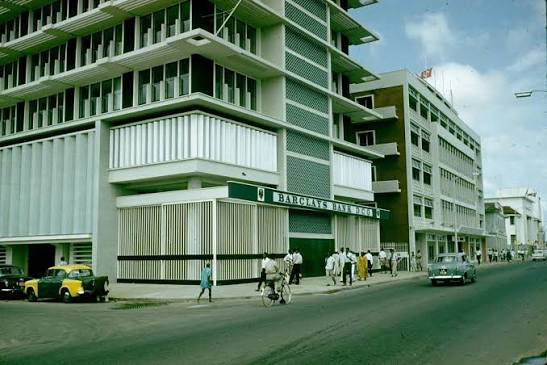
What Barclays DCO’s Position Actually Was
Barclays’ own entry into this system is worth tracing precisely, since the timing matters. The bank arrived in West Africa relatively late relative to the currency board’s own founding — its predecessor institution, the Colonial Bank, only received parliamentary authorization in 1916 to extend operations throughout the wider British Empire, and Barclays itself reached a working arrangement giving it access to West African markets in 1917, five years after the WACB had already been established and was already governing the region’s monetary system. Barclays secured a controlling interest in the Colonial Bank by 1918-1919, formally cementing its presence in a currency architecture that had already been built entirely without its input.
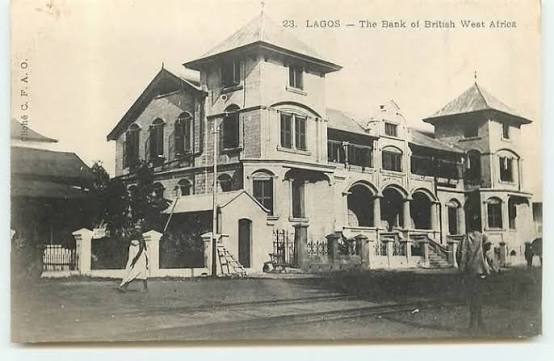
This positioned Barclays as one of two dominant commercial banks operating inside the WACB system, alongside the older, more established Bank of British West Africa (BBWA), which had served as the currency board’s primary commercial agent since 1912 — managing colonial government accounts, revenue collection, and currency exchange on the WACB’s behalf from the very outset. Official documentation from the period, including a 1952 IMF staff paper on colonial monetary arrangements, lists Barclays (Dominion, Colonial, and Overseas) directly alongside the Bank of British West Africa among the banks operating under the British West African pound system — confirming Barclays’ formal, ongoing participation as a commercial banking conduit within the same sterling-backed currency structure BBWA had helped establish.
The Honest Limitation, & What It Reveals Anyway
It’s worth being direct about a genuine gap in the available research here, rather than overstating what’s confirmed. Unlike the documented internal Barclays correspondence already covered elsewhere in this blog — the “flout controls” and “political reasons” language found in the bank’s own archived records on discriminatory lending — this specific research did not surface an equivalent internal Barclays document in which the bank’s own management explicitly articulated how it understood its function within the currency board system itself. That kind of granular internal record may well exist in Barclays’ own archived materials, held today by Barclays Group Archives, but it wasn’t something this research was able to locate and quote directly.
What is clearly documented, however, is the structural position Barclays occupied regardless of how explicitly its own management ever articulated it in writing. As a commercial bank operating inside a currency board system explicitly designed to funnel West African reserve earnings back to London under full sterling backing, Barclays functioned — whether or not any surviving internal memo says so in exactly these words — as one of the working, on-the-ground mechanisms through which that broader extraction actually happened. Every deposit taken, every currency exchange facilitated, every sterling transfer processed by a Barclays branch in Lagos or Accra operated within, and reinforced, a monetary architecture that had already been built, years before Barclays ever arrived, specifically to serve London’s financial interests rather than the colonies whose money was actually being held.
The Myth vs. The Reality
| What people assume | What actually happened |
| Barclays DCO helped design or shape West Africa’s colonial currency system | The West African Currency Board was established in 1912, five years before Barclays even reached a working arrangement to enter the region in 1917 |
| The West African Currency Board functioned as a genuine central bank, with authority to adjust monetary policy for local economic conditions | It functioned strictly as a currency board — issuing currency fully backed by sterling reserves held in London, with no independent monetary policy authority |
| Colonial-era reserve deposits primarily benefited the West African territories where they were generated | Academic research describes the WACB’s “hard currency pool” mechanism as letting Britain act as an “international banker,” using colonial reserve deposits to build its own financial capacity |
| Barclays DCO operated as West Africa’s sole dominant currency board-era commercial bank | Barclays operated alongside the Bank of British West Africa, which had served as the WACB’s primary commercial agent since the board’s 1912 founding |
Close: A Structure Built Before Barclays Ever Arrived
Barclays DCO’s specific institutional self-understanding of its role inside the West African Currency Board may still sit, unquoted, somewhere in the bank’s own archived correspondence. But the broader structural reality doesn’t actually require that internal quote to be clearly understood: Barclays entered a monetary system already engineered, years before its own arrival, to channel West African reserve wealth toward London — and simply took its place as one of the two commercial banks operating that machinery on the ground.
This connects directly to the deeper institutional pattern this blog has already traced in Barclays DCO’s founding as an explicitly Britain-serving “empire bank” — a currency system built to serve the same sterling area logic Frederick Goodenough’s own founding vision was designed around, with Barclays arriving not to build that system, but simply to operate profitably inside one that already existed.
Sources and further reading.