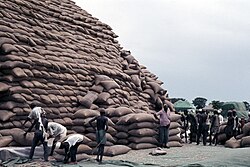

A Historical In-depth Discovery of Trade in West Africa Since 1896
Here’s what you need to know:
- Groundnut cultivation in Senegal and the Gambia began in the 1840s, initiated by French merchants from Bordeaux along the Senegal Valley — and academic research documents that the extensive agricultural model behind it was built substantially on slave labor, not the free peasant farming most popular accounts assume.
- The dependency this created was staggering by the numbers: Gambia’s groundnut exports reached over 90% of total export value by the 1920s, and by 1976, groundnuts occupied 70% of Gambia’s and 55% of Senegal’s entire cultivated land.
- The scandal that outlasted colonialism: after independence, France continued working to “sever the ties” between local communities and their traditional food crops specifically to keep them producing groundnuts for French markets — while Senegal’s global peanut export share collapsed from roughly a quarter of the world’s trade in the 1960s to about 1% today.
By the 1920s, groundnuts made up over 90% of the entire export value of the Gambia — a single crop functioning as almost the whole of one colony’s formal economy.
This is a three-act story, tracing groundnuts from a slave-labor origin most accounts leave out, through the machinery that locked two colonies into near-total dependency on it, to an independence era that never actually escaped it.
Act One: Planted in Bondage
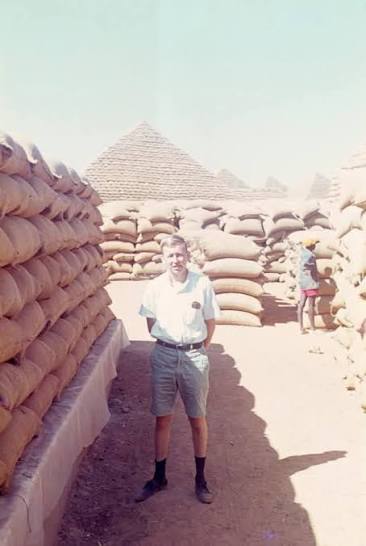
The actual origin of groundnut cultivation is worth introducing directly, since it complicates the usual telling significantly. Groundnut cultivation was initiated in the 1840s by French merchants from Bordeaux, first along the Senegal Valley and the Thiès region, before expanding to Sine-Saloum, the Gambia, and Casamance.
Here’s the scandal, sourced to academic research most popular retellings of this story omit entirely. The extensive agricultural model developed to grow this crop across colonial French West Africa “was mainly based on the non-wage labour of a slave workforce” — meaning the groundnut economy’s actual founding labor system, in its first decades, was built substantially on enslaved people’s labor, not the free smallholder farming the crop is usually associated with today.
The geography that made this expansion possible is worth explaining. The region’s elevated average temperatures and a consistent wet season from June to October, combined in some areas with irrigation, created ideal conditions for groundnut cultivation across Thiès, Sine-Saloum, Kaolack, Casamance, and the Senegal Valley.
It’s worth noting how quickly local producers themselves became involved once the trade proved profitable. Local farmers began cultivating groundnuts rapidly once European traders demonstrated genuine commercial interest and the possibility of substantial profit — meaning the crop’s spread, after its coercive beginning, drew in willing local participants pursuing real economic opportunity.
Act Two: The Monoculture Machine
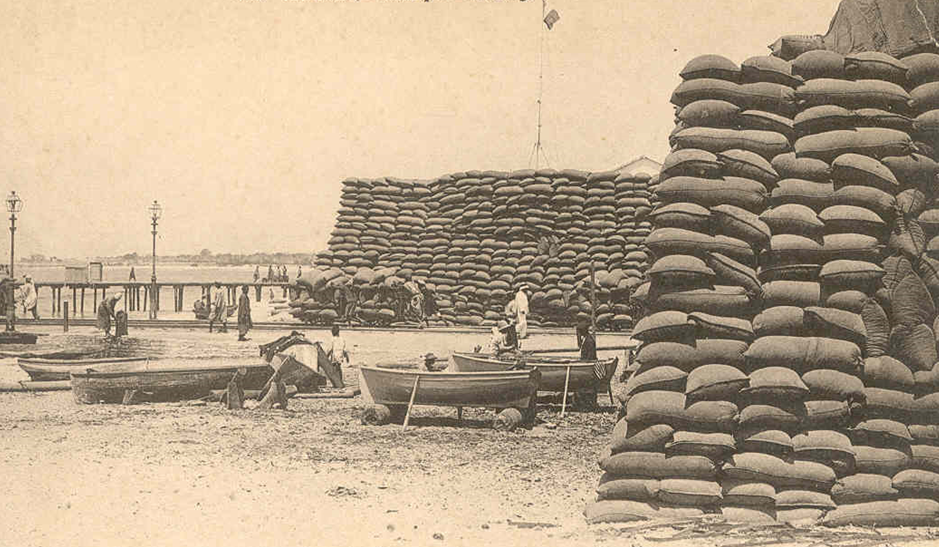
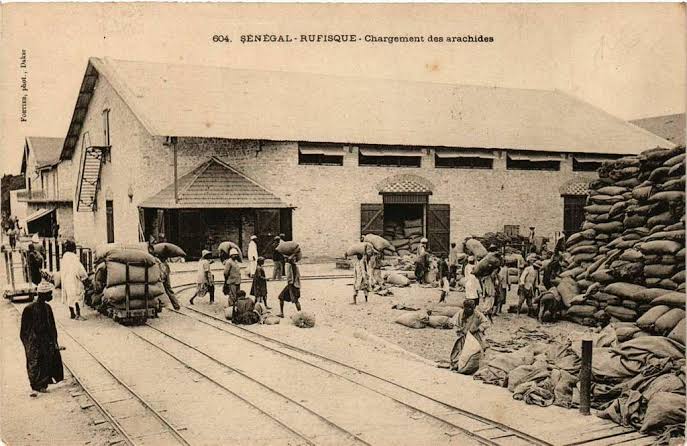
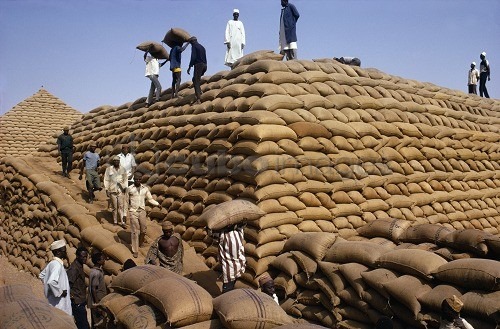
The infrastructure that entrenched this dependency is worth bringing in directly. French colonial administrations invested in railways, roads, and ports — most notably the Dakar-Niger Railway — specifically to move groundnuts from the interior to Dakar’s port for export, infrastructure explicitly built to serve resource extraction rather than the colonies’ broader economic development.
The direct cost this imposed on food security is worth explaining, since it’s a documented, specific harm. Forced labor building roads to export groundnuts actively prevented local communities from continuing to grow native African rice — a crop that carried real cultural and spiritual significance for the people being redirected away from it.
The hard dependency figures are worth stating precisely, since they show how total this concentration became. By 1976, groundnuts occupied 70% of the Gambia’s cultivated land and 55% of Senegal’s — meaning more than half of all farmable land in two entire countries was devoted to a single export crop, decades into the independence era.
It’s worth explaining why monoculture at this scale carries real, compounding risk, since it’s the educational core of this section. A country dependent on one export crop for the overwhelming majority of its foreign earnings is exposed simultaneously to global price volatility, weather-related harvest failures, and soil degradation from continuous single-crop cultivation — three separate risks a genuinely diversified agricultural economy would spread across multiple crops instead.
The Scandal: Independence Didn’t End the Machine
Here’s the piece’s sharpest and most consequential finding. After formal independence, France continued actively working to “sever the ties” between Senegal’s traditional ethnic communities and their forests and rice fields, specifically to keep them cultivating groundnuts for French markets.
It’s worth explaining what this meant institutionally, tying it directly to a pattern already documented elsewhere in this blog. Post-independence Senegal replaced French private traders with state-owned enterprises — the OCA-BSD-CRAD cooperative system — to keep the groundnut trade flowing, but researchers describe the resulting structure as “almost certainly unsustainable,” plagued by the same diversion and corruption problems that had already troubled colonial administrators, just relocated to new state institutions rather than resolved.
Replacing colonial traders with a national government didn’t dismantle the monoculture dependency structure. It inherited it, running the same essentially extractive economic model under new, formally sovereign management.
The Myth vs. The Reality
| Groundnut cultivation in Senegal and the Gambia began as free peasant farming that only later became a colonial dependency | The agricultural model behind its colonial-era expansion was built substantially on slave labor, according to documented academic research |
| Independence in the 1960s ended France’s economic leverage over the groundnut trade | France continued working after independence to keep local communities producing groundnuts rather than traditional food crops |
| Post-independence state enterprises replacing French traders represented a genuine break from the colonial economic model | They inherited the same unsustainable structure, plagued by the same diversion and corruption problems documented under colonial administration |
| Senegal’s continued dedication of large amounts of farmland to groundnuts reflects continued economic strength in the sector | Despite dedicating roughly 40% of cultivated land to the crop, Senegal now produces only about 1% of globally traded peanuts, down from nearly a quarter in the 1960s |
Close: A Seed That Outlasted Two Empires and Still Hasn’t Let Go
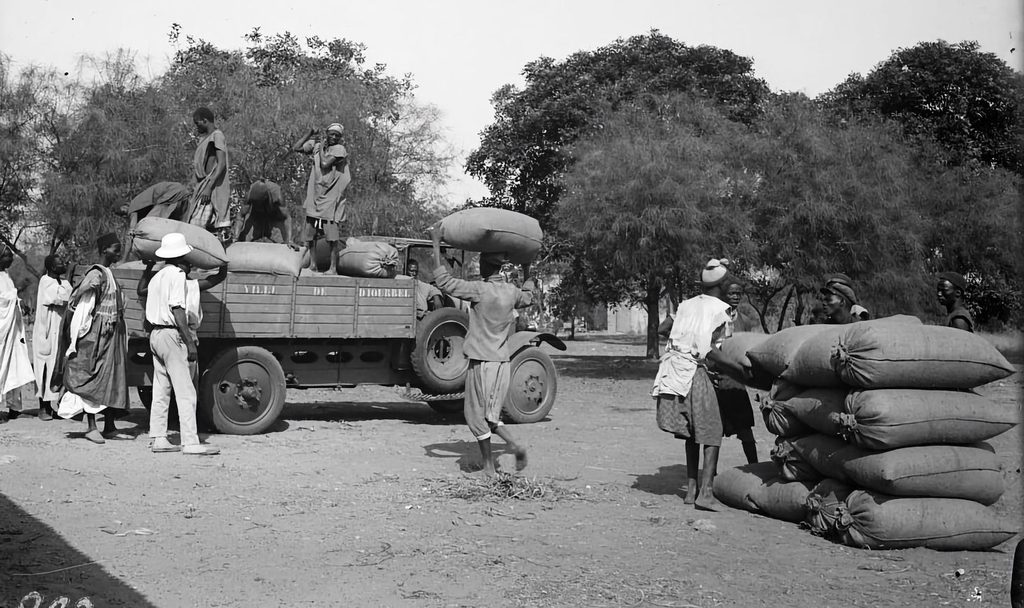
A crop that began with slave labor in the 1840s went on to define, for well over a century, whether two entire nations’ economies would rise or fall on a single global commodity price — a dependency that colonial administrators built, independence-era governments inherited, and that neither slavery’s abolition nor formal political sovereignty ever fully undid.
This is the same pattern this blog keeps documenting across cocoa, cotton, palm oil, and now groundnuts — a single crop, engineered into economic dominance through coercion, infrastructure, and policy, leaving behind a dependency that outlives the colonial system that created it.