

A Historical In-depth Discovery of Trade in West Africa Since 1896
Here’s what you need to know:
- Sir Alfred Lewis Jones began his career at age twelve as a ship’s apprentice in Liverpool in 1857, rose to acquire full control of the Elder Dempster shipping line by 1890 through successive share purchases, and by the 1890s had built what one contemporary journalist called an empire spanning “shipping, landholdings, banking, and mining” across West Africa — earning him the epithet “the Uncrowned King of West Africa.”
- Jones founded the Bank of British West Africa in 1893-1894 specifically as an extension of his existing shipping dominance, and by 1896, when BBWA opened its Accra branch, the bank’s “main business then was the distribution of silver coins, of which it was the sole supplier.”
- The scandal isn’t a single dramatic event — it’s the underlying structural pattern: one man’s personal, near-total control over West African shipping, the physical money supply, and eventually formal banking, concentrated without meaningful separation between his private commercial interests and the region’s basic financial infrastructure.
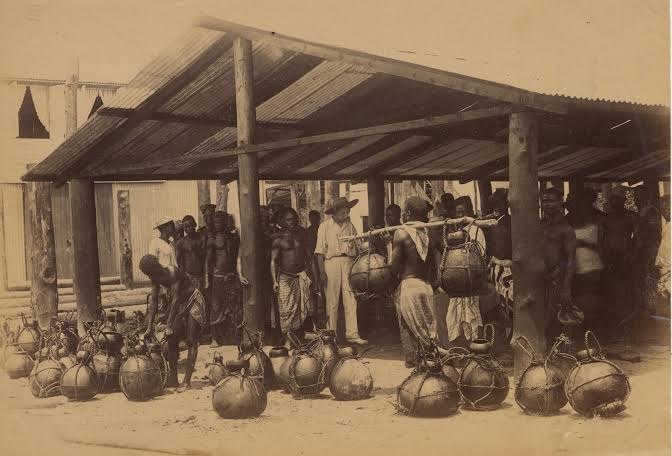
The Rise: How One Man Came to Dominate West African Shipping (Educational/explanatory core)
It’s worth tracing Jones’s actual career path in detail, since the scale of his eventual dominance only makes sense in light of just how methodically he built it. Jones was born in Carmarthen, Wales, in 1845, and his family moved to Liverpool when he was three years old. He began earning his living at age twelve, working first as a clerk for Fletcher and Parr, a Liverpool firm doing business with the West Coast of Africa as agents for the African Steamship Company. He rose to become manager of that firm, then struck out on his own as a shipping and insurance broker in 1878.
It’s worth understanding the specific, deliberate strategy Jones pursued from this point forward, since his own biographers describe his ambition in explicit terms. When Elder Dempster began absorbing much of his old firm’s business, Jones responded not by competing against them, but by offering, in 1876, to take control of their concern or buy them out entirely. He raised substantial capital, became a junior partner in 1879, and quickly became “the master spirit” of the firm’s operations. His stated first aim, according to the Dictionary of National Biography’s 1912 account, was direct and unambiguous: “to monopolise the whole shipping trade of the West African ports.” By 1890, through successive share purchases, Jones had acquired full control of Elder Dempster outright.
It’s worth noting how far beyond shipping this consolidation eventually extended, since it shows the banking venture wasn’t an isolated pivot but one piece of a much broader pattern. By the 1890s, Jones had “secured a vast business portfolio in the region, including shipping, landholdings, banking, and mining.” He also founded the Liverpool School of Tropical Medicine and served as President of the British Cotton Growing Association — meaning his influence extended into the scientific institutions studying tropical disease (directly relevant to sustaining European commercial presence in West Africa) and into organizing raw material supply chains, alongside his shipping and banking dominance. Contemporary journalist W.T. Stead captured the scale of this concentrated power directly, describing Jones as “the Uncrowned King of West Africa.”
The Bank: How Shipping Dominance Became Currency Dominance
It’s worth tracing the specific corporate sequence by which BBWA actually came into being, since it shows the bank emerging directly out of existing shipping infrastructure rather than being built as an independent financial venture. The African Banking Corporation had briefly operated a banking presence in Lagos beginning in 1892, but wished to withdraw within a single year. Rather than the operation simply closing, ABC sold it to Jones and Elder Dempster, who used it as the foundation for a new institution: Elder Dempster helped form the Bank of British West Africa in 1893, taking over the former ABC operation in Lagos directly. The bank was formally incorporated as a limited liability company on March 31, 1894, with a head office in Liverpool and a modest paid-up capital of £12,000.
It’s worth stating precisely what BBWA’s actual early business consisted of, since this is the crux of the essay’s central claim. Following the bank’s 1896 expansion into Accra, the historical record states plainly: “Its main business then was the distribution of silver coins, of which it was the sole supplier.” This wasn’t a bank that happened to also handle currency distribution as one service among many — for its formative early years, distributing physical silver coin into West Africa’s economy was BBWA’s core function, and it held that function as the region’s sole supplier.
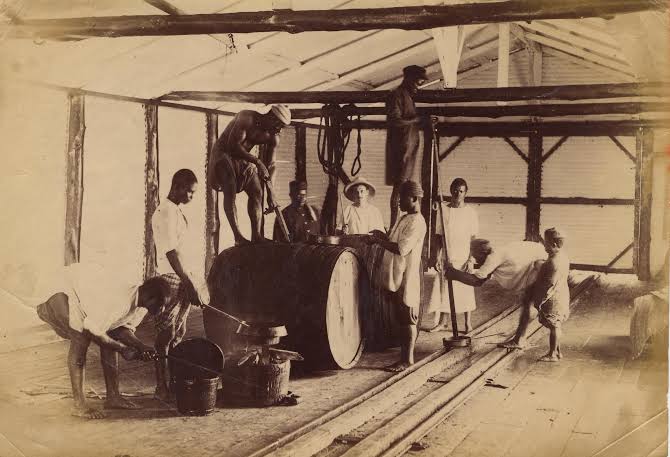
The Scandal: One Man’s Money, One Man’s Bank
Here is the underlying structural pattern worth stating directly, since it’s less a single scandalous event than a persistent, foundational conflict of interest built into the very creation of West Africa’s earliest modern banking institution. Alfred Jones didn’t discover an opportunity to enter banking as a separate venture — he built a bank specifically to formalize and extend a currency distribution monopoly he had already effectively secured through his existing shipping dominance. The same man who controlled the ships bringing goods and people to and from West Africa also controlled the physical silver coin that constituted the region’s actual money supply, and then formalized that same control into a chartered banking institution bearing his own board’s direct oversight.
It’s worth stating what this concentration actually meant in practice. There was no meaningful institutional separation between Jones’s private shipping commercial interests and the region’s basic monetary infrastructure — the coin West African traders and consumers needed simply to conduct daily transactions flowed through channels one man ultimately controlled, from the ships that physically carried it to the bank that distributed it. His own approach to competition, documented directly in his biographical record, involved deliberately organizing “a conference system to regulate the West African shipping trade” specifically through negotiated arrangements with rival firms like the German Woermann Line and the Royal Niger Company — the same cartel-building instinct that shaped his shipping business appears to have carried directly into how BBWA came to hold sole-supplier status over the region’s coin distribution, with no meaningful competing institution positioned to challenge that monopoly during the bank’s critical formative years.
It’s worth noting the honorific title Jones eventually received for this body of work, since it reveals how thoroughly this concentration of economic power was celebrated rather than scrutinized within the British establishment of his era. Jones was awarded the KCMG and became, according to his own biographical record, “Founder of the First Bank of Nigeria” and “Chairman of the Bank of British West Africa” simultaneously — official recognition of exactly the kind of concentrated economic control this piece has traced, rather than any indication that his contemporaries viewed the arrangement as a conflict requiring correction.
Close
BBWA’s founding reveals something genuinely important about the earliest architecture of formal banking across British West Africa: it did not emerge from a competitive market of banking institutions gradually converging on the region’s needs. It emerged directly from one shipping magnate’s pre-existing, deliberately built monopoly over the physical movement of goods and money — a monopoly he then formalized, with official institutional and eventually royal recognition, into a chartered bank holding sole-supplier status over the region’s actual currency distribution. The “Uncrowned King of West Africa” title Jones earned in his own lifetime wasn’t hyperbole; it was a reasonably accurate description of how completely one man’s commercial empire came to encompass the ships, the coin, and eventually the bank that together constituted much of West Africa’s earliest formal economic infrastructure.