

● Nigeria-Niger-Benin cross-border trade resumes via Tsamiya-Kamba route,
with over 1,600 Niger-bound trucks finally moving from the Port of Cotonou
after being stranded for months. (April 2026)
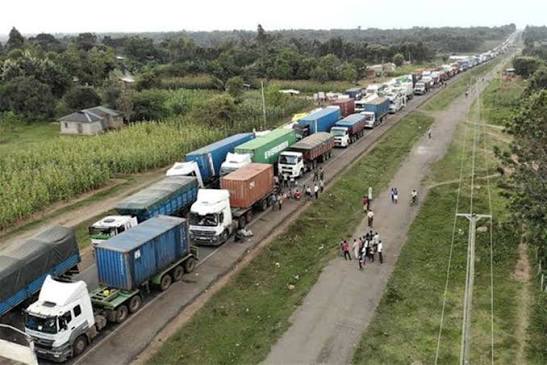
Over 1,600 trucks bound for Niger sat stranded at the Port of Cotonou for
months. Cargo aging. Drivers waiting. An entire country’s import pipeline backed
up at a port that couldn’t legally send goods forward.
This wasn’t solved by fixing the actual problem. It was solved by routing around it
— through a third country, on a road that didn’t exist as an official crossing for
this purpose seven years ago.
Niger’s real border with Benin is still closed today. What reopened in April 2026
wasn’t a border. It was a detour around one country’s accusation that its
neighbor was hosting the people trying to overthrow it.
Here’s What Actually Happened
In April 2026, trade resumed along the Tsamiya-Kamba corridor — a route
through Nigeria’s Kebbi State linking Ségbana in Benin to Sabon Birni in Niger. It
was reactivated shortly after trade had separately resumed between Benin and
Nigeria.
The immediate, measurable impact was significant: over 1,600 Niger-bound
trucks, some stranded for months at the Port of Cotonou, were finally able to
move.
Here’s who acted and how. Following a directive from President Bola Tinubu, the
Nigeria Customs Service Area Command in Kebbi State reopened the corridor
specifically to restore the flow of goods into Niger from Cotonou, and to a lesser
extent from Lagos.
Here’s the myth-check. It’s important to be clear about what this reopening
actually is and isn’t. This is not the same as Niger’s official, direct border crossing
with Benin reopening. That crossing, at Gaya-Malanville, remains closed. What
reopened is a workaround, running through Nigerian territory instead of
resolving the underlying dispute.
The Scandal: Why Niger’s Actual Border With Benin Is Still Shut
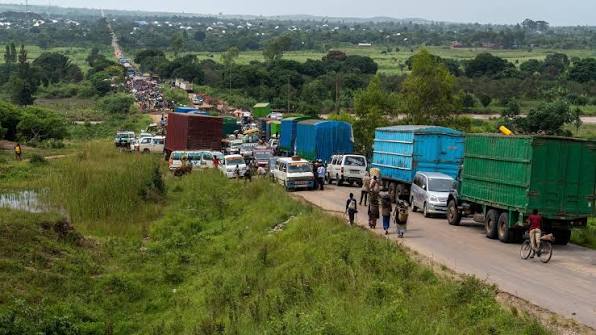
Here’s the real story sitting underneath the trade headline. Niger has kept its
official Gaya-Malanville crossing with Benin closed amid escalating tensions
between Niamey and Cotonou.
Those tensions were aggravated by a coup attempt in Benin in December 2025.
Here’s the core accusation, and it’s the scandal at the heart of this piece: Niger
has repeatedly accused Benin of hosting foreign military bases on its territory
and of supporting efforts to destabilize Niger’s government.
This isn’t a routine customs or tariff dispute. It’s an allegation that a neighboring
government is providing a platform for armed threats to national sovereignty —
the kind of accusation that makes normal trade relations politically impossible
even when the economic cost is enormous.
And the economic cost has been enormous. Cotonou’s port used to handle up to
1,000 vehicles a day on the route to Niamey, and Nigerian cargo alone accounted
for roughly 80% of the port’s transit volumes before this rupture.
The Workaround, & What It Actually Costs
Here’s what the Tsamiya-Kamba route actually solves, and what it doesn’t. It lets
Niger keep using Cotonou — still its closest and most cost-effective maritime
outlet — without physically crossing the closed Gaya-Malanville border, since
goods now detour through Nigerian territory instead.
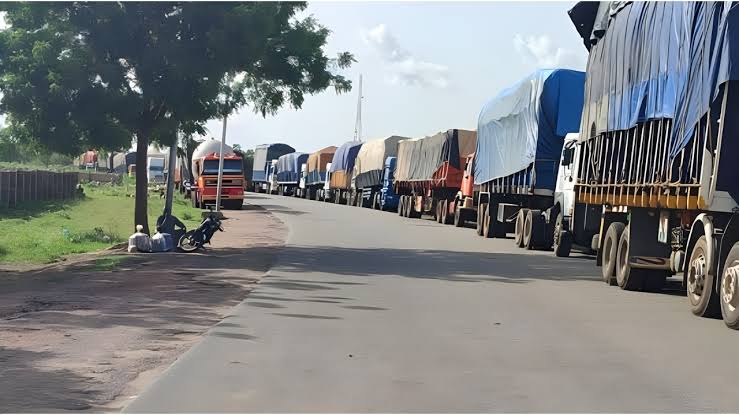
The real logistics cost of this workaround is worth stating plainly. The detour
adds an extra 600 to 900 kilometers to journeys that used to run a direct 1,030
kilometers from Cotonou to Niamey. That means every truck now pays for
hundreds of extra kilometers of fuel, time, and risk just to avoid a border
crossing between two countries that won’t resolve their underlying dispute.
The wider regional reshuffling this rupture has triggered shows this isn’t a small
or contained story. Shipping volumes have shifted dramatically toward Lomé,
which handled 2.06 million TEUs in 2024, with 92% of its transit traffic bound for
AES countries and a record 123,000 container moves in a single month. Volumes
have shifted toward Abidjan too, whose Mali-bound transit jumped 76.4% in 2025.
Even Dakar, over 2,200 kilometers from Niamey, has picked up some of the
redirected flow.
There’s a sovereignty point worth making explicit here. Nigeria’s willingness to
open this workaround corridor positions it as a potential mediator between
coastal states and landlocked Sahelian countries. One country’s response to a
diplomatic rupture between two of its neighbors is quietly reshaping the entire
region’s trade geography.
The Myth vs. The Reality
| What people assume | What actually happened |
|---|---|
| The April 2026 reopening means the Niger-Benin border crisis is resolved | Niger’s actual, official border crossing with Benin at Gaya-Malanville remains closed |
| This was simply a routine trade corridor reopening, like the earlier Nigeria-Benin one | It’s a costly workaround built specifically to bypass an unresolved sovereignty dispute, not a resolution of it |
| The dispute is a minor bilateral disagreement with limited regional impact | It has already permanently redirected massive trade volumes toward Lomé, Abidjan, and Dakar |
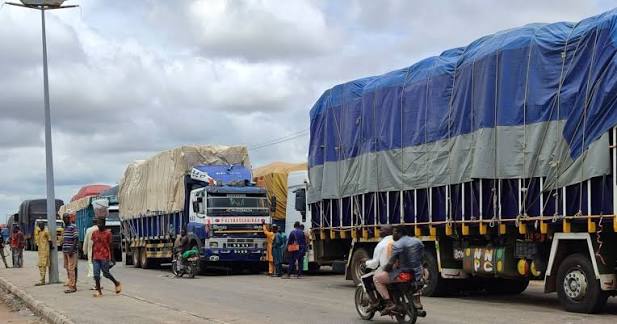
| Trucks moving again means trade has fully normalized | Every truck using this route now travels 600 to 900 kilometers further than it would on the direct, still-closed path |
Why This Still Matters
1,600 trucks moving again looks, on the surface, like a trade success story. It’s
really a measure of how expensive and fragile regional trade becomes when a
sovereignty dispute between two neighbors goes unresolved.
The real fix here was never built. Niger and Benin’s actual border remains shut,
and every truck taking the long way round through Kebbi State is a daily
reminder that this “reopening” is a workaround for a diplomatic crisis, not a
solution to it.