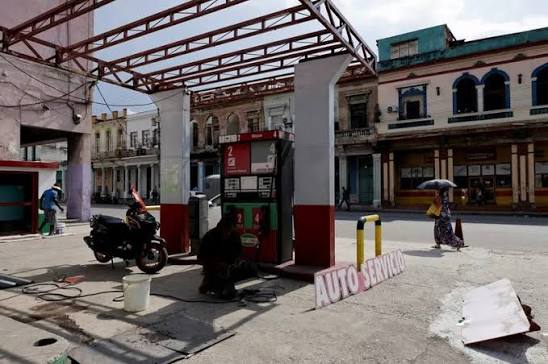

● Nigeria’s naira float and fuel subsidy removal drive higher cross-border
trade costs with ECOWAS neighbors reliant on Nigerian fuel and goods.
(2023)
This is a story in two acts, staged less than eighteen months apart, in which
Nigeria’s own government policy first destroyed a thriving cross-border
smuggling economy, and then, through an entirely separate decision, brought it
roaring back to life.
The same commodity. The same borders. The same smugglers. Reacting to two
different Nigerian policies pulling in opposite directions.
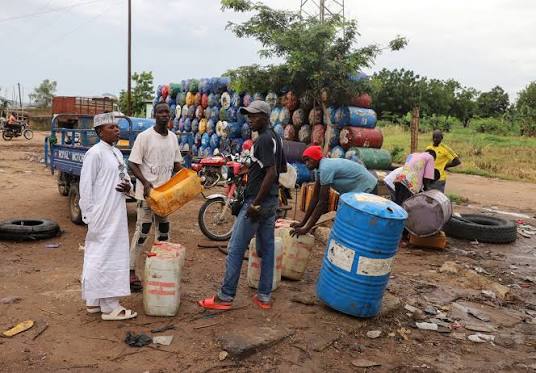
Act One: The Subsidy Falls, the Black Market Collapses
On May 29, 2023, newly inaugurated President Bola Tinubu declared, in his own
inaugural address, an end to Nigeria’s decades-long fuel subsidy. Petrol pump
prices jumped from around N200 to over N500 a litre almost overnight.
Tinubu’s own justification was colorful and revealing. He stated plainly that
Nigeria could not continue acting as “Father Christmas” to neighbouring
countries — a direct acknowledgment that cheap, subsidized Nigerian fuel had
been propping up informal cross-border supply chains for years.
The immediate, documented effect was dramatic. In Niamey’s suburbs, illegal fuel
warehouses closed and black-market fuel touts became, in one report’s words, “an
endangered species,” as the price gap that had made smuggling profitable
simply vanished once Nigerian fuel tripled in price.
Academic research confirms this effect with hard data. A peer-reviewed analysis
of Nigerian fuel trucking data found a 32% drop in daily fuel movement to border
states after subsidy removal, with a further 15% decline following Niger’s 2023
coup and subsequent border closures — evidence that a meaningful share of
pre-2023 “consumption” in border regions had actually been smuggling, not
domestic use.
It’s worth explaining exactly why subsidized fuel had made smuggling so lucrative
in the first place. Nigerian pump prices, kept artificially low by government
subsidy, sat far below market prices in Benin, Niger, and Cameroon, creating a
profit margin smugglers could exploit simply by moving fuel a few kilometers
across a border.
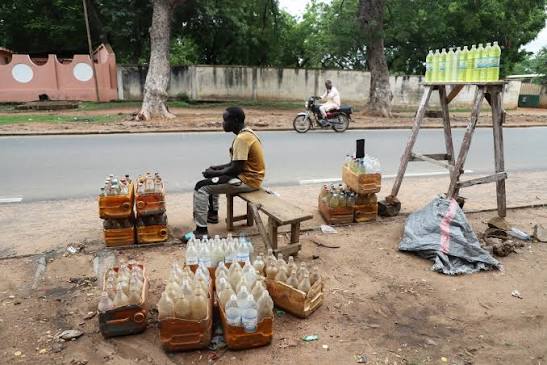
Act Two: The Naira Falls, the Black Market Returns
Here’s the second policy shift, and it’s a separate decision entirely. Nigeria’s
currency float sent the naira into steep depreciation, reaching around N1,560 to
the dollar — a move that had nothing directly to do with fuel policy, but would
undo the subsidy removal’s effects almost completely.
The mechanism is worth explaining plainly, since it’s the educational core of this
act. As the naira weakened dramatically against the CFA franc used in Benin and
Niger, Nigerian fuel — even at its new, unsubsidized price — became cheaper in
CFA-franc terms than fuel sold locally in neighboring countries. This recreated
the exact price gap that had made smuggling profitable in the first place, just
through currency movement instead of subsidy.
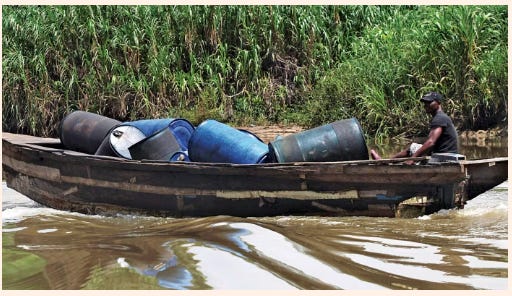
One fuel smuggler described the reopened opportunity plainly: “Mostly, we go
through the Ijofin river and from there, we enter Cotonou where there are buyers.
The market is bubbling and it will continue because Nigerian fuel is cheaper
than theirs.”
The specific price arithmetic makes the incentive concrete. Smugglers described
buying fuel in Nigeria between N580 and N630 a litre, then selling it in Benin at
prices equivalent to roughly N1,200 to N1,850 — a markup steep enough to justify
the risk of moving fuel illegally across an international border.
The parallel effect in Niger is worth noting specifically. In the border town of
Illela, a litre of petrol cost around N1,000, while just across the border in Konni,
Niger, it cost between N1,250 and N1,300. Niger, remarkably, faced no fuel scarcity
at all even as Nigerians endured repeated shortages at home.
The Scandal: The Fuel Nigerians Couldn’t Get, Smuggled Out by
the Truckload
Here’s where the irony turns genuinely serious. While Nigerians endured what
reporting described as the country’s fifth major fuel crisis since Tinubu took
office — panic buying, long queues, repeated scarcity — a steady stream of that
same fuel was being smuggled out to keep neighboring countries fully supplied.
The hard enforcement data shows the scale of this, sourced directly to Nigeria
Customs Service figures. Between January and July 2024 alone, Customs
intercepted 1,529,996 litres of petrol — the equivalent of 46 tankers — worth an
estimated N205.4 billion, in seizures concentrated specifically in states bordering
Benin and Niger.
This wasn’t a minor leakage problem. It was a documented, large-scale diversion
of a resource Nigerians themselves were struggling to access, moving in the
opposite direction of domestic need, driven by a currency policy that had
nothing to do with fuel at all.
The local economic anxiety this created on the Nigerian side is worth including
directly. Commercial motorcycle operators and border transporters expressed
fear about being pushed out of business as fuel dynamics shifted again, with
Niger-Nigeria transporters’ chairman Malam Ali lamenting that policy changes
had “plunged vehicle owners and passengers into economic crisis.”
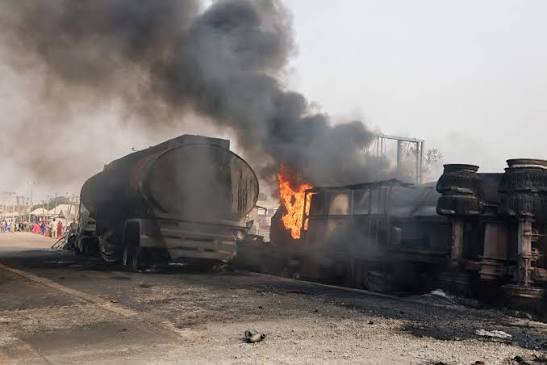
Close: Same Stage, Different Villain
The exact same cross-border smuggling economy that one Nigerian policy
successfully dismantled in 2023 was substantially rebuilt by a completely
different Nigerian policy less than two years later — not because anyone
intended it, but because currency and fuel pricing turned out to be more tightly
linked than either policy’s architects seemed to have planned for.
Cross-border trade dynamics in West Africa don’t respond to any single policy in
isolation. They respond to the gap between whatever prices exist on either side
of a border — a gap that a currency float can reopen just as easily as a subsidy
removal can close it.
This is the same underlying currency-and-price dynamic already touched on
elsewhere in this blog’s coverage of regional trade — proof that in a region
without a shared, stable currency, exchange rate movements alone can quietly
rewrite the economics of cross-border trade, with or without anyone’s intention.