

Here’s what you need to know:
● ECOWAS extended its chief negotiator’s mandate to December 2026,
formally reaffirming it still treats AES states as part of the “ECOWAS family”
— even a year and a half after their formal withdrawal.
● AES has spent 2026 harmonizing its own negotiating position, holding a
joint strategic workshop in Ouagadougou in June to present a unified
front to ECOWAS.
● A November 2025 coup in Guinea-Bissau exposed a stark double standard:
ECOWAS, which threatened military intervention against Niger in 2023,
issued no sanctions when the Guinea-Bissau junta rejected its transition
ultimatum.
● New leadership on both sides — Senegal’s Faye as ECOWAS Chair, Birame
Diop as incoming Commission President, and AES’s own rotating
chairmanship under Burkina Faso’s Ibrahim Traoré — will inherit whatever
comes out of December’s summit.
Heading into ECOWAS’s December 2026 summit, it’s worth actually grading where
things stand — not with vague optimism or pessimism, but category by category,
on the specific, documented evidence this blog has gathered throughout its
coverage of the AES rupture.
Four categories, four grades, and one scandal that explains why the toughest
grade of all belongs to ECOWAS’s own consistency.
Category One: Negotiation Infrastructure — Grade:
Incomplete
At the 69th Ordinary Summit in Lungi in July 2026, ECOWAS extended the
mandate of its chief negotiator, former Guinean Prime Minister Lansana Kouyaté,
through December 2026, reaffirming that talks with the three AES states would
continue “exclusively within a collective framework.”
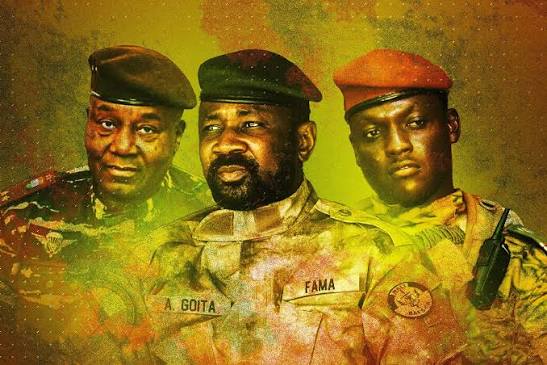
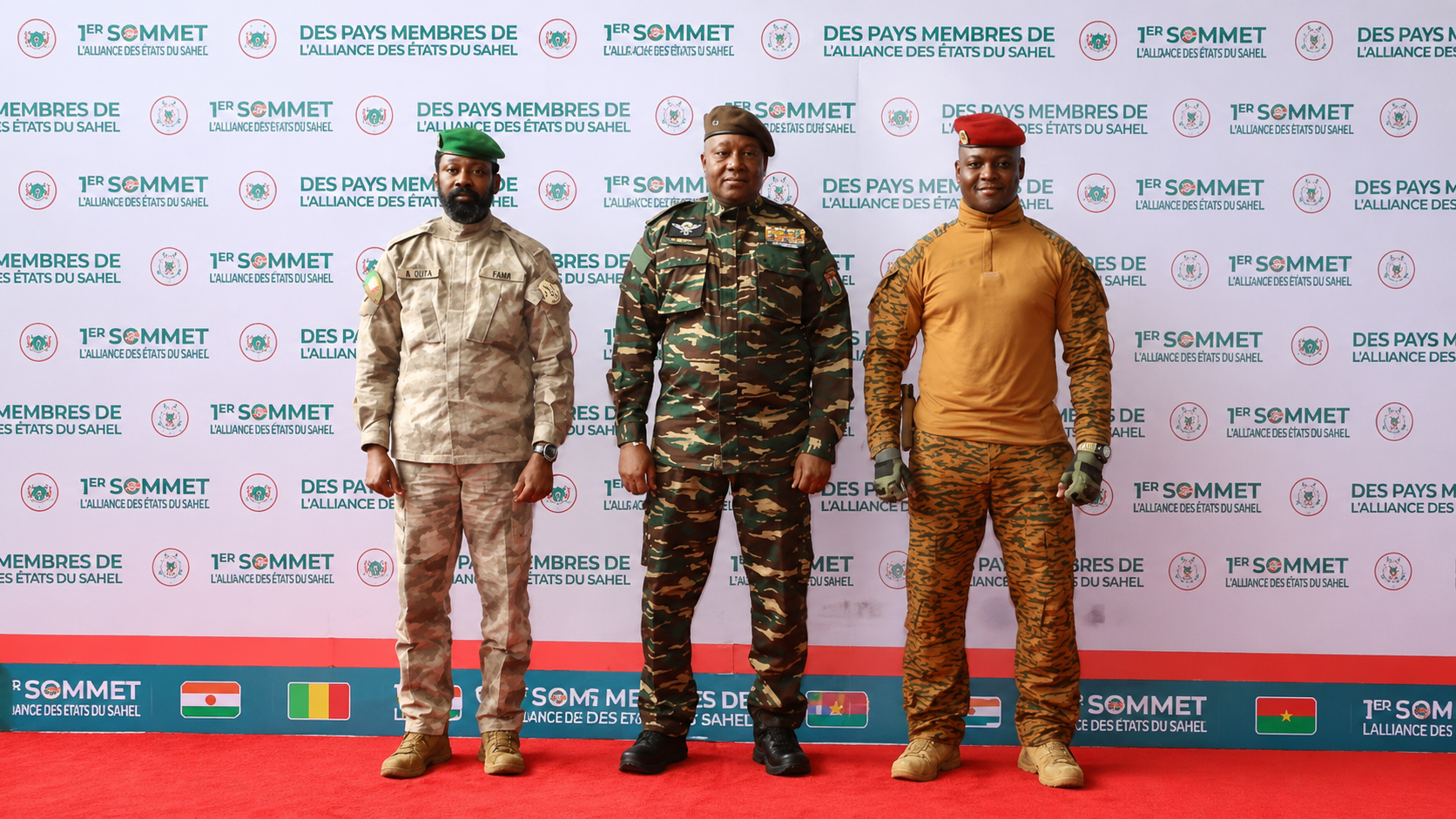
AES has been preparing on a parallel track. From June 23 to 25, 2026,
Ouagadougou hosted a strategic workshop bringing together experts and
diplomats from all three AES states, specifically to produce a “consolidated
strategic framework document” ensuring a harmonized negotiating position.
The head of the Burkinabè delegation described the approach as consistent with
“sovereignty without isolation,” insisting that “sovereignty is not synonymous with
isolationism” — a sentiment Malian delegation coordinator Mahamane Amadou
Maïga echoed at the same gathering.
“Incomplete” is the fair grade here. Both sides have built real negotiating
infrastructure and shown willingness to talk. But eighteen months after formal
withdrawal, there’s still no finalized framework governing the actual relationship
— only continued preparation for eventual talks.
Category Two: Institutional Consistency — Grade: F
(The Scandal)
Here’s the sharpest evidence in this entire scorecard. In November 2025, a coup
occurred in Guinea-Bissau — and ECOWAS’s response looked nothing like its
response to Niger’s 2023 coup.
Walk through the comparison precisely. At its December 2025 summit, ECOWAS
rejected the Guinea-Bissau junta’s proposed one-year transition roadmap and
threatened economic and financial sanctions if it wasn’t withdrawn. The junta
resisted and kept its roadmap anyway.
Here’s the striking follow-up, sourced to independent regional analysis. At
ECOWAS’s subsequent summit, “no sanctions nor threat of sanctions were voiced
to deter violations.” The bloc instead simply noted “efforts underway in
Guinea-Bissau to conclude the country’s political transition.”
The scandal’s core point is explicit. Analysts have directly connected this shift to
the AES departure — ECOWAS’s uncharacteristically restrained response is
widely read as evidence the bloc is now managing its remaining membership out
of fear of triggering a repeat departure, rather than enforcing the same
democratic standards it once applied forcefully to Niger.
This earns the scorecard’s harshest grade precisely because of what it reveals.
An institution that applies its own rules inconsistently based on how much it
fears losing the country in question isn’t just weakened by the AES rupture — it’s
actively demonstrating, in real time, exactly the kind of unprincipled institutional
behavior AES cited as a reason for leaving in the first place.
Category Three: Economic Entanglement — Grade:
B-
This connects directly to the currency coverage already extensively documented
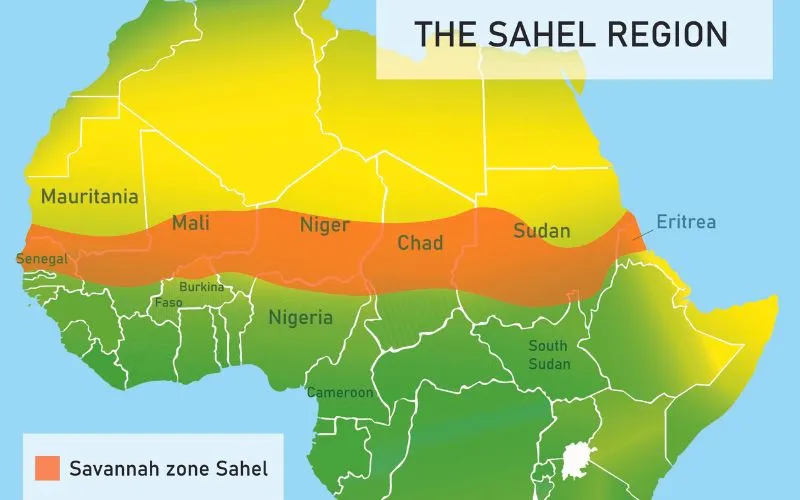
in this blog: AES states remain fully inside UEMOA and the CFA franc zone even
after leaving ECOWAS, meaning genuine economic separation never actually
happened at the currency level.
The continued ETLS treatment already covered earlier in this series is worth
noting too. ECOWAS’s unilateral extension of trade benefits, document
recognition, and visa-free movement to AES nationals remains formally in place,
even without reciprocal commitment.
This earns a solidly positive, if incomplete, grade. Economic ties between
ECOWAS and AES have proven far harder to sever than political ones — a
genuinely stabilizing factor heading into December’s talks, even if it complicates
any narrative of a truly clean break.
Category Four: Security Cooperation — Grade:
Separate Tracks
ECOWAS has made its own security investment directly: the 69th summit
endorsed a revised roadmap for a 1,650-strong counter-terrorism brigade within
the ECOWAS Standby Force, targeted for full operational status by July 2027.
Contrast this with AES’s parallel security posture, already extensively
documented elsewhere in this blog through its Russia and Africa Corps coverage.
The two blocs are now building entirely separate counter-terrorism
infrastructure for a shared Sahelian security crisis, rather than any coordinated
regional response.
This isn’t failure exactly, but fragmentation — two capable regional actors solving
the same underlying problem through completely disconnected institutions,
years into a security crisis that, as this blog has documented, has arguably
worsened rather than improved.
Close: The Final Grade
Negotiation infrastructure exists but remains unfinished. Institutional
consistency has visibly cracked under the pressure of the AES departure itself.
Economic ties remain more intact than political ones. Security cooperation has
fully forked into parallel tracks.
Heading into December 2026, Captain Ibrahim Traoré, on AES’s second
anniversary in July 2026, confirmed consultations with ECOWAS were continuing
toward “a new framework for relations.” But a scorecard this mixed suggests
December’s summit is more likely to produce another extension of talks than any
final resolution.
This is where this blog’s ongoing coverage of the AES-ECOWAS relationship
stands as of today — not a story with an ending yet, but a genuinely live,
unresolved test of whether West Africa’s oldest regional institution can hold
together a region increasingly comfortable operating in separate pieces.