

Here’s what you need to know:
- Starting in 1924, French colonial administrators in Upper Volta forced peasant farmers to grow cotton for export, under a policy launched by Lieutenant-Governor Frédéric-Charles Hesling.
- The policy failed almost completely — cotton yields stayed under 1,000 tons a year, farmers resisted through evasion, crop-mixing, and mass emigration, and food insecurity worsened as land shifted away from subsistence crops.
- The scandal: this failure was so severe it became a direct factor in France dissolving Upper Volta as a colony entirely in 1932, splitting its territory between Ivory Coast, French Sudan, and Niger for the next 15 years.
- This coercive, quota-based system — not CFDT itself — laid the actual template CFDT would formalize in 1949 and SOFITEX would inherit in 1979.
A cotton policy failed so badly that the colony enforcing it was dissolved — wiped off the map entirely for fifteen years.
In 1932, Upper Volta — the territory that would one day become Burkina Faso — stopped existing as a French colonial administrative unit. Its land was carved up and handed to three neighboring colonies. A failed cotton scheme, launched in 1924, was one of the direct causes cited for that dissolution.
This is the origin story nobody puts in the corporate history. Before there was a CFDT, before there was a SOFITEX, there was a policy so coercive and so badly designed it helped erase an entire colony from the map.
Here’s What Actually Happened
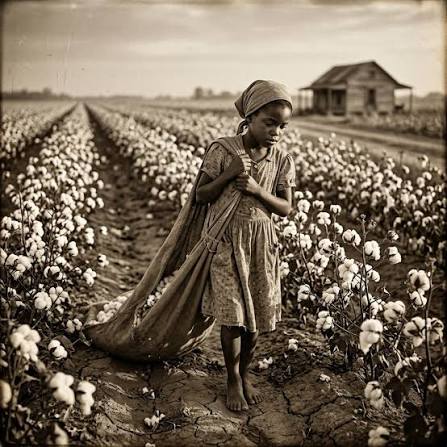
In 1924, Lieutenant-Governor Frédéric-Charles Hesling, who administered Upper Volta from 1919 to 1927, launched a cotton cultivation program aimed at integrating the colony into the export markets of French West Africa, known by its French acronym AOF.
The mechanism is worth explaining plainly. Cotton production quotas were enforced on designated communal lands, with village chiefs’ compliance directly tied to tax relief. Local leaders were pressured to enforce a crop their own communities didn’t want to grow, in exchange for their villages’ overall tax burden being eased — a system that turned traditional chieftaincy structures into an enforcement arm of colonial agricultural policy.
This wasn’t a gentle nudge toward a cash crop. It ran alongside the broader French colonial system of prestations en travail — compulsory labor obligations that could range from one day a week to far more severe, abusive impositions that colonial inspectors themselves documented and, in many cases, simply failed to stop.
Despite the coercion, the results were meager. Yields remained under 1,000 tons annually — a marginal output for the scale of forced labor involved, and one that contributed to colonial budget deficits exceeding 20%.
Why the Policy Collapsed
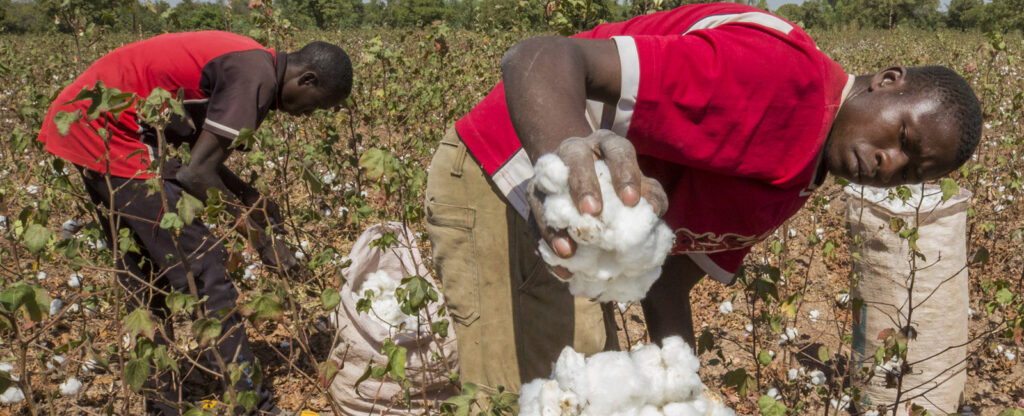
The agronomic problem came first, and it was foundational. Upper Volta’s soils and climate were poorly suited to cotton cultivation, and colonial administrators themselves acknowledged, in contemporaneous records, the direct competition between cotton labor and food-crop labor during the same agricultural cycle. A colonial official in neighboring French Sudan put the trade-off bluntly in 1924, noting that expanding cotton production would necessarily come at the cost of grain output, since the region’s agricultural labor supply itself would not increase to compensate.
Farmers were not passive under this pressure. Peasants restrained their own productivity by illegally mixing food crops onto cotton plots, “cheating” on mandated work hours whenever oversight lapsed, and increasingly selling cotton illegally into the growing local textile market instead of through official colonial channels — a local market that had already tripled in size by 1917 and continued expanding through the 1920s and 1930s.
The starkest form of resistance was simply leaving. Thousands fled Upper Volta for the neighboring British Gold Coast, where colonial administration was documented as markedly less severe, and where migrants could instead work in coffee and cocoa plantations under better conditions.
This had a real human cost beyond lost productivity. Land forced into cotton production was land pulled away from subsistence food crops, measurably increasing vulnerability to famine and food insecurity. The consequences were severe enough that the French government eventually passed a ministerial decree requiring official approval before forced cash-crop production could continue at all.
The Scandal: A Policy So Bad It Erased a Colony
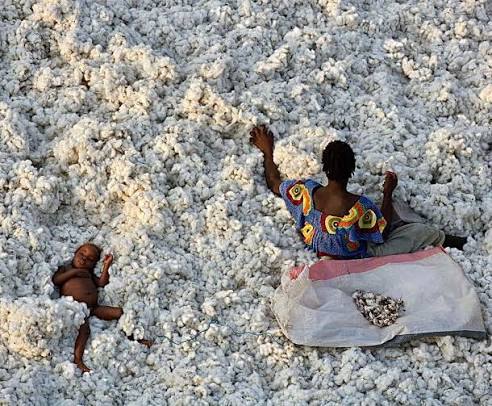
Here’s the piece’s central, striking fact. Upper Volta was formally dissolved as a French colony on September 5, 1932, its territory split between Ivory Coast, French Sudan, and Niger.
The documented causal link is direct. The colony’s chronic economic failure — driven substantially by the collapsed cotton program alongside weak livestock and agricultural export revenue — left tax collection barely covering administrative costs, with nothing left over for infrastructure or development. A colony that couldn’t fund its own administration, built on a coercive cash-crop scheme that had failed on its own terms, was not seen by Paris as worth preserving.
There’s a second, less-discussed political motive worth including, since it completes the picture honestly. Ivory Coast’s powerful plantation-owning class was simultaneously lobbying for a larger labor supply for its expanding cocoa and coffee plantations, and held, in historians’ own words, “a monopoly on both the political leverage and the administrative will” to absorb Upper Volta’s population as migrant labor once the colony was dissolved.
This wasn’t simply an unprofitable agricultural experiment quietly wound down. It was a coercive policy whose failure directly enabled the erasure of a colonial territory and the redirection of its population into labor migration elsewhere. Upper Volta was not reconstituted as its own colony again until 1947 — fifteen years after its dissolution.
The Myth vs. The Reality
What people assume | What actually happened |
| CFDT’s 1949 founding was the beginning of coercive cotton policy in Upper Volta | Forced cotton cultivation predates CFDT by 25 years, beginning under Governor Hesling in 1924 |
| The 1924 cotton program was a minor, unsuccessful economic experiment with limited consequences | Its failure was a documented contributing factor in the outright dissolution of Upper Volta as a colonial territory from 1932 to 1947 |
| Farmers had no meaningful way to resist forced cultivation | Peasants used crop-mixing, work-hour evasion, illegal local sales, and mass emigration to the Gold Coast as sustained forms of resistance |
| The colony’s dissolution was purely an economic decision | It was driven by both the cotton program’s fiscal failure and Ivory Coast plantation owners’ political lobbying for migrant labor |
Why This Still Matters
When CFDT arrived in 1949, it wasn’t inventing a new relationship between French colonial power and Burkinabè cotton farmers. It was formalizing and industrializing a coercive template that had already been tested, had already failed catastrophically once, and had already cost an entire colony its administrative existence.
SOFITEX’s 1979 founding, and the vertically integrated “filière” system still shaping Burkina Faso’s cotton economy today, sits on top of a foundation laid not by a corporation, but by a 1924 quota system whose failure was severe enough to make the colony itself disappear for fifteen years.