

Here’s what you need to know:
- The Compagnie Française pour le Développement des Fibres Textiles (CFDT) was created by the French state in 1949, taking charge of cotton development across nearly the entire French West and Equatorial African subcontinent, plus Madagascar.
- CFDT built roughly a hundred ginning factories and oil mills, and pioneered the vertically integrated “filière” model still used by national cotton companies today, operating from a regional headquarters in Bobo-Dioulasso as early as 1919.
- The scandal: CFDT and its national successor companies held a legally protected monopsony — the sole legal buyer of cotton — across a dozen or more countries for decades, a structure economists at the World Bank and Cato Institute later documented as distorting prices and stalling reform long after independence.
- Even after the late-1990s global cotton price collapse exposed the monopoly’s flaws, most West and Central African governments — Chad among the clearest examples — announced reforms they then failed to actually carry out.
Not to be confused with the unrelated French trade union confederation that also uses the initials “CFDT” (Confédération française démocratique du travail) — a completely separate organization founded in 1964.
In 1949 France created a single company and handed it effective control over cotton development across roughly a dozen territories — nearly the entire French West and Equatorial African subcontinent, plus Madagascar. This wasn’t just influence. It was a legally protected monopoly. Farmers across millions of acres, in a dozen different countries, had exactly one legal buyer for their cotton — for decades.
This is what a monopoly actually looks like when it’s built at continental scale: one company, one price, one buyer, and no legal alternative — for generations of farmers who never got a vote on any of it.
Here’s What Actually Happened
The Compagnie Française pour le Développement des Fibres Textiles (CFDT) was established by the French state in 1949, tasked with promoting cotton production across French West Africa (AOF), French Equatorial Africa (AEF), and Madagascar.
CFDT’s institutional roots predate its formal founding by decades. Its regional headquarters was based in Bobo-Dioulasso — in what’s now Burkina Faso — from as early as 1919, showing the administrative infrastructure existed well before the company itself was legally created.
The financing architecture behind CFDT’s expansion is worth explaining, since it powered everything that followed. French colonial development was underwritten by two purpose-built funds: FIDES (Fonds d’Investissement et de Développement Économique et Social d’Outre-mer), created in 1946 to finance equipment, agriculture, and research across Sub-Saharan colonies and Madagascar, and FERDES (Fonds d’Équipement Rural pour le Développement Économique et Social), created in 1949 specifically to fund smaller, village-level projects.
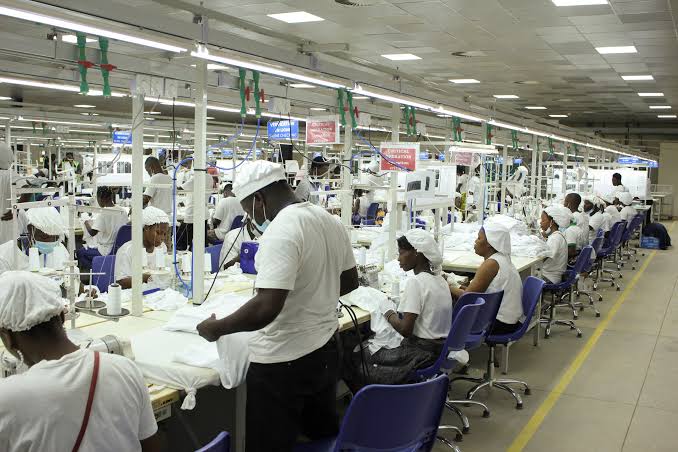
The scale of physical infrastructure CFDT built is worth stating directly. Roughly a hundred ginning factories and oil mills were established across the region under CFDT’s direction — the industrial backbone that would later be inherited, factory by factory, by the national cotton companies (SOFITEX, CIDT, Sodecoton, and others) that replaced CFDT after independence.
The Three-Part Policy That Actually Worked
It’s worth explaining what CFDT did differently from Hesling’s failed 1924 coercion policy, since the contrast matters. Rather than relying purely on quotas and chief-level tax coercion, CFDT progressively rolled out three coordinated policies across the region.
The first was a pan-territorial and pan-seasonal price — meaning farmers received the same price for cotton regardless of season or how remote their location was, specifically designed to make cotton attractive even in hard-to-reach areas that earlier coercive policies had struggled to bring into production.
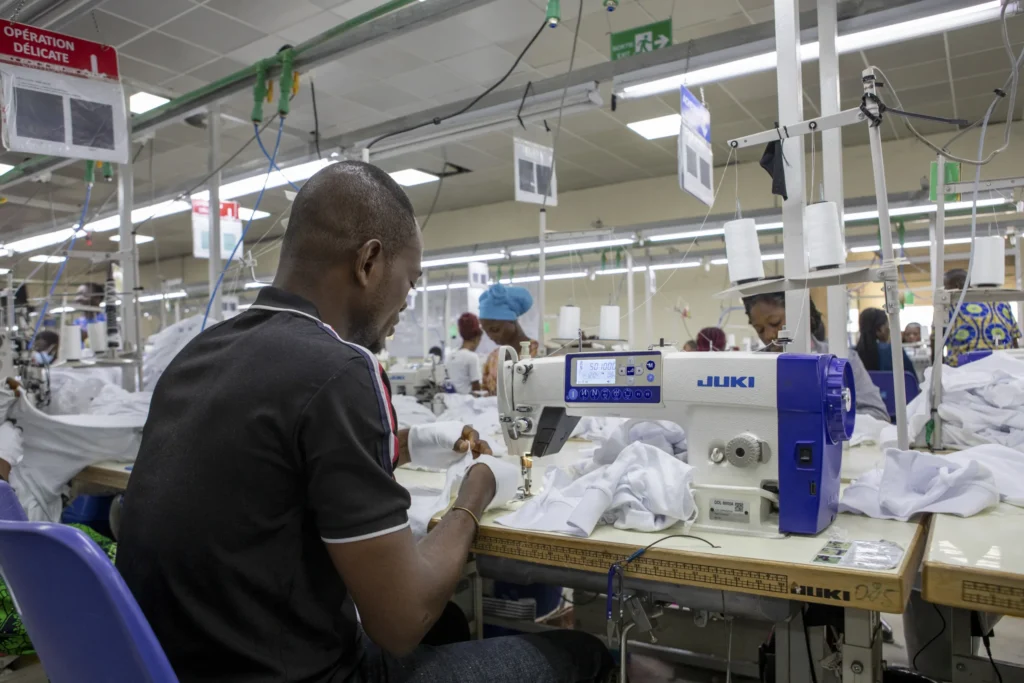
The second and third elements worked together: a guaranteed purchase commitment, meaning farmers knew their crop would be bought, removing one major source of the uncertainty that had undermined earlier forced-cultivation schemes, paired with the vertically integrated “filière” system — a single coordinated structure covering credit, inputs, extension advice, purchasing, ginning, and export, all under one institutional umbrella.
The comparison is worth stating explicitly. This was a fundamentally more sophisticated system than 1924’s raw coercion — and it worked, in the narrow sense that cotton production expanded dramatically across the region over subsequent decades. But sophistication and coercion aren’t opposites. They can coexist in the same system. the second body section here.
The Scandal: A Legal Monopoly That Outlived the Empire
Here’s the piece’s central argument. CFDT and its national successor companies held a legally protected monopsony — the sole legal buyer of cotton in each territory — a structure documented extensively by the World Bank and the Cato Institute as persisting largely unchanged for 30 to 40 years, well past the end of colonial rule itself.
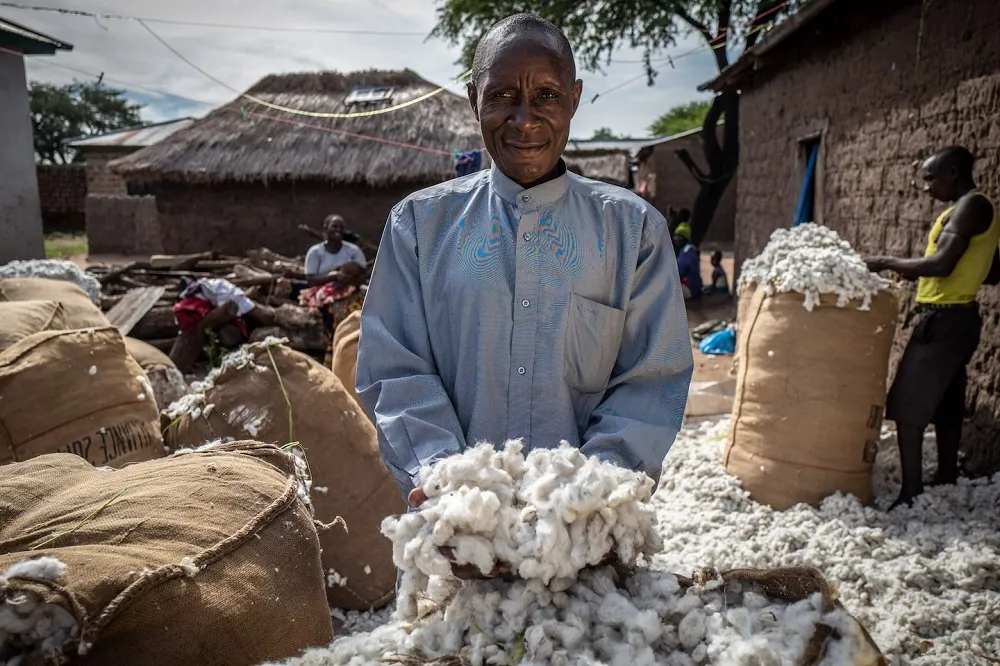
It’s worth being precise about what monopsony power meant in practice. State-owned cotton companies would announce a base buying price before farmers had even planted, sometimes supplementing it with a second, later bonus payment tied to the company’s own financial health. The same entity setting the price was also the only legal buyer of the crop, with farmers holding no real negotiating leverage.
COPACO, CFDT’s dedicated marketing subsidiary, shows how tightly centralized the system remained. Most West and Central African cotton was funneled through this single CFDT-controlled marketing arm for export, regardless of which country it was grown in.
Here’s the sharpest evidence of the scandal’s persistence. The late-1990s global cotton price collapse exposed the monopoly structure’s deep flaws, and policymakers openly acknowledged, through what researchers described as “constructive dialogue,” that reform was needed. Yet serious reform efforts stalled for years afterward, with the underlying sector structure remaining, by economists’ own assessment, “not very different from what it was 30 or 40 years ago.”
The single clearest example of this failure is Chad. Its government formally announced its intention to disengage from the cotton sector in 1999 — and by the time researchers were writing about it years later, had still failed to follow through, with the sole exception of privatizing the cotton-oil byproduct business.
This wasn’t a colonial-era abuse that ended with independence. It was a legal monopoly structure, inherited by post-colonial African governments themselves, that persisted for decades after those governments had every legal authority to dismantle it — and, in Chad’s case, still hadn’t fully done so.
The Myth vs. The Reality
| CFDT’s monopoly was purely a colonial-era arrangement that ended with African independence | The legal monopsony structure persisted largely unchanged for 30 to 40 years, well into the post-independence era |
| Post-independence African governments moved quickly to dismantle inherited colonial-era monopolies | Reform was actively stalled by the very African governments that inherited the system, with Chad’s 1999 disengagement announcement never fully carried out |
| The pan-territorial pricing and guaranteed-purchase system represented uncomplicated progress for farmers | A more sophisticated pricing and purchasing structure still concentrated total market power in a single buyer, leaving farmers with no real price negotiation leverage |
| CFDT’s structure was unique to the colonial period and stopped mattering once the company was renamed | The vertically integrated “filière” model CFDT built became the permanent operating structure inherited by every national cotton company that followed it |