

A Historical In-depth Discovery of Trade in West Africa Since 1896
Here’s what you need to know:
- Frédéric Bohn absorbed Établissements Verminck into the newly formed CFAO in 1887 with 30 million francs in starting capital, then oversaw an expansion so rapid that the company’s turnover grew roughly sevenfold and its trading posts network nearly quadrupled by 1912.
- Profitability under Bohn’s leadership was extraordinary by any standard: return on CFAO’s shares jumped from 3.5% to 25% between 1887 and 1912.
- The scandal: in 1898, Bohn personally proposed an economic policy blueprint for the entire French West African federation at a public geography congress in Marseille — then helped make it real by co-founding the region’s central colonial bank in 1901.
- That bank, the Banque de l’Afrique Occidentale, became foundational to the colonial monetary system already covered elsewhere in this blog — meaning the man running CFAO also helped design the financial infrastructure his own company would operate inside for decades.
In 1898, at the National Congress of Geographic Societies held in Marseille, a trading company executive stood up and proposed an entire economic policy framework for a French colonial federation spanning millions of square kilometers.
This is a look at exactly what Bohn proposed that day, what he built to make it real, and why a private executive shaping public colonial policy this directly deserves to be called what it actually was.
Part One: The Expansion That Made Him Worth Listening To
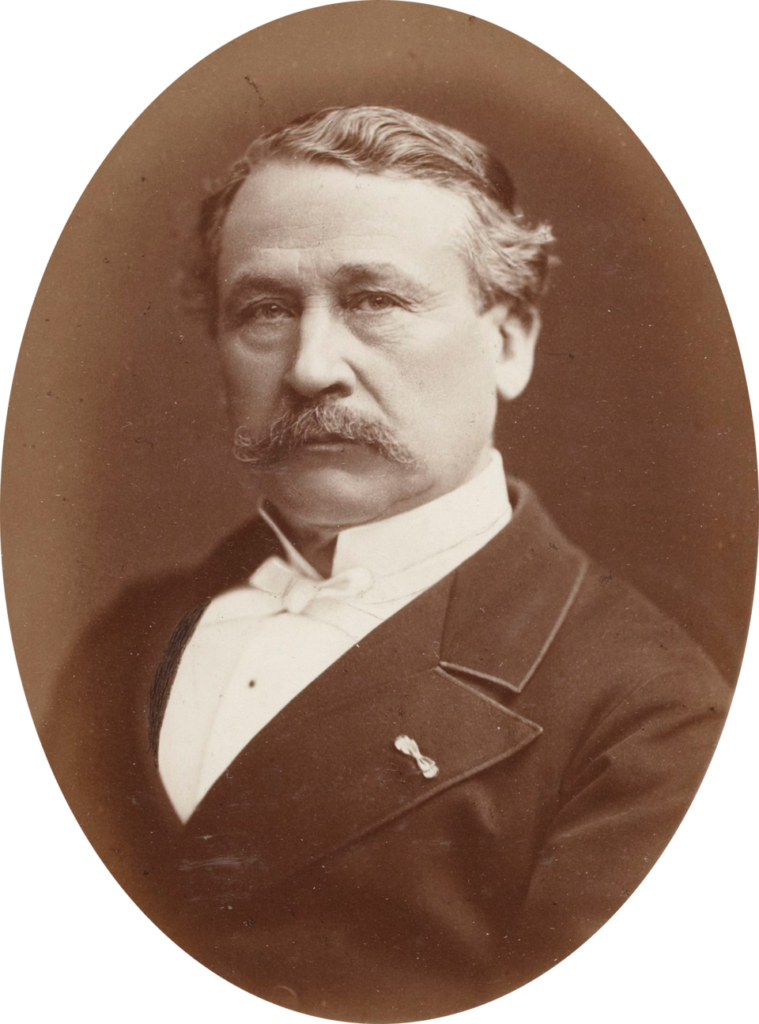
The scale of CFAO’s growth is worth setting precisely, since it’s what gave Bohn the standing to propose national policy in the first place. Frédéric Bohn, Verminck’s son-in-law, formally absorbed Établissements Verminck into the newly created Compagnie Française de l’Afrique Occidentale in 1887, with 30 million francs in starting capital.
The growth figures are extraordinary by any measure. Between 1887 and 1912, the company’s own equity capital roughly doubled while turnover multiplied nearly sevenfold, climbing from 7 million to 50 million francs. Return on the company’s shares jumped from 3.5% to a striking 25% over the same period.
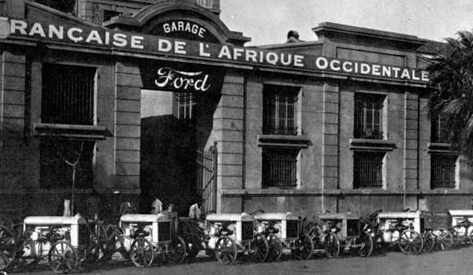
The mechanism behind this growth is worth explaining plainly. CFAO expanded largely by buying out competitors and building an unmatched commercial network, growing from 46 to over 150 trading posts spanning the full breadth of French West Africa, from French Sudan to Nigeria.
It’s worth being clear about what this scale actually meant in practice. By the early twentieth century, CFAO wasn’t simply the largest trading company in the region — it had grown to a size where its own commercial interests and the French colonial administration’s policy interests became difficult to meaningfully separate.
The Scandal: The Blueprint
Here’s the piece’s central document. At the National Congress of Geographic Societies in Marseille, Bohn laid out a specific economic program for French West Africa (AOF), arguing the federation needed its own general budget, the ability to take out loans guaranteed by the French state, and a dedicated colonial bank capable of making investments across the territory.
There’s one policy position Bohn explicitly opposed within that same proposal, worth noting since it reveals the self-interest sitting underneath the public-spirited framing. He specifically rejected any protectionist taxation — a position that, for a company already dominant enough to be buying out its competitors, meant keeping colonial markets open in exactly the way that best suited the largest, most established player already operating in them.
This wasn’t just a speech that went nowhere. Bohn actively supported Augustin Ferraud — president of the Marseille Chamber of Commerce and simultaneously vice-president of both the Société Marseillaise de Crédit and CFAO itself — in a direct campaign to found a colonial bank for French West Africa.
That campaign produced results. In 1901, that effort succeeded, creating the Banque de l’Afrique Occidentale (BAO) — with its founding capital drawn substantially from Bordeaux trading houses, and its creation credited to active collaboration between Bohn and Bordeaux financier Émile Maurel.
This wasn’t a business executive lobbying government from the outside for favorable policy, the way modern corporate lobbying typically works. This was a business executive personally proposing the actual structural framework for an entire colonial federation’s public finances, then directly helping build the institution that would implement it, while simultaneously running the single company best positioned to benefit from exactly that kind of financial infrastructure.
Part Two: Why This Wasn’t Considered Scandalous at the Time
It’s worth explaining the historical context that made this normal rather than exceptional, since it matters for understanding how deeply intertwined commerce and colonial governance actually were. Bohn operated within a dense network of overlapping roles — colonial chambers of commerce, geographic societies, banking initiatives, and trading companies were staffed by substantially the same small circle of Marseille and Bordeaux business figures, meaning what looks today like an obvious conflict of interest was, at the time, simply how French colonial economic policy got made.
There’s a note worth including on Bohn’s personal cost, since it humanizes rather than excuses the broader pattern. Bohn was deeply affected by the death of his son Antoine on the Vosges front during the First World War, and later died of cancer in 1923 at his Marseille home — a reminder that the men shaping this system were real people operating inside institutional structures larger than any individual’s intentions.
This is the same institutional pattern already documented elsewhere in this blog with the Bank of Senegal and the broader colonial banking system — private commercial interests didn’t simply operate within colonial financial infrastructure. In case after case, they directly designed it.
The Myth vs. The Reality
| What people assume | What actually happened |
| CFAO’s expansion under Bohn was purely a story of successful commercial strategy and market competition | Bohn personally proposed the region’s core economic policy framework at a public congress in 1898, opposing protectionism specifically as it served CFAO’s dominant market position |
| Colonial economic policy in French West Africa was designed by government administrators independent of private commercial interests | Bohn directly co-founded the colonial bank that became central to the region’s financial system, embedding private commercial interests into public colonial financial infrastructure from its very founding |
| CFAO’s dominance and colonial monetary policy developed along separate, unrelated tracks | The same small circle of Marseille and Bordeaux business figures staffed the chambers of commerce, banking initiatives, and trading companies that together shaped the region’s economic system |
| Bohn’s proposals reflected a genuinely public-spirited vision for AOF’s development | His explicit rejection of protectionist taxation aligned precisely with what benefited CFAO’s own dominant market position |
The Myth vs. The Reality
Close: The Businessman Who Never Needed to Lobby
Most companies have to lobby governments to shape policy in their favor. Bohn simply stood up at a public congress and proposed the policy directly, then built the institution that made it real. There was no meaningful gap between “what CFAO wanted” and “what colonial economic policy became” during his tenure, because he was substantially the same person shaping both.
Understanding CFAO’s later, well-documented dominance of French West African commerce — the monopoly power, the market capture, the sovereignty questions already explored elsewhere in this series — requires recognizing that its founder didn’t just win inside the colonial economic system. He helped build the system he then won inside of.