

A Historical In-depth Discovery of Trade in West Africa Since 1896
Here’s what you need to know:
- ECOWAS’s July 2026 summit in Lungi, Sierra Leone reaffirmed a 2027 launch date for the Eco single currency — the fifth target date the bloc has set, after 2005, 2010, 2015, and 2020 were all previously missed due to member states failing to meet convergence criteria simultaneously.
- The picture has shifted since the 2024 snapshot showing only Cape Verde and Benin meeting all four criteria: Liberia’s central bank governor reported the country meeting 4 of 6 convergence benchmarks in 2025, citing an 18.6% rise in government revenue and a balanced budget.
- The scandal: even the convergence criteria themselves are being reported inconsistently across recent official and journalistic sources — some describing the budget deficit threshold as 3% of GDP, others as 4% — a data confusion that echoes the same kind of definitional ambiguity already documented elsewhere in this blog’s coverage of Nigeria’s N34 trillion figure.
2027 isn’t ECOWAS’s first target date for launching a single currency. It’s the fifth. Understanding why the previous four all failed is the only real way to evaluate whether this one is different.
Symptom, The Repair, and the Track Record — including a fresh data inconsistency that complicates even measuring progress.

Symptom: A Deadline With a Long, Documented History of Slipping
The historical pattern is worth explaining directly, since it’s genuinely striking on its own. ECOWAS has set and missed single-currency launch targets in 2005, 2010, 2015, and 2020, each time postponed because member states failed to meet the bloc’s convergence criteria simultaneously.
It’s worth understanding what “convergence criteria” actually means and why they’re so hard to meet all at once. A currency union requires participating economies to share a reasonably similar level of fiscal and monetary discipline — control over inflation, manageable budget deficits, sustainable debt levels — because a shared currency removes each country’s ability to independently adjust its own exchange rate or interest rates in response to its own economic conditions. Getting fifteen economies at very different stages of development to hit the same fiscal targets simultaneously has proven, across five separate attempts, to be the central obstacle.
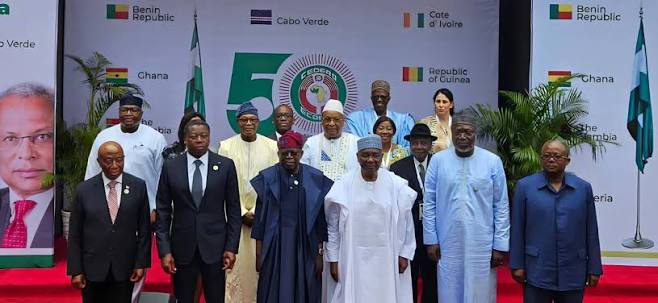
The specific criteria set under the current roadmap are worth having on record. The 2021 roadmap framing the current attempt establishes four primary criteria — a budget deficit no greater than 3% of GDP, average annual inflation no more than 5%, central bank financing of deficits limited to below 10% of the previous year’s tax revenue, and external reserves sufficient to cover several months of imports.
The Repair: The Phased Approach ECOWAS Adopted This Time
The strategic shift that distinguishes this fifth attempt is worth bringing in directly. Rather than continuing to wait for every member state to qualify simultaneously — the approach that had already failed four times — ECOWAS agreed to a phased rollout, letting countries that meet the criteria join the Eco at launch while others work toward qualifying over time.
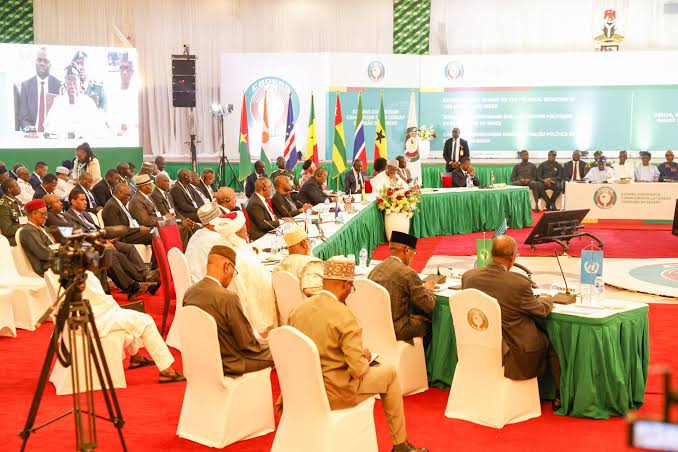
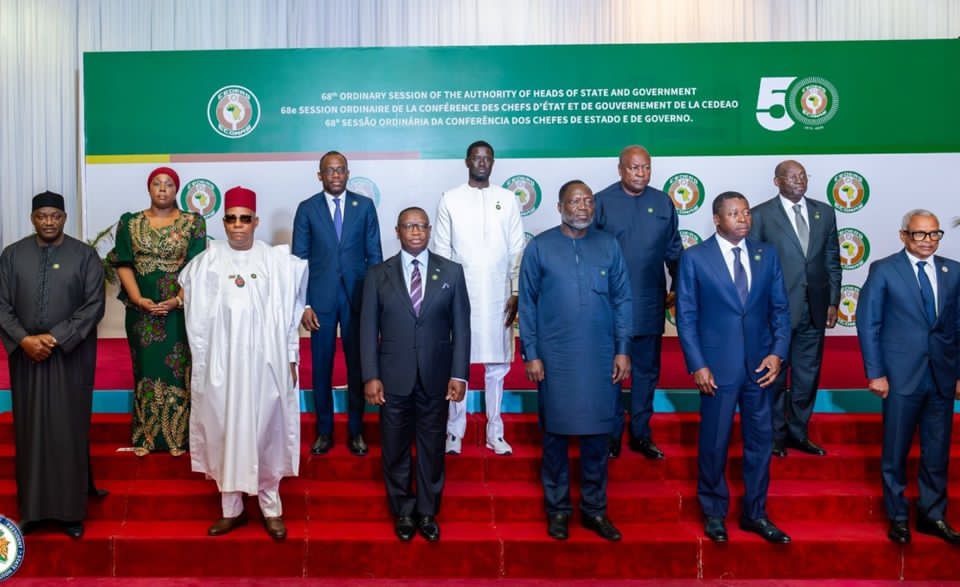
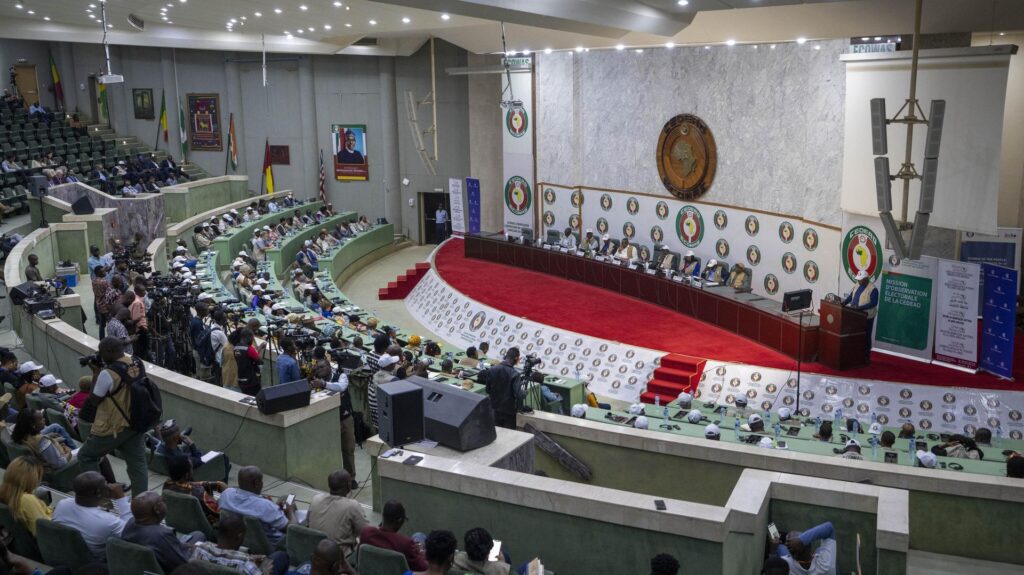
The July 2026 summit communiqué is worth quoting directly, since it captures the bloc’s own stated commitment. The Authority of Heads of State declared it “reiterates its firm commitment to the launch of the ECO in 2027 as a key instrument for deepening regional economic integration and promoting sustainable, inclusive and resilient growth within the Community.”
There’s institutional machinery supporting this effort worth noting, since it shows genuine bureaucratic follow-through. The ECOWAS Commission’s Convergence Council is tasked with monitoring the roadmap, with finance ministers and central bank governors set to assess compliance with deficit, debt, and inflation criteria at an upcoming 2026 meeting, alongside evaluating the operational readiness of regional payment systems.
The Track Record: Genuine Progress, Somewhere
There’s specific country-level improvement documented since the original 2024 snapshot worth bringing in directly, since it shows the picture has genuinely moved. Liberia’s central bank governor reported the country meeting 4 of 6 convergence benchmarks in 2025, with total government revenue and grants rising 18.6% in the first half of the year, enabling a balanced budget “well within the three percent ECOWAS threshold,” alongside public debt declining to an estimated 54.2% of GDP.
There’s additional institutional development worth including, since it shows expanding engagement rather than stagnation. Guinea’s request to join the Presidential Task Force overseeing the single currency program was approved at the July 2026 summit, with the ECOWAS Commission instructed to convene a dedicated meeting before the bloc’s December 2026 summit.
The Scandal: Even the Numbers Don’t Quite Agree
Here’s the piece’s central and most unusual finding, worth introducing directly. Recent, credible sources describing the same convergence criteria give different figures for the budget deficit threshold — one 2026 analysis states the limit is “no greater than 3% of GDP,” while a separate contemporaneous source describes it as “no more than 4% of GDP.”
This is worth taking seriously rather than dismissing as a minor discrepancy. A currency union’s entire technical credibility rests on member states being held to a single, consistently understood standard — if journalists, analysts, and even official communications can’t agree on the exact numerical threshold defining compliance, it raises real questions about how rigorously and consistently that threshold is actually being applied across fifteen different national governments.
There’s a direct parallel to material already covered elsewhere in this blog worth naming explicitly. This is the same kind of definitional confusion already documented in this section’s coverage of Nigeria’s N34 trillion Import Duty Exemption Certificate figure — a headline number or benchmark repeated widely in public discourse, without the underlying institutions ever fully clarifying exactly what it measures.
Genuine incremental progress, like Liberia’s improved fiscal position, is real and worth crediting — but a monetary union heading into its fifth attempted launch date still can’t produce fully consistent public reporting on the exact criteria determining who qualifies, a basic technical clarity gap that deserves scrutiny independent of whether any individual country happens to be meeting the (inconsistently reported) threshold.
The Myth vs. The Reality
| What people assume | What actually happened |
| The 2024 snapshot showing only Cape Verde and Benin meeting all four convergence criteria represents the current, unchanged state of Eco readiness | Liberia’s central bank reported meeting 4 of 6 convergence benchmarks in 2025, showing the picture has moved since the original 2024 data point |
| ECOWAS’s convergence criteria are consistently and precisely defined across official communications and independent analysis | Different 2026 sources describe the core budget deficit threshold using different percentages, a genuine reporting inconsistency |
| 2027 is ECOWAS’s first serious attempt at a single-currency launch date | It is the fifth, following missed targets in 2005, 2010, 2015, and 2020 |
| The phased-launch approach adopted for 2027 is untested and unprecedented for ECOWAS | It represents a deliberate strategic shift specifically designed to avoid the all-or-nothing failure mode that doomed the previous four attempts |
Close: The Fifth Deadline Deserves the Same Scrutiny as the First Four
ECOWAS’s Eco project shows real signs of institutional seriousness this time around — a phased approach designed specifically to avoid the all-or-nothing failure mode that doomed the previous four attempts, genuine country-level fiscal improvement in places like Liberia, and expanding institutional engagement from countries like Guinea — but a project with this specific a track record of missed deadlines earns the right to be watched carefully, not assumed into success simply because the target year changed again.
This joins the pattern already extensively documented across this blog’s Customs, Logistics & Infrastructure coverage — genuine institutional effort and genuine measurement problems can coexist in the very same initiative, and a currency union’s fifth attempted launch date deserves exactly the same “check the math first” scrutiny this blog has already applied to Nigeria’s own headline fiscal figures.
Sources and further reading.