

A Historical In-depth Discovery of Trade in West Africa Since 1896
Here’s what you need to know:
- The Confederal Bank for Investment and Development of the Alliance of Sahel States (BCID-AES) became operational on December 23, 2025 in Bamako, launching with 500 billion CFA francs — roughly $895 million — specifically funded by combining the 0.5% confederal import levy with a requirement that each member state contribute around 5% of its own annual tax revenue.
- The bank’s stated mandate spans transport, energy, agriculture, mining, and industrial development, explicitly positioned by AES ministers as a break from dependence on the World Bank and African Development Bank.
- The scandal: this represents a second, less-discussed fiscal burden layered on top of the trader-facing tariff costs already documented elsewhere in this blog — meaning citizens of three of the world’s poorest countries are now funding AES sovereignty ambitions through both higher import costs and a direct diversion of national tax revenue, even as regional security analysts flag the unresolved question of whether the broader confederation can actually sustain itself without continued reliance on Russian, Turkish, Gulf, and Chinese financing.
This blog has already documented what the 0.5% AES import levy costs ordinary traders at the border. This is the second bill behind that same policy — the one national governments themselves are now paying, and what it’s actually meant to build.
Symptom, The Repair, and the Track Record — including a second funding obligation that hasn’t gotten nearly as much attention as the levy itself.
Symptom: Why AES Wanted Its Own Bank
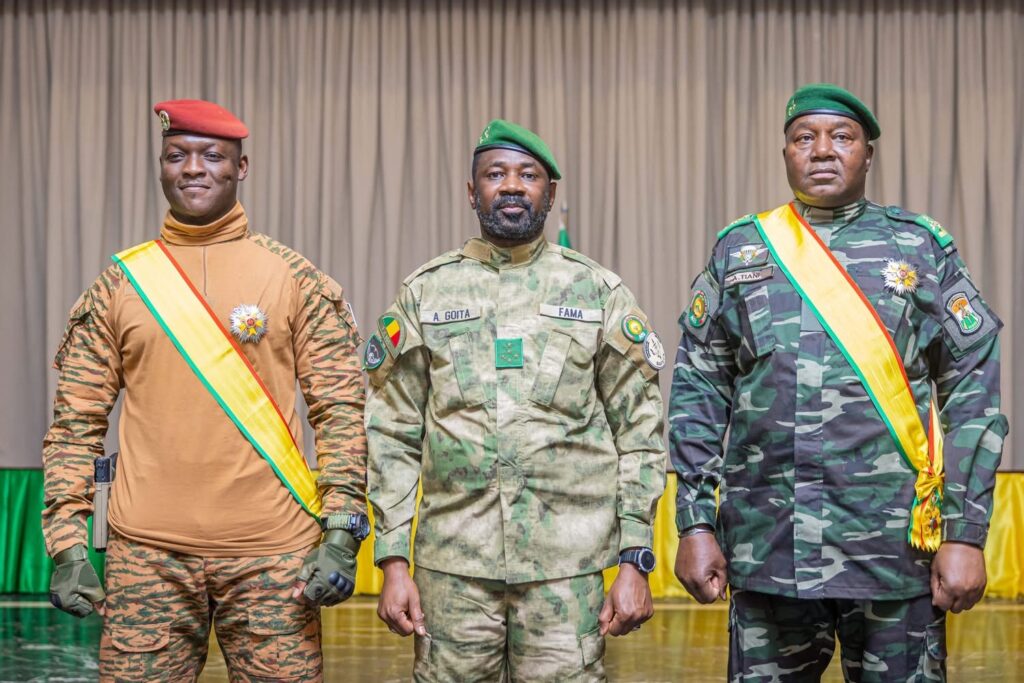
The underlying motivation is worth explaining directly, since it connects to the broader sovereignty project already documented elsewhere in this blog. AES’s founding charter explicitly commits to financing “provided by contributions from the member states,” reflecting a deliberate strategic choice to avoid the kind of donor dependency regional security analysts say hollowed out the earlier, Western-funded G5 Sahel force.
It’s worth explaining why a development bank specifically, rather than just government budgets, matters for a project like this. A dedicated regional development bank can pool capital across multiple member states, borrow against that combined capital base, and fund large, multi-year infrastructure projects that no single one of these three governments could easily finance from its own annual budget alone — meaning the institution itself, not just the money behind it, represents a genuine attempt at building lasting financial infrastructure rather than one-off spending.

The Repair: What Actually Got Built
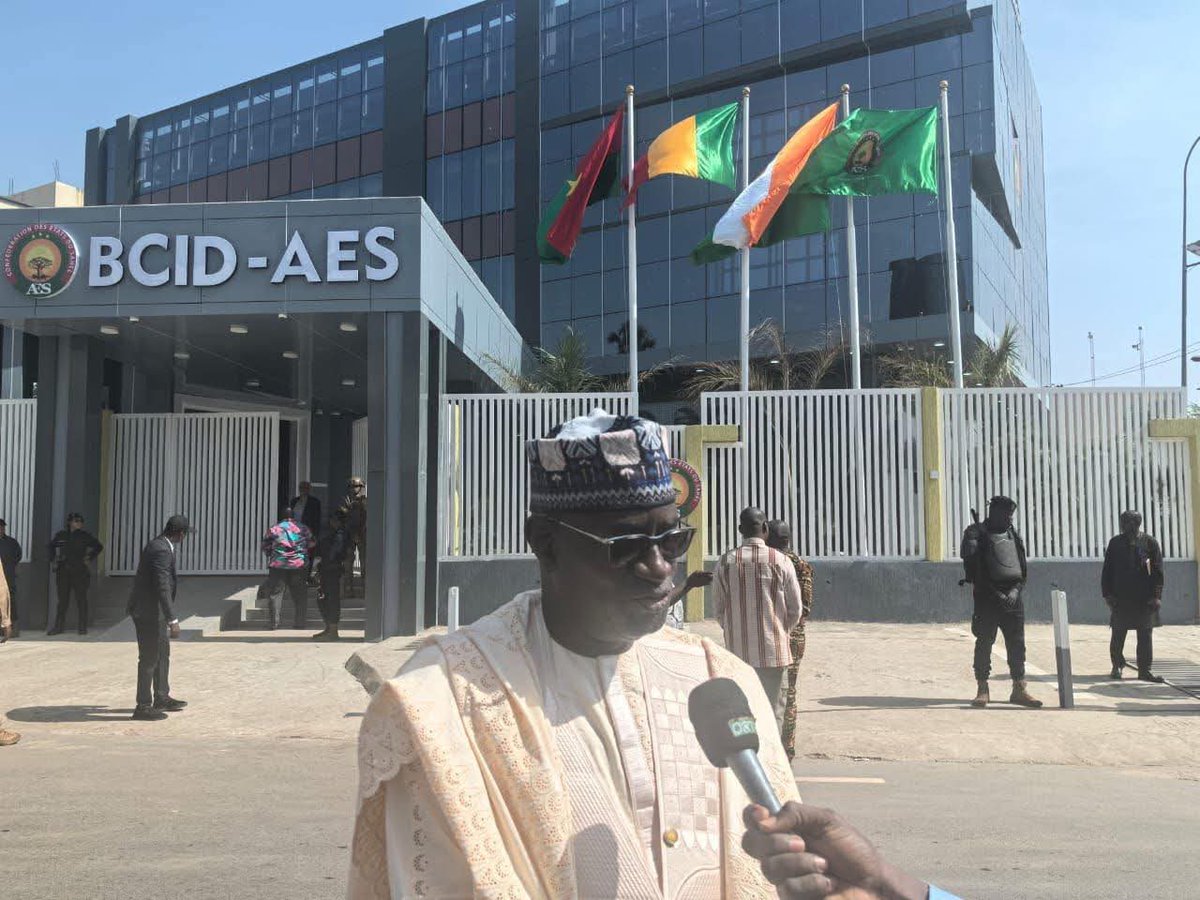
The bank’s formal launch is worth bringing in directly. Burkina Faso, Mali, and Niger formally launched the BCID-AES on December 23, 2025, during a ceremony in Bamako, with an initial capital of 500 billion CFA francs, approximately $895 million.
The funding structure is worth explaining precisely, since it’s the mechanism this piece is built around. The model combines direct government contributions with the confederal import levy, and separately, each member state is expected to contribute a portion of its annual tax revenue — around 5%, according to Wikipedia’s own summary of the arrangement — specifically to strengthen the institution’s capital over time.
The stated mandate is worth noting directly, since it shows genuine breadth of ambition. Officials say the bank will help finance transport, energy, agriculture, mining, and industrial development, with a particular emphasis on road networks and regional interconnections.
The Track Record: What’s Actually Happening on the Ground
There’s broader institutional context this launch sits inside worth bringing in, since it shows real, sustained follow-through beyond just the bank itself. The January 2025 ministerial meeting in Bamako that first proposed the investment bank also discussed launching an AES airline and other transformative infrastructure projects across member states, suggesting the bank represents one piece of a wider, coordinated institution-building effort.
There’s a specific openness gesture AES made alongside its otherwise sovereignty-focused posture, worth including for balance. General Assimi Goïta stated AES declared its borders open to ECOWAS nationals, creating a visa-free zone across AES territories, explicitly framed as demonstrating “the Confederation’s commitment to regional integration and African solidarity” even as the bloc formally withdrew from ECOWAS itself.
The Scandal: The Bill Nobody’s Fully Adding Up
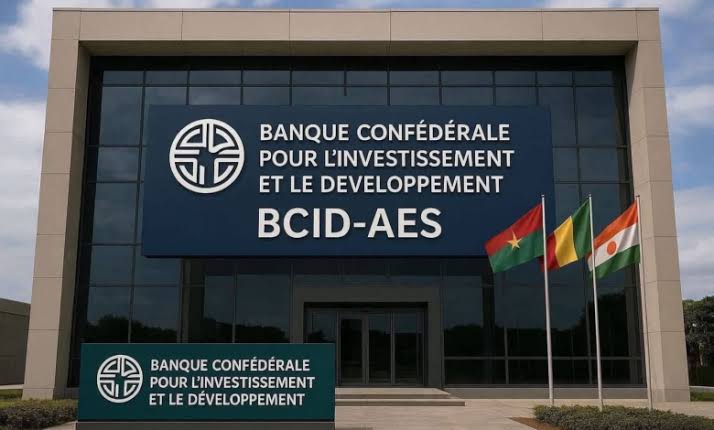
Here’s the piece’s central and underexamined finding, worth introducing directly. Citizens and traders in AES states are now effectively funding this sovereignty project through two separate channels at once — the 0.5% import levy documented elsewhere in this blog as producing tariffs traders describe costing them “either way,” and a separate requirement that each national government divert roughly 5% of its own annual tax revenue to capitalize the new development bank.
It’s worth stating what this actually means for government budgets already under strain. A 5% diversion of annual tax revenue is a genuinely significant fiscal commitment for any government, and for three countries already managing active insurgencies, humanitarian crises, and the broader costs of standing up new confederal institutions — a joint parliament, a television channel, a unified military force — represents real money that isn’t available for other domestic priorities.
There’s an unresolved dependency question regional analysts have raised worth including directly, since it complicates the bank’s own self-reliance framing. The central unresolved question, according to regional security analysts, is whether AES states can sustain their broader confederal ambitions “primarily from their own resources, or whether the reliance on Russian, Turkish, Gulf and Chinese financing will simply reproduce, in a multipolar form, the same external dependency that undid the G5 Sahel.”
A bank explicitly built and marketed as proof of financial self-reliance is being capitalized by squeezing two separate revenue streams — ordinary cross-border trade and national tax collection — from three of the world’s poorest countries, while the broader confederation’s actual security and institutional apparatus remains, by outside analysts’ own assessment, still substantially reliant on the exact kind of external financing this bank was supposed to help the bloc move beyond.
The Myth vs. The Reality
| What people assume | What actually happened |
| The BCID-AES represents a purely new source of development funding, separate from the costs already documented affecting AES traders | The bank is capitalized partly through the same confederal levy already documented as producing real costs for ordinary traders |
| AES’s development bank and broader institution-building represent genuine, achieved financial self-reliance | Regional security analysts note the broader confederation remains substantially reliant on Russian, Turkish, Gulf, and Chinese financing |
| The 5% tax revenue contribution requirement represents a minor administrative adjustment for member governments | It represents a genuinely significant fiscal diversion for three countries already managing active insurgencies and humanitarian crises |
| AES’s posture toward regional integration has been uniformly restrictive since its ECOWAS withdrawal | The bloc simultaneously declared a visa-free zone for ECOWAS nationals, explicitly framed as a gesture of regional solidarity |
Close: Sovereignty Financed on Two Fronts at Once
The BCID-AES represents genuine institutional ambition — real capital, a real mandate, and a real attempt to build lasting regional financial infrastructure outside traditional donor frameworks — but the money behind it comes from citizens and governments already documented elsewhere in this blog as paying real costs for the broader AES sovereignty project, layered on top of continued reliance on the exact external financing sources the project claims to be moving away from.
This is the direct fiscal sequel to this blog’s earlier coverage of the AES import levy’s cost to individual traders — proof that a sovereignty project this ambitious gets paid for on multiple fronts simultaneously, and understanding its true cost means tracking all of them, not just the one that shows up at the border.Paste the final body section here.
Sources and further reading.