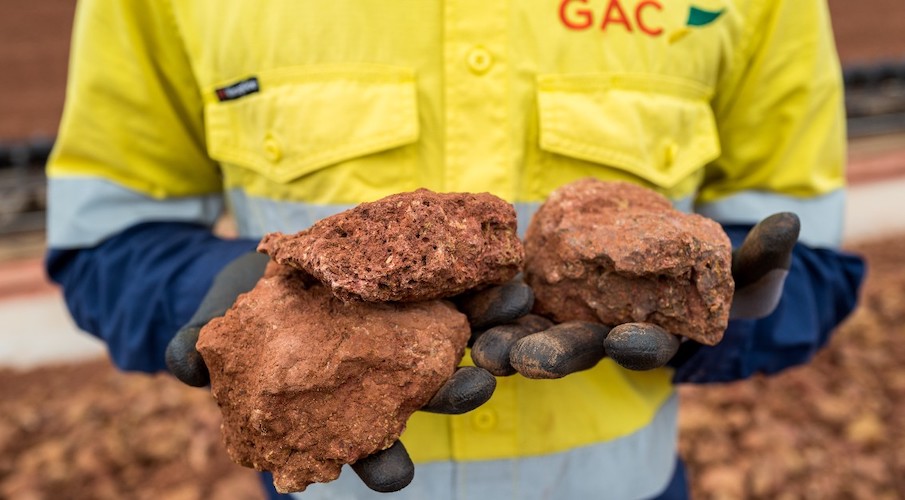

A Historical In-depth Discovery of Trade in West Africa Since 1896
Here’s what you need to know:
- CBG has operated continuously since 1973, and for the majority of that history treated the rural land surrounding its Sangaredi mining operations as state property — seizing farmland without the free, prior, and informed consent of the customary landowners who had lived on it for generations.
- Human Rights Watch documented a direct exchange between a CBG official and a community leader in 2016: when the farmer asked to be paid for his land, the official replied, “This land was given to us by the state in the 1970s,” to which the community leader answered, “No, we’ve been living here for more than 100 years, and this is our land.”
- The scandal: CBG only began paying any compensation at all in 2015 — and even then, only for trees and crops destroyed, never for the land itself — with the company only formally recognizing communities’ customary land rights and agreeing to compensate for land going forward in 2024, more than sixty years after the original 1963 agreement that created the company.
The Legal Foundation of Dispossession
It’s worth understanding precisely why CBG was able to operate this way for so long, since the underlying mechanism sits in Guinean land law itself, not simply in the company’s own individual conduct. Rural land in Guinea is traditionally organized according to customary law, recognizing a family’s, lineage’s, or community’s right to land based on generations of continuous occupation and use. Guinean statutory land law can, in principle, be interpreted to recognize these customary rights — but obtaining genuine legal protection in practice requires communities to have formally registered or recorded their customary tenure through state processes that many rural communities, occupying land their ancestors had lived on for a century or more, had never undertaken and often had no meaningful access to.
This legal gap gave mining companies operating in Guinea, including CBG, a durable justification for treating occupied farmland as effectively unclaimed state property. As Human Rights Watch’s research states directly: “Because Guinean laws don’t adequately protect rural land rights, mining companies can maintain that the land communities have occupied for generations remains ‘property of the state.”
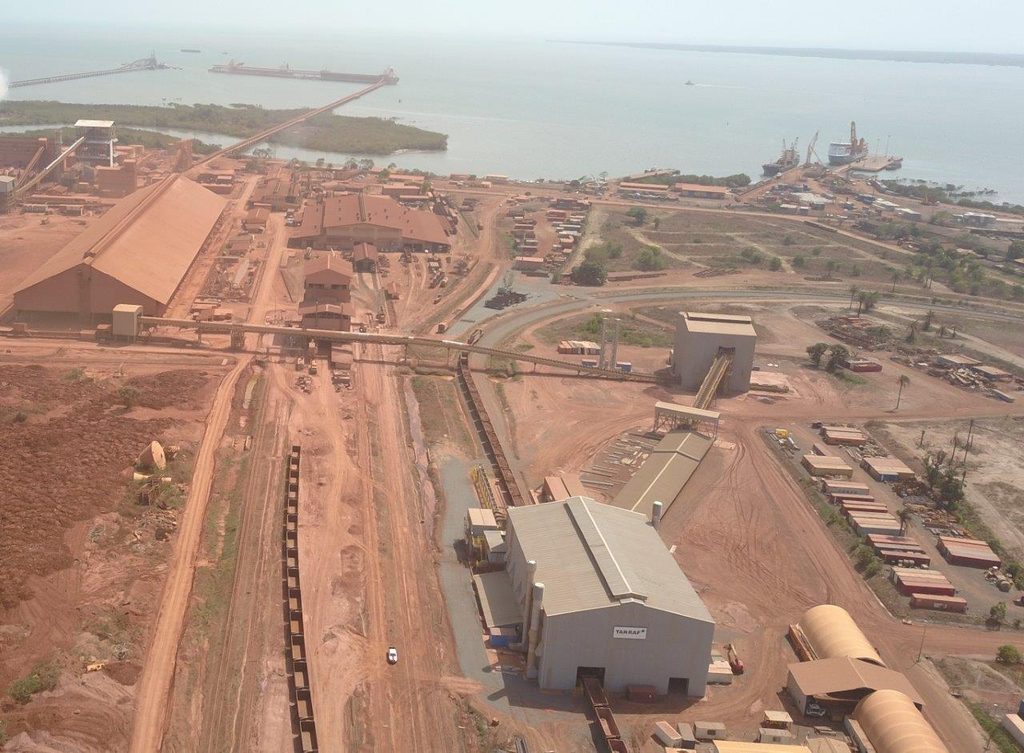
The Testimony: What This Actually Looked Like on the Ground
Here is the specific, documented exchange that captures the core of this dispute more precisely than any general description could. In the village of Hamdallaye, roughly 30 kilometers northeast of Boké, a community leader named Bah described how almost 40% of the village’s ancestral land had been expropriated for CBG’s operations since 2005 — with mining eventually forcing the village itself to relocate entirely by 2019. When Bah asked CBG in 2016 to compensate him for his land, a senior CBG official told him directly: “This land was given to us by the state in the 1970s.” Bah’s response is worth quoting precisely, since it distills the entire dispute into a single exchange: “No, we’ve been living here for more than 100 years, and this is our land.”
There is a further, similarly direct testimony worth including from another affected community. A community leader from Boundou Waadé, a village surrounded by five separate CBG mines, described the impact plainly: “They’ve expanded into our fields, the areas we depended on for food. And now much of our fertile land has been taken from us. The company has destroyed our means of subsistence.”
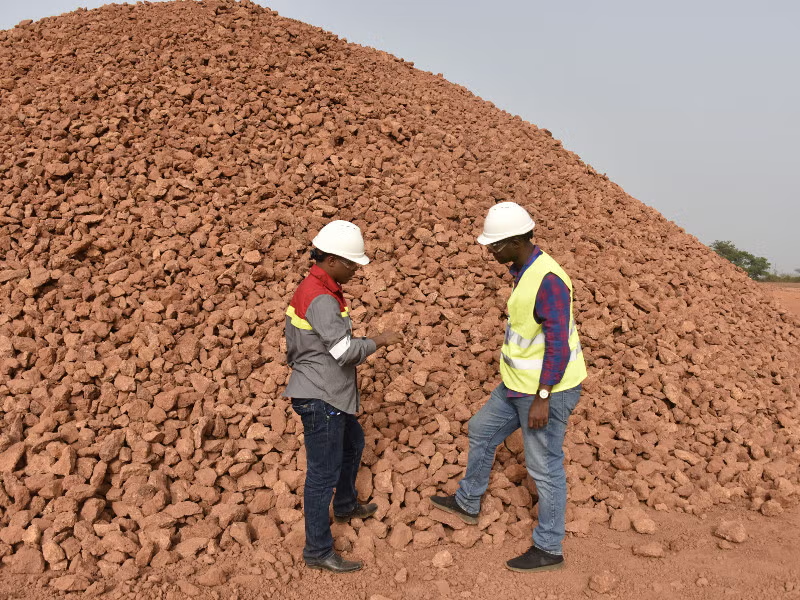
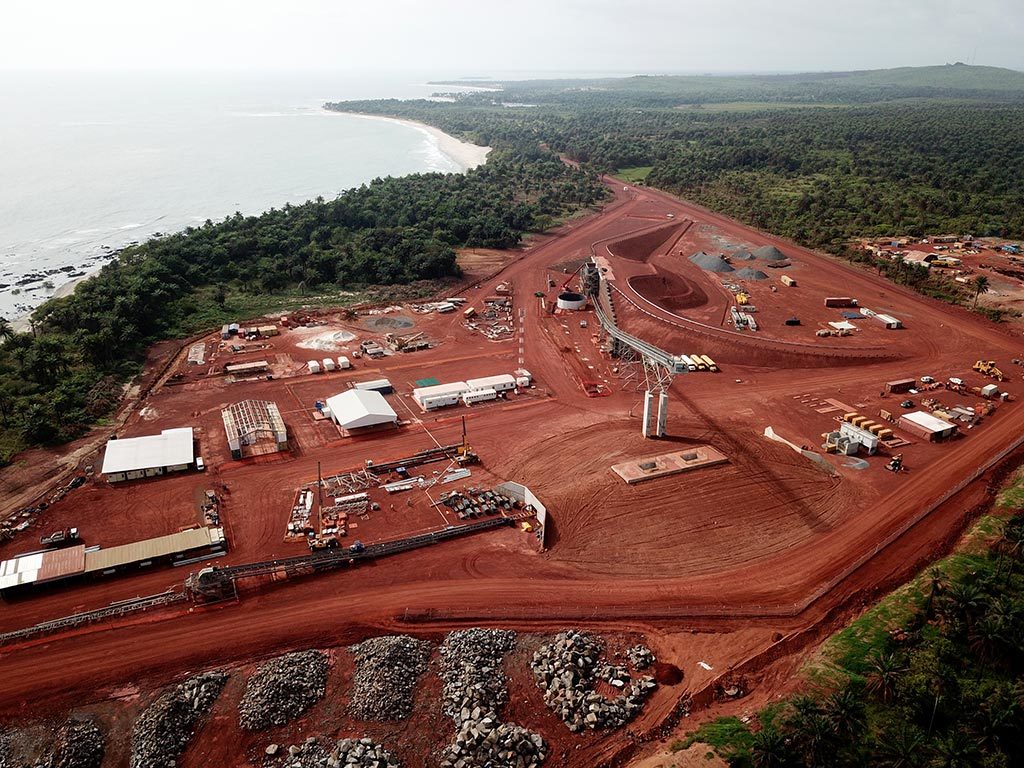
Livelihoods: International human rights groups have noted that expanding mines has caused damage to local water supplies and taken away farmland without proper consent.
The Compensation Timeline: What “Compensation” Actually Meant
It’s worth being precise about when any compensation began at all, and how limited it actually was even once it started. According to Bah’s account, CBG began paying compensation only in 2015 — a full 42 years after the company began operations in 1973 — and even then, compensation covered only trees and crops destroyed during land seizure, never the land itself.
There is a specific, quantified example worth including that illustrates how minimal even this limited compensation could be. A formal mediation request filed with the International Finance Corporation’s Compliance Advisor Ombudsman documents a case involving Paragögö village, which had existed since 1911. In 1996, CBG seized multiple named parcels of land — Bohoum Lelouma, Loppè, Dhidhidji, Thia Bholèhoun, Kounsihoun Ndjérédjiè, Ndounsihoun, Badon, and portions of Wéndou Djidè and Tigaya, land the community had held since the 19th century — without any compensation whatsoever. The same document records that of the affected landowners, “only one landowner managed to obtain compensation for the loss of his assets,” and the amount received was approximately 3 million Guinean francs — roughly $300 — an amount the complaint states was “inadequate to restore the income he expected from the sale of his harvested crops.”
The Scandal: A Formal Complaint, and an Attempt to Suppress It
Here is the piece’s most serious documented finding, worth stating directly. In February 2019, community members neighboring CBG’s expanding Sangaredi mine filed a formal complaint with the IFC’s own Compliance Advisor Ombudsman, specifically raising concerns about “uncompensated land loss and displacement, impacts on livelihoods, community safety risks, air and water pollution, inadequate consultation, information disclosure, and the effectiveness of CBG’s grievance mechanism.”
There is a genuinely troubling detail worth including about how CBG responded around this same period. According to reporting on the complaint, rather than directly addressing community grievances, “CBG sought to yet again get signatures from community members on an agreement which stated that the community recognized that the compensation offered by the company was fair and equitable,” with the same agreement requiring community members to formally waive their rights to challenge the fairness of that compensation. The reporting states this effort was “presumably aimed at preventing the community from filing this complaint” in the first place — a documented instance of a company attempting to secure legal waivers from affected communities specifically to head off formal accountability action, rather than resolving the underlying dispute on its merits.
The broader, quantified scale of environmental damage this dispossession produced is worth including for completeness. An analysis of satellite imagery covering 1974 to 2019, commissioned by Inclusive Development International, found that approximately only 10% of the land CBG has mined has undergone any form of rehabilitation — “far below industry best practice” — leaving behind extensive dead zones unsuitable for the agriculture and livestock raising that represented the primary economic activity for communities in the region.

The 2024 Shift: What Finally Changed
It’s worth stating plainly what the eventual 2024 policy change actually represents, and what it doesn’t undo. Independent research confirms that “only in 2024 did CBG begin recognizing communities customary land rights, agreeing to pay compensation for land going forward” — a genuine, if extraordinarily overdue, policy shift, arriving 61 years after CBG’s 1963 founding and 51 years after the company’s first bauxite shipment in 1973. This recognition applies to land taken going forward, not retroactively to the decades of documented uncompensated seizure already described above — meaning the communities of Hamdallaye, Boundou Waadé, Paragögö, and numerous other named villages who lost ancestral land across five decades of CBG’s operations remain, even after this 2024 shift, without any formal mechanism to recover compensation for what was already taken from them.
Close
The story of land dispossession around CBG’s Sangaredi operations is not an abstract statistic about corporate land use — it is a documented, decades-long pattern captured in the direct testimony of named individuals in named villages, from a $300 compensation payment that failed to replace a lifetime’s agricultural income, to a company official telling a farmer his own ancestral land legally belonged to a state decree from the 1970s, to a formal international complaint met with an apparent attempt to secure legal waivers before it could even be filed. CBG’s 2024 recognition of customary land rights arrived only after more than sixty years of exactly the pattern this piece has documented in detail — and it offers no remedy at all for the communities who lost their land, their crops, and their livelihoods across every one of those preceding decades.