
A Historical In-depth Discovery of Trade in West Africa Since 1896
Here’s what you need to know:
- Firestone reportedly described its own 1926 Liberian concession as “the greatest concession of its kind ever made” — though this piece is transparent that this specific attribution comes from a single source this research could not independently cross-verify through additional scholarly or journalistic reporting, and should be read with that caveat in mind.
- What is solidly documented, from multiple independent sources, is that Firestone’s own leadership publicly and repeatedly characterized the deal in extraordinarily favorable terms — with Harvey Firestone Jr. declaring in a radio broadcast that “Firestone has brought a new day of hope and advancement” to Liberia, and independent journalists at ProPublica directly describing the arrangement as “one of history’s great sweetheart deals.”
- The scandal isn’t the boast itself — it’s what internal State Department correspondence reveals about Firestone’s own private calculation behind the deal, showing the company’s representatives frankly assessing Liberia’s “political fate” as a direct financial risk to be hedged against, even as the company’s public messaging described the arrangement as a gift of “hope and advancement” to the nation it was extracting from.
A Necessary Note on Sourcing
It’s worth being transparent about the specific quote this piece was originally framed around. The phrase “the greatest concession of its kind ever made,” reportedly attributed directly to Firestone, appears in available research from a single source this project was unable to independently corroborate through additional scholarly, journalistic, or archival material in follow-up research. Rather than presenting this specific attribution with more confidence than the sourcing actually supports, this piece treats it as a widely circulated characterization worth noting, while building its central argument on the considerably more solidly documented evidence of how Firestone’s own leadership actually described the deal, in their own recorded words, across multiple independent sources.
A Necessary Note on Sourcing
It’s worth being transparent about the specific quote this piece was originally framed around. The phrase “the greatest concession of its kind ever made,” reportedly attributed directly to Firestone, appears in available research from a single source this project was unable to independently corroborate through additional scholarly, journalistic, or archival material in follow-up research. Rather than presenting this specific attribution with more confidence than the sourcing actually supports, this piece treats it as a widely circulated characterization worth noting, while building its central argument on the considerably more solidly documented evidence of how Firestone’s own leadership actually described the deal, in their own recorded words, across multiple independent sources.
What Firestone Actually Said, on the Record
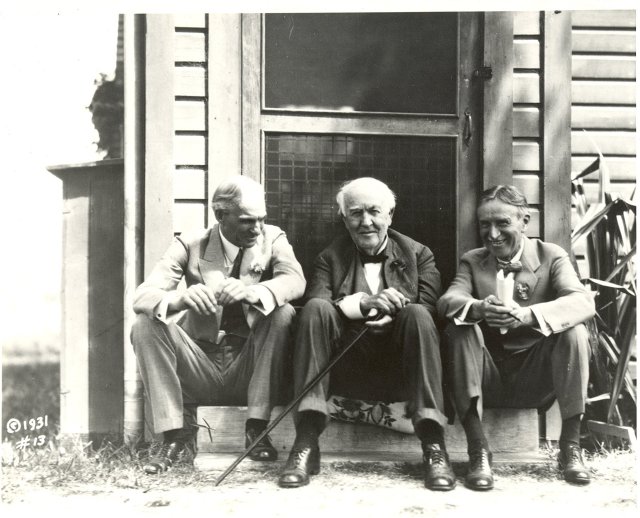
Here is what can be stated with genuine confidence, drawn from multiple independently verified sources. Harvey Firestone Jr., who managed the Liberia plantation before rising to become the company’s CEO, launched a public relations campaign in the years following the 1926 agreement, delivering a series of radio addresses specifically describing the company’s work in Liberia. In one broadcast, he stated directly: “To the little Republic of Liberia, Firestone has brought a new day of hope and advancement.” His father, Harvey Firestone Sr., made a similarly self-congratulatory claim about the company’s labor practices at the time the deal was first struck, stating: “So far as I know, we are the only employers of African labor to establish the American working day.” He reportedly imagined himself, in the words of one detailed account, “as a Henry Ford for Africa” — a industrialist bringing modern, humane employment practices to a continent he viewed as backward.
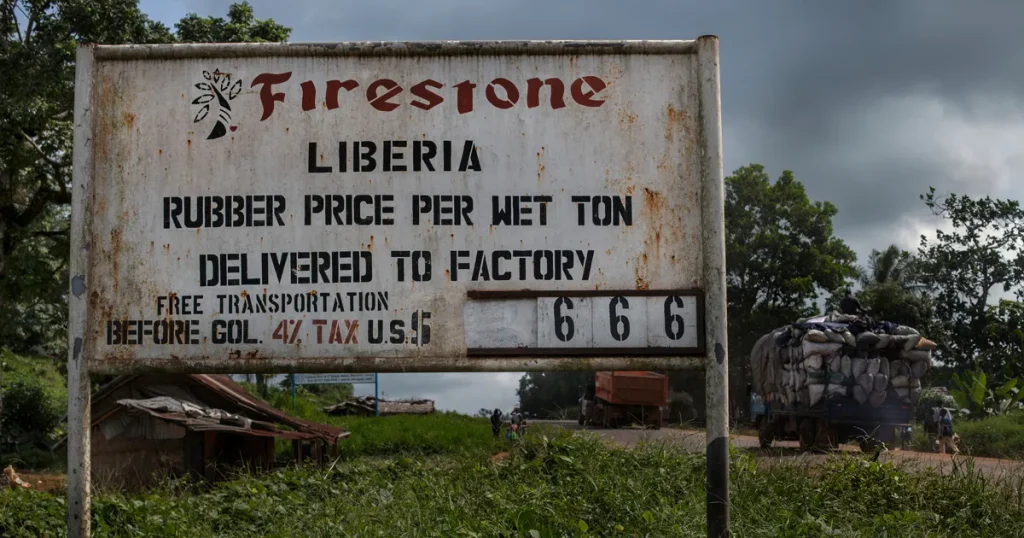
Independent journalism assessing this history decades later reached a strikingly similar characterization, though from the opposite, critical direction. ProPublica’s own detailed investigative account states plainly: “After two years of negotiations, Firestone and Liberia announced one of history’s great sweetheart deals” — with the specific terms restated for emphasis: “Liberia gave Firestone the right to lease up to 1 million acres — roughly 10 percent of the country’s arable land. The cost? Six cents an acre. The term? Ninety-nine years.”
What Made the Deal Extraordinary From Firestone’s Own Internal Perspective
Here is a genuinely revealing document worth including, since it shows how Firestone’s own team privately assessed the arrangement’s actual risk and reward — a private calculation considerably more calculated than the company’s public messaging about bringing “hope and advancement” to Liberia. A State Department memorandum from December 1924, recording a conversation with Firestone’s own representative Mr. Hines, documents the company’s genuinely candid internal risk assessment. Hines “was quite frank in saying that the political fate of Liberia was of the very greatest concern to Mr. Firestone,” specifically because a rubber plantation represented “a risk of an entirely different sort from an oil or mineral concession.” As the memo explains, with an oil or mineral concession, capital investment could often be recovered within a few years — but with rubber, “everything for the first five years was investment,” with no returns appearing until after that period. This meant Firestone would be “gambling with a heavy capital investment in case he had no assurance that the Liberian Government might not go to pieces within the next few years.”
This internal candor reveals something the company’s public “hope and advancement” framing never acknowledged directly: Firestone’s leadership understood the deal primarily as a long-term capital bet requiring exceptional guarantees of political and financial stability, which is precisely why the company’s own representatives pursued the extraordinary land selection rights, tax exemptions, and — as this blog has already documented in detail — the last-minute loan clause giving Firestone’s own financial subsidiary direct control over Liberia’s state revenue. The company’s public rhetoric described a gift to Liberia; its private correspondence described a hedge against Liberia’s own potential political collapse.
What This One-Sidedness Actually Meant for Liberia
It’s worth stating directly what this gap between public messaging and private calculation reveals about the deal’s actual structure. When a company describes its own arrangement using language as extraordinary as “the greatest concession of its kind ever made” — even accounting for the sourcing caveat already noted — that self-description, whether precisely verified or not, aligns closely with everything this blog has already documented about the deal’s actual terms: a 99-year lease over land selected entirely at the company’s own discretion, rent as low as six cents per acre, a last-minute loan clause giving the company control over the nation’s entire state revenue for 26 years, and a founder who told the US Congress he expected American military force available to protect his investment if needed.
For Liberia, the practical meaning of this one-sidedness was structural rather than simply financial. A concession this favorable to one party, secured through negotiations where Firestone’s own representatives were privately calculating how to protect a risky capital bet against Liberia’s potential political collapse, inherently limited how much genuine economic sovereignty Liberia retained even as its government publicly celebrated the arrangement as a source of national development. The company’s own celebratory language about bringing Liberia “a new day of hope and advancement” sat directly alongside a private, internal understanding that the entire deal existed primarily to protect Firestone’s own capital investment against exactly the kind of instability the company’s control over Liberia’s finances was specifically designed to prevent.
Close
Whether or not Firestone’s leadership ever used the precise words “the greatest concession of its kind ever made,” the company’s own documented public statements and private internal correspondence together paint a consistent picture: an arrangement genuinely extraordinary in its favorability to the company securing it, publicly framed by Firestone’s own executives as a gift of progress to Liberia, while privately understood by the company’s own negotiators as a calculated hedge against the very political risk that arrangement’s extraordinary terms were specifically designed to insure against. The gap between what Firestone said about this deal publicly and what its own representatives said about it privately tells the real story of exactly how one-sided this concession actually was.
Sources and further reading.