
A Historical In-depth Discovery of Trade in West Africa Since 1896
Here’s what you need to know:
- The 1926 agreement gave Firestone the right to select, wherever it wanted, up to one million acres of Liberian land for a 99-year lease, paying $1 per acre in base annual rent and just 6 cents per acre for additional leased land, while remaining largely exempt from all other taxation.
- Three separate draft agreements had already been exchanged between Firestone and Liberia’s government with no mention of any loan — until, at the very last minute, Harvey Firestone himself personally inserted a clause requiring Liberia to accept a $5 million (some sources say $2.5 million) loan from his own subsidiary, the Finance Corporation of America, at 7% interest, with loan terms giving Firestone’s own financial officers direct control over Liberia’s state revenue until the debt was finally repaid in 1952.
- The scandal, documented directly: Firestone himself told members of the US Congress that “a private loan, supported by American diplomatic pressure, and guns if necessary, was the best means to ensure adequate protection” of his investment — an open acknowledgment that he expected American military force to be available to safeguard his private commercial concession in a sovereign foreign nation.
The Terms: What the Agreement Actually Said
It’s worth examining the specific negotiated terms with real precision, since the deal’s full structure reveals a company that secured extraordinary flexibility and minimal obligation in nearly every dimension. Firestone secured the right to select up to one million acres of land — “wherever it desired” across the entire country — for a 99-year lease. The rent structure combined a base annual payment of $1 per acre for the initial acreage with a considerably lower rate of just 6 cents per acre for additional land leased beyond that base allocation. Firestone remained largely exempt from all other forms of Liberian taxation, paying instead a revenue tax on rubber sales that different sources place at either 1% or 2.5%.
In exchange, Firestone committed to investing $1 million in the country and employing 350,000 Liberians — commitments genuinely significant on paper, though worth measuring against the scale of the land grant itself. Liberia’s own settler government, for its part, was made directly responsible for “assisting in securing and maintaining an adequate labour supply” for the company — a specific obligation that, as this blog’s research into the broader Christie Scandal has already documented, connected directly to the forced-labor crisis that would erupt within Liberia’s own borders during this same period.
Clause K: The Loan Nobody Saw Coming Until It Was Too Late
Here is the piece’s central and most consequential finding, worth tracing precisely because the documented sequence of events is genuinely damning. Academic research on this agreement confirms that three separate draft agreements had already been exchanged between Firestone and the Liberian government during the negotiation process — and none of these three drafts mentioned any loan whatsoever. Only when negotiations were nearing completion was a clause inserted at the last minute — subsequently referred to directly as “the infamous ‘Clause K’” — requiring Liberia to accept a loan from Firestone’s own financial subsidiary.
The scale and terms of this loan are worth stating precisely, even accounting for a genuine discrepancy in the historical record: some sources cite the loan at $2.5 million, while multiple other accounts, including Foreign Policy’s own detailed reporting drawing on historian Gregg Mitman’s research, place the figure at $5 million, carrying a 7% interest rate. What’s consistently confirmed across sources is who actually inserted this provision and why. Foreign Policy’s account states directly: “Harvey himself inserted a last-minute addition of a $5 million loan — an attempt to tie the U.S. government’s interests to his company’s.”
The practical consequence of this loan is worth stating in full, since it extended Firestone’s influence over Liberia’s sovereignty considerably beyond the land concession alone. Academic research confirms “the terms of the loan agreement also gave Firestone complete authority over state revenues until the loan was paid back in 1952” — meaning financial officers connected to Firestone’s own lending subsidiary held direct control over Liberia’s entire government revenue stream for a period spanning 26 years, well beyond the immediate rubber concession itself.
The Admission: Firestone’s Own Words to Congress
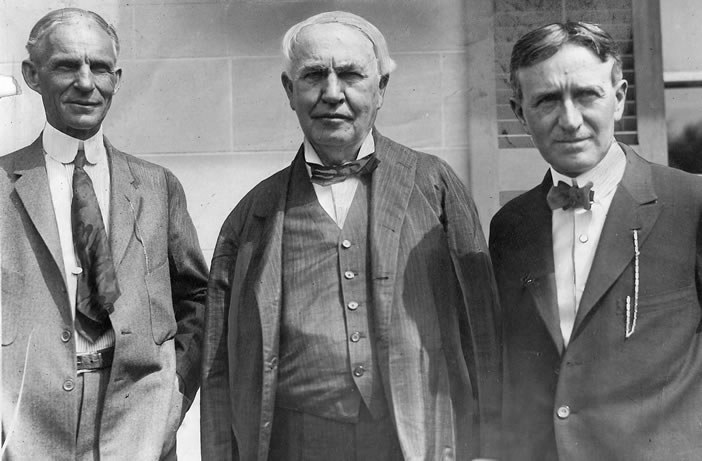
Here is the single most direct and damning piece of evidence in this entire episode, worth quoting in full because it removes any ambiguity about how explicitly Firestone understood — and was willing to state publicly — what actually stood behind his investment’s security. According to historian Gregg Mitman’s research, “Firestone told members of Congress that a private loan, supported by American diplomatic pressure, and guns if necessary, was the best means to ensure adequate protection” of his Liberian investment.
This statement deserves to be read exactly as written. Firestone was not speaking in euphemism or through an intermediary — he directly told US lawmakers that he expected American diplomatic pressure, and if necessary American military force, to stand behind and protect a private commercial rubber concession he had personally negotiated in a sovereign African nation. This is a rare instance of a corporate executive from this era stating, on the public record before Congress, the precise relationship he expected between his own private commercial interests and American state power.
Why Liberia Accepted: Genuine Desperation, & a Government That Knew It
It’s worth stating the context that made Liberia’s government genuinely willing to accept terms this lopsided, since a fair account requires acknowledging the real pressures Liberia faced rather than treating the agreement as simple corruption or naivety. Academic research states this plainly: “Desperate to ward off encroachment by French and British colonisers, Liberia accepted under duress a US$5 million loan.” This wasn’t Liberia’s first experience with high-interest foreign borrowing under external pressure — the same research documents that Liberia’s post-settler leadership had already been “compelled to undertake high-interest loans from Euro-American financiers-turned-debtors in 1871, 1906 and 1911/1912,” meaning the 1926 Firestone deal represented the continuation, and by most accounts the most extreme instance, of a decades-long pattern of Liberia trading away financial sovereignty specifically to preserve its territorial independence against surrounding European colonial powers.
There’s a genuinely striking irony worth including from a separate historical account of this same negotiation: “Both Firestone and Liberia hoped to outwit the financiers who were profiting from the status quo” — meaning Liberia’s government appears to have entered this arrangement believing, at least in part, that partnering with an American private company represented an escape from its existing predatory financial relationships, rather than the deepening of dependency the actual terms ultimately produced.
It’s worth including the direct diplomatic evidence that this arrangement drew formal international objection even at the time, since it confirms the customs-control provisions were genuinely controversial by contemporary standards, not simply viewed as unremarkable by other world powers. State Department records document Britain’s own Chargé formally raising concerns “regarding the alleged possibility, as a condition of the proposed loan agreement, that a nominee of the United States should be placed in control of Liberian customs” — a direct diplomatic protest from Britain specifically targeting the customs-control mechanism this loan established.
There’s a final detail worth including regarding US government complicity in this arrangement, since contemporary critics at the time went well beyond describing this as a purely private commercial transaction. A 1931 labor movement account stated directly that “it was the Coolidge-Hoover regime that helped Firestone grab his fat concession,” and that the same US administration “picked the expensive financial advisors who, since 1927, has been dictating the public expenditures and regulating the military establishment of the country” — a contemporary, direct allegation that the US federal government itself, not simply Firestone as a private company, actively selected the financial officials who would go on to control Liberia’s public spending.
Close
The 1926 Firestone concession was never simply a lopsided commercial lease. It began as a genuinely negotiated land agreement, went through three separate drafts with no mention of any loan, and only at the final stage had Harvey Firestone himself personally insert a clause that would give his own financial subsidiary direct control over Liberia’s entire state revenue for the next 26 years — a maneuver he later told the US Congress was specifically intended to ensure American diplomatic pressure, and if necessary military force, stood behind his private investment. Liberia’s government accepted these terms not from naivety, but from genuine desperation to preserve its independence against surrounding European colonial encroachment — a desperation Firestone’s own negotiating strategy appears to have understood and deliberately exploited at every stage of the deal’s construction.
Sources and further reading.