A Historical In-depth Discovery of Trade in West Africa Since 1896
Here’s what you need to know:
- Following the Christy Scandal’s forced labor findings, the United States, Britain, and Germany jointly demanded in January 1931 that Liberia request a League of Nations “International Governing Commission” to directly take over and administer the country — a demand President Edwin Barclay refused, stating he could not comply “without violating his oath of office.”
- The resulting multi-year standoff produced the League’s formal “Plan of Assistance,” developed through 1931-1932 — a plan that explicitly empowered Liberia’s president, working with a League financial committee, to “commence negotiations with Firestone and Finance Corporation respecting modifications in their contracts,” directly tying this sovereignty dispute to Firestone’s own concession terms.
- The scandal deepens considerably once Firestone’s own conduct during this standoff is examined directly: company founder Harvey Firestone Sr. personally lobbied President Hoover’s State Department to send an American warship to Monrovia to enforce debt payment through “a show of American military force,” which he said would give “sufficient aid and comfort to Barclay’s enemies” — an open acknowledgment that Firestone was actively pushing for pressure that could destabilize the very government resisting foreign takeover, while simultaneously employing Liberia’s disgraced former president, Charles King, as one of the company’s own lawyers.
The Ultimatum: What the Major Powers Actually Demanded
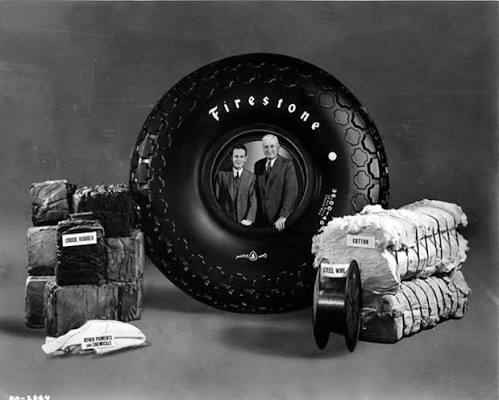
It’s worth tracing this standoff’s precise origin, since it followed directly from the Christy Scandal’s political fallout already documented elsewhere on this blog. Early in 1931, Britain and Germany, acting in conjunction with the United States, delivered a joint ultimatum to Liberia. The document, in language one contemporary account describes as genuinely “patronising,” declared that reforms the Liberian government in Monrovia “neither desired nor had the capability to carry out” required outside intervention. The specific mechanism proposed was stark: appointing foreign nationals — one from each of the intervening powers — to serve as district commissioners with authority over the entire country, reporting directly to the League of Nations in Geneva rather than to Liberia’s own government in Monrovia.
President Barclay’s response is worth quoting directly, since it captures the constitutional and moral stakes he understood himself to be defending. He replied that he could not request such a commission “without violating his oath of office” — framing the demand not simply as an unwelcome imposition, but as something his own presidential oath legally forbade him from accepting. In a subsequent address to Liberia’s Legislative Council, recorded in British parliamentary records, Barclay went further, stating directly that “an International Government Commission would be a violation of the constitution of the Republic and would also be tantamount to a surrender of its sovereignty and autonomy,” specifically stigmatizing as a “pernicious proposition” the related demand that Liberia’s own administrative personnel require approval from an outside authority.

The Plan: A Multi-Year Negotiation, Directly Tied to Firestone’s Own Contract
It’s worth correcting a common oversimplification here, since the actual historical record shows this wasn’t a single moment of confrontation and refusal, but a genuinely extended, multi-year diplomatic process. Rather than accepting outright foreign governance, Barclay offered a counter-proposal: he would ask the League of Nations to nominate qualified individuals to help reorganize the country, while Liberia’s own government retained ultimate authority. The League responded by appointing a special committee, which developed a formal “Plan of Assistance” through 1931 and 1932, with an expert commission’s report published in May 1932 and considered by the full League that October.
Here is the specific detail that connects this entire sovereignty standoff directly to Firestone’s own commercial interests, worth stating precisely since it comes from internal State Department correspondence. The League’s own Plan of Assistance explicitly provided that “the President with the financial committee of League empowered to commence negotiations with Firestone and Finance Corporation respecting modifications in their contracts as suggested in the League plan.” This confirms that the international intervention being negotiated wasn’t simply about Liberia’s general governance and labor practices — it directly and explicitly included provisions to potentially renegotiate the terms of Firestone’s own rubber concession and loan agreement, the same arrangement already documented in extensive detail elsewhere on this blog.
It’s worth noting how long this negotiation actually continued, since it undercuts any simple narrative of immediate rejection. Liberia’s own legislature formally authorized its president “to complete negotiations in connection with the League’s Plan of Assistance” as late as January 12, 1934 — meaning genuine, ongoing negotiation continued for roughly three years after the original 1931 ultimatum, before Liberia’s eventual formal rejection of the plan that summer.
Firestone’s Own Conduct During the Standoff
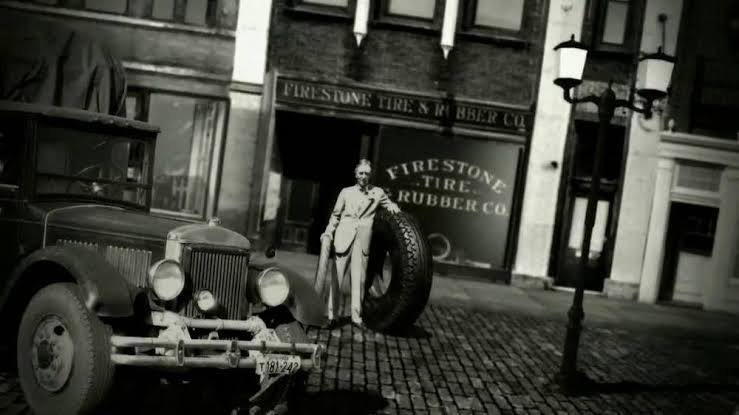
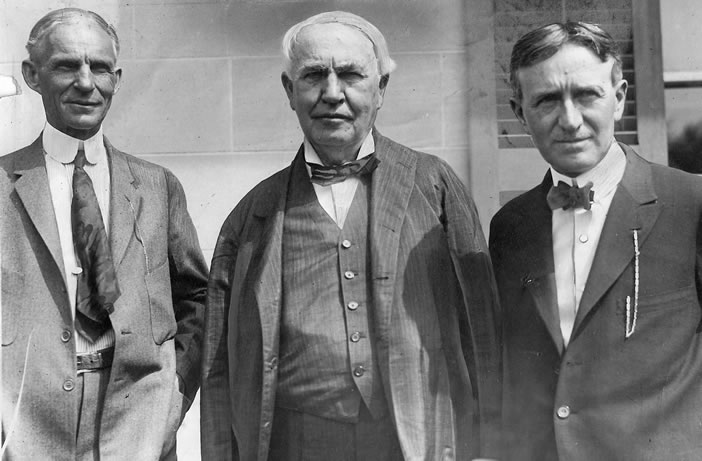
Here is the piece’s most serious and directly documented finding, worth stating in full because it reveals Firestone’s own active role in this sovereignty crisis, not simply passive commercial interest in its outcome. Even as this diplomatic standoff unfolded, Harvey Firestone Sr. continued personally urging President Hoover to take direct action, specifically lobbying the State Department to send an American warship to Monrovia to enforce debt payment through a demonstrated show of American military force. Firestone stated directly that such a show of force would give “sufficient aid and comfort to Barclay’s enemies” — an explicit acknowledgment that he understood, and apparently welcomed, the possibility that American military pressure could help destabilize or even facilitate the overthrow of the Liberian government actively resisting the League’s proposed takeover.
There is a further, genuinely telling detail worth including about Firestone’s ongoing relationships during this exact period. The company had hired Charles King — the same president who had resigned in disgrace following the Christy Scandal’s forced labor findings — as one of its own lawyers, while Firestone was separately promoting speculation that Barclay’s political opponents might be capable of overthrowing him.
W.E.B. Du Bois’s own 1933 assessment of this entire episode is worth including as a direct, contemporary intellectual critique, drawn from League documents provided to him by activist Anna Melissa Graves. Du Bois found that the League’s own investigating commission “dwelt more on general economic conditions, having quickly concluded that Liberia had successfully suppressed the forced labor practices in question” — suggesting the commission’s actual focus had shifted well beyond the original slavery allegations into broader economic restructuring. Du Bois stated the underlying dynamic directly: “United States government efforts to guarantee the profits of the Firestone Corporation” demonstrated Liberia’s vulnerability to being “ruthlessly exploited as a foundation for American and European wealth.”
The Aftermath: Reprisals Against Those Who Testified
There is a genuinely disturbing postscript worth including, since it shows the human cost this crisis continued to impose even after Barclay assumed the presidency. British parliamentary records from 1934 document continued reports “of continued misrule and of reprisals on natives who had given evidence before the Christy Commission.” Toward the close of 1931, Liberia’s own government sent what it called a “peaceful patrol” to visit affected tribal communities — a patrol under which, the same records confirm, troops “burned many villages” and left local populations “in a state of panic.” The very witnesses who had cooperated with the international investigation into forced labor faced documented violent retaliation for having done so.
Close
Liberia’s standoff with the League of Nations was never simply an abstract dispute about administrative sovereignty — it was a multi-year confrontation directly tied to whether Firestone’s own concession terms would be modified as part of any international “assistance” plan, fought by a government whose own founding president explicitly framed the choice in terms of constitutional oath and national survival. Firestone’s own founder actively lobbied for American military pressure specifically because he understood it might help destabilize the very government resisting foreign takeover — a documented instance of a private company’s commercial interests directly intertwining with the question of whether a small African republic would retain genuine control over its own government. Liberia ultimately rejected the League’s full plan in 1934, preserving formal sovereignty on paper — but the underlying economic entanglement with Firestone that had helped provoke this entire crisis in the first place remained fundamentally unresolved.
Sources and further reading.