
A Historical In-depth Discovery of Trade in West Africa Since 1896
Here’s what you need to know:
- After losing Liberia’s fraudulent 1927 presidential election, defeated candidate Thomas Faulkner accused sitting President Charles D. B. King’s government of allowing slavery to persist in the Republic, alleging senior officials were forcibly shipping Liberian laborers to the Spanish colony of Fernando Po — accusations that triggered a formal League of Nations investigation.
- The resulting “Christy” Commission — comprising one American member, one League of Nations nominee, and one Liberian appointee — confirmed the forced labor allegations in September 1930, directly implicating Vice President Allen Yancy and other senior officials, forcing both King and Yancy to resign that December.
- The scandal has a genuinely important, documented gap at its center: the Christy Report gave Firestone Tire and Rubber Company “a clean bill of health,” while a later analysis by Northwestern University economists concluded there was “an element of coercion in Firestone’s method of recruitment even 40 years after it had started growing rubber” — meaning the very investigation triggering Liberia’s presidential crisis specifically exonerated the company whose own rapidly expanding rubber operations were simultaneously reshaping the country’s entire labor market.
The Accusation: A Defeated Candidate’s Charge
It’s worth understanding precisely how this scandal actually originated, since it began not with an external discovery but with domestic political conflict. Thomas Faulkner ran against Charles D. B. King in Liberia’s 1927 presidential election — an election so fraudulent that official results showed King receiving over fifteen times more votes than there were registered electors in the entire country. Following his defeat, Faulkner accused King directly of allowing slavery to exist in the Republic, and specifically alleged that senior government officials were engaged in forcibly shipping Liberian laborers to the Spanish colonial island of Fernando Po, using Liberia’s own military force, the Frontier Force, to carry this out. Faulkner named the accused officials directly: President King himself, Secretary-General and Postmaster-General Samuel A. Ross, and Vice President Allen N. Yancy.
The Investigation: What the Christy Commission Actually Found
Faulkner’s accusations produced genuine international reaction, resulting in the establishment of a formal International Commission of Inquiry. It’s worth noting the commission’s specific composition, since it reflects the same pattern of American involvement in Liberian affairs already extensively documented elsewhere in this blog: the commission comprised one American member, one member nominated by the League of Nations, and one member appointed by Liberia’s own government. State Department records confirm the commission began its work in April 1930 and submitted its unanimous report to Liberia’s government on September 8, 1930.
The findings, published as the “Christy Report,” directly supported many of Faulkner’s original allegations. The commission found that Vice President Yancy and other Liberian government officials had approved forced labor for constructing public works such as roads, for shipping goods abroad, and — in a genuinely striking specific finding — “to humiliate native chiefs.” Some tribes were additionally found to practice domestic servitude the commission considered tantamount to slavery. Perhaps the report’s most damning conclusion was its finding that a “policy of gross intimidation and suppression ha[d] for years been systematically fostered and encouraged” specifically in order to “suppress the native” population.
The Fall: King & Yancy’s Resignations
The political consequences unfolded quickly once the report’s findings became public. Under sustained American diplomatic pressure — including a sharply worded note from Secretary of State Henry Stimson demanding “punishment of the guilty parties,” and President Herbert Hoover briefly suspending diplomatic relations specifically to force Liberia into compliance — King initially named a Liberian commission to investigate the charges against his own government officials. When evidence directly linked Vice President Yancy to the forced labor operation, both King and Yancy resigned. Edwin Barclay, then serving as Secretary of State, was sworn in as Liberia’s next president in December 1930 — the same Barclay who, as this blog’s earlier coverage has documented, would go on to renegotiate Firestone’s own concession terms during his subsequent presidency.
The Firestone Exoneration: A Genuinely Important Gap in the Record
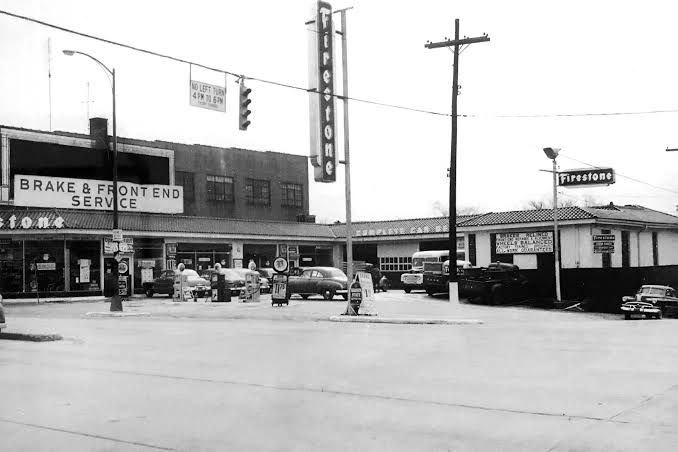
Here is the piece’s central and most consequential finding, worth stating directly, since it goes to the heart of what this scandal actually reveals about Firestone’s own position during this crisis. Academic analysis of the Christy Report notes plainly that “the report gives Firestone a clean bill of health” — meaning the official investigation into Liberia’s forced labor crisis specifically exonerated the American company whose massive rubber plantation was, at this exact moment, rapidly expanding its operations and reshaping the country’s entire labor economy.
This exoneration deserves genuine scrutiny rather than uncritical acceptance, and later scholarship has directly challenged it. The same academic source notes that “the group of economists of Northwestern University is of the opinion that there was an element of coercion in Firestone’s method of recruitment even 40 years after it had started growing rubber” — a considerably more skeptical assessment, reached decades after the original 1930 investigation, suggesting the coercive labor practices the Christy Report condemned in Liberia’s broader Fernando Po labor trade may not have been so cleanly absent from Firestone’s own recruitment methods after all.
There is a further, genuinely important structural critique of the entire investigation worth including. The same scholarly analysis “questions the impartiality of the commission’s report which condemns only Liberia, the source of supply of labour, without mentioning the Spanish colonial government, which was the source of demand for the labour” — meaning the investigation placed blame entirely on the African nation supplying forced laborers, while leaving both the Spanish colonial administration actually demanding that labor, and the American rubber company simultaneously drawing on the same national labor pool, largely outside its scope of condemnation.
There is a final, genuinely revealing scholarly interpretation worth including for a complete picture, drawn from earlier academic research on this crisis. One analysis published in the Journal of African History argues that the eventual investigation into the Fernando Po labor trade “was the product of a desire to conserve Liberian labour for use on the African mainland, rather than an attempt to relieve its abuse” — a genuinely striking suggestion that at least part of the underlying motivation for stopping the export of Liberian labor to Fernando Po may have been to preserve that same labor supply for use within Liberia itself, at precisely the moment Firestone’s own rapidly expanding plantation required exactly the kind of large-scale labor force this crisis was contesting the control of.
Close
The Christy Scandal toppled a sitting Liberian president and his vice president over documented, government-sanctioned forced labor practices — a genuine, serious human rights crisis that deserved the international scrutiny it eventually received. But the investigation’s own specific exoneration of Firestone, later directly disputed by independent academic analysis finding coercive recruitment practices persisting for decades afterward, reveals a genuinely important gap in how this crisis was actually adjudicated. Liberia’s government was held fully accountable for forced labor practices unfolding at exactly the moment Firestone’s own expanding rubber operations were reshaping the country’s entire labor market — while the company whose concession this blog has already documented in extensive detail walked away from the same investigation with, in the historical record’s own words, a clean bill of health.
Sources and further reading.