
A Historical In-depth Discovery of Trade in West Africa Since 1896
Here’s what you need to know:
- Établissements Ch. Peyrissac wasn’t a new venture when Optorg acquired it in 1955 — it was an old French family trading house founded in Bordeaux in 1872, originally built specifically around “the sale of basic goods and purchase of local production from Senegal,” meaning Optorg’s 1955 entry into West Africa bought its way into an extraction model already 83 years old.
- Optorg’s move into Africa at all traces directly back to a retreat, not an ambition: the company’s own centennial history states plainly that “the Indochina war in 1946 leads Optorg to look towards a new continent” — Africa became the destination for a French trading conglomerate being pushed out of its original Asian markets by decolonization conflict there.
- The scandal is a genuine continuity worth stating directly: in 1964, just four years after Senegal’s own independence, President Léopold Sédar Senghor personally and publicly opened a new Peugeot workshop “built and equipped by Optorg” in Dakar — the same French colonial-era commercial infrastructure this piece traces surviving decolonization not by hiding from it, but by having the country’s own founding independence leader stand beside it in celebration.
The Acquisition: What Optorg Actually Bought in 1955
It’s worth correcting a common oversimplification here, since Peyrissac’s own history reveals something more significant than a simple 1955 corporate purchase. Établissements Ch. Peyrissac was, by the time Optorg acquired it, an old family business founded in Bordeaux in 1872 — a full 83 years before this acquisition, and already active in Senegal specifically since 1908. Bordeaux is worth noting directly as a location, since it wasn’t an incidental hometown: Bordeaux merchants were among the earliest and most significant French commercial interests driving West African cash-crop extraction, with historical research already confirming Bordeaux traders had “initiated” the peanut export economy along the Senegal River valley as far back as the 1840s. Peyrissac’s own stated original purpose, worth quoting precisely, was “the sale of basic goods and purchase of local production from Senegal” — the exact same raw-produce-out, manufactured-goods-in extraction pattern this blog has already documented in extensive detail through Paterson Zochonis’s own founding trade.
It’s worth explaining why Optorg, a company with no prior West African footprint at all, chose this specific moment to acquire an existing operation rather than build its own presence gradually. Optorg’s own centennial company history states the underlying reason directly: “The Indochina war in 1946 leads Optorg to look towards a new continent.” This detail matters enormously for understanding Optorg’s actual strategic position. The company wasn’t pursuing West Africa out of confident, forward-looking ambition — it was retreating from its original wholesale distribution markets in Asia, which it had specifically built following its 1919 founding, precisely because decolonization conflict in Indochina had made those markets untenable. Optorg’s African expansion, in other words, began as a hedge against losses elsewhere, not a deliberate, African strategy.
It’s worth stating the actual scale of what Peyrissac’s distribution network covered once absorbed. By the time of acquisition, Peyrissac managed “a distribution business of bikes and mopeds all across Western Africa,” alongside representing Peugeot automobiles across multiple territories — a reputation the same company history notes “gets stronger as of 1958” specifically through Peugeot’s own racing victories in African rally events, including the East African Safari, the Bandama Rally, the Morocco Rally, and the eventual Paris-Dakar. By 1968, Optorg had extended assembly plant operations built on this same Peyrissac foundation across Ivory Coast, Cameroon, Upper Volta (now Burkina Faso), Mali, Togo, Senegal, Benin, and Chad — a genuinely continent-spanning commercial network, all traceable back to this single 1955 acquisition.
The Timing: What “Decolonization Gathering Force” Actually Meant in 1955
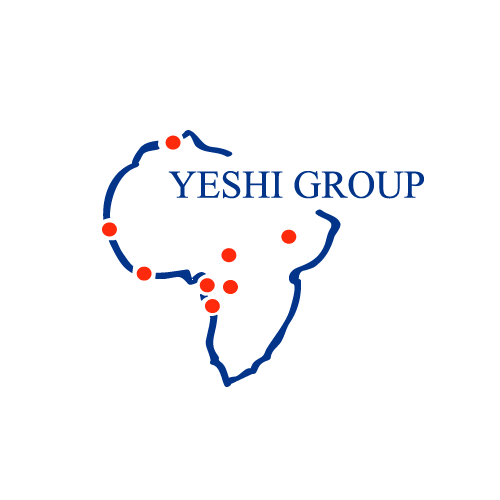
It’s worth being precise about where 1955 sits within French West Africa’s actual political timeline, since the acquisition’s timing wasn’t incidental. By 1955, the Rassemblement Démocratique Africain — the major pan-territorial African political movement founded in 1946 — had already been organizing and building political pressure across French West Africa for nearly a decade. This activity was building directly toward the Loi-Cadre Defferre of 1956, the landmark French reform that would grant West African territories substantial internal self-governance for the first time, itself a direct precursor to the full wave of independence that would follow just four years later, in 1960. Optorg’s 1955 acquisition of Peyrissac therefore occurred in the narrow, specific window between the RDA’s decade of organizing pressure and the actual legislative reform that pressure was about to produce — a French commercial conglomerate deepening its investment in West African trade infrastructure at almost exactly the moment the political order underpinning that trade was about to change permanently.
.
The Scandal: Independence Didn’t End the Relationship — It Legitimized It
Here is the piece’s central and most striking finding, worth stating directly because it complicates any simple narrative in which decolonization swept away colonial-era commercial structures. In 1964 — four years after Senegal achieved full independence from France — Léopold Sédar Senghor, Senegal’s own founding president and one of the most significant intellectual architects of African independence thought, personally opened a new Peugeot workshop “built and equipped by Optorg” in Dakar. A surviving photograph from the event shows a mechanic demonstrating engine-testing equipment directly to Senghor alongside Optorg’s own CEO, Robert Lemaignen.
It’s worth stating plainly what this moment actually represents. This wasn’t a case of colonial commercial infrastructure quietly surviving independence while independence leaders looked the other way, or a foreign company maintaining its position through political indifference. Senegal’s own president — the man whose name is inseparable from the intellectual and political project of African decolonization — chose to lend his personal, public presence and legitimacy to a facility built by the exact same French commercial conglomerate whose regional trading history traced directly back through Peyrissac’s 1872 Bordeaux founding and its original business model of extracting Senegalese produce for European benefit. Optorg’s own company history frames this moment as “a fine recognition for the Optorg quality of service” — a characterization that treats presidential endorsement of continued French commercial dominance as a simple business achievement, rather than acknowledging what it actually reveals: that formal political independence and genuine commercial decolonization were, in this case and many others, two entirely separate and disconnected processes.
It’s worth noting, for a complete and honest picture, that this specific chapter of Optorg’s West African presence has more recently begun winding down. In 2021, the Ivory Coast Peyrissac entity — by then listed on the Abidjan Regional Stock Exchange — transferred its consumer goods and building materials distribution business to companies within the Yeshi Group, with Optorg explicitly “refocusing” its African operations onto its core “Motors” and “Equipment” businesses instead. Nearly seven decades after the original 1955 acquisition, the general trading business Peyrissac represented has finally, gradually, begun to separate from Optorg’s ownership — even as the Caterpillar exclusivity this blog has already documented continues uninterrupted.
Close
Optorg’s 1955 arrival in West Africa wasn’t the confident expansion of a company building new African markets from a position of strength — it was a strategic retreat from Asian markets Indochina’s own decolonization conflict had made untenable, redirected toward an 83-year-old French trading dynasty’s existing extraction infrastructure in Senegal, acquired at almost exactly the moment West Africa’s own political order was about to transform. And when that transformation finally arrived, the relationship didn’t end or hide — it was publicly endorsed, four years into full Senegalese independence, by the very president whose name remains synonymous with the intellectual project of African liberation.
Sources and further reading.