

A Historical In-depth Discovery of Trade in West Africa Since 1896
Here’s what you need to know:
- CFAO (founded 1887), SCOA (founded 1907), and Optorg (arriving in West Africa in 1955 through its Peyrissac acquisition, itself a firm founded in 1872) built businesses on the exact same commercial model — importing European manufactured goods, exporting African raw commodities like peanuts, palm oil, cocoa, rubber, and cotton — operating as nominal competitors for the better part of a century.
- Formal inter-company pacts to restrict competition weren’t a hypothetical risk in this trading environment — they were documented, ordinary practice: British firms including John Holt and Ollivant formed explicit agreements specifically “to strangle” CFAO’s own entry into Nigeria, with historical research confirming that “on every front, French CFAO and SCOA were met with the walls set up by British inter-company agreements.”
- The scandal is the ending these three “rivals” actually arrived at: after the 1994 CFA franc devaluation, CFAO directly acquired the activities of both SCOA and Optorg — meaning the three companies West African economic history has spent decades describing as competitors ultimately consolidated into a single French-controlled commercial structure, the clearest possible proof that genuine, sustained rivalry between them was never really the point.
The Shared Playbook: Why These Three Companies Were Never Structurally Different
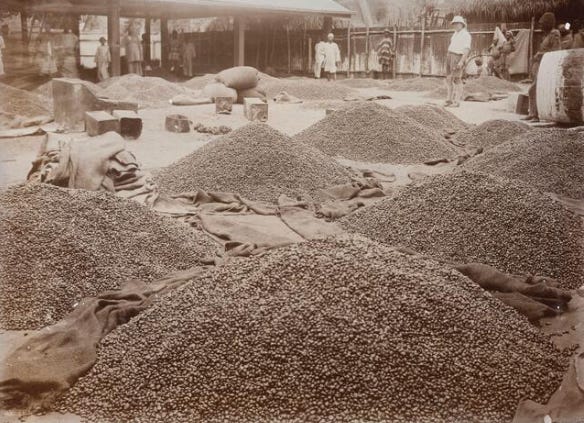
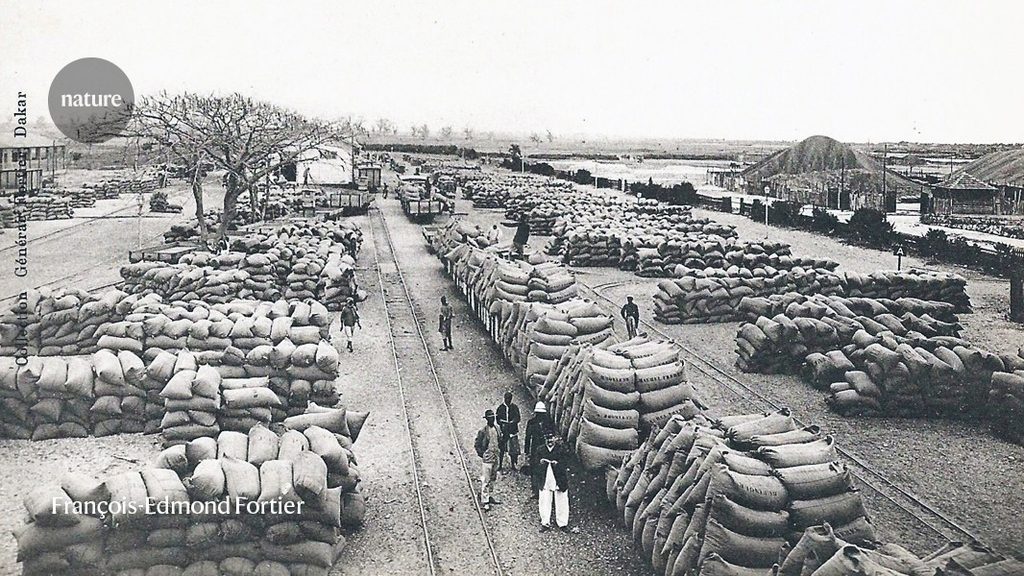
It’s worth stating plainly, before examining the collusion question directly, that CFAO, SCOA, and Optorg were never actually offering West African producers or consumers a genuine choice between fundamentally different commercial models. All three operated on an identical underlying structure: European-manufactured goods shipped into West African trading posts (comptoirs) for local sale, and West African raw commodities — peanuts, palm oil, cocoa, rubber, cotton — purchased at those same posts and shipped back to Europe. SCOA’s own historical description states this directly: the company “sells in its counters of Africa all the objects of European manufacture consumed by the population” while it “imports into Europe agricultural products and raw materials from African soil.” This is, without meaningful variation, the exact same model this blog has already documented in CFAO’s own origins and in Peyrissac’s founding purpose before Optorg absorbed it.
It’s worth understanding why this structural sameness matters economically, since it connects directly to genuine, peer-reviewed academic research on colonial trade. Scholarly analysis specifically examining French colonial trade describes these firms in precise economic terms as “monopsonistic colonial trading companies” — meaning the relevant market failure wasn’t necessarily firms colluding on prices charged to consumers, but firms functioning, whether through explicit agreement or simply through their shared small number, as the near-exclusive buyers facing African producers who had few or no alternative purchasers for their crops. This research explicitly compares “prices to African producers paid by monopsonistic colonial trading companies with those that would have been paid in a competitive market” — a direct, quantified academic framework for exactly the kind of structural entanglement this piece was asked to investigate.
The Documented Pattern: Formal Collusion Was Not Hypothetical in This Trading Environment
Here is a crucial piece of evidence worth presenting directly, since it establishes that formal, explicit market-restriction agreements between competing trading houses were a genuine, documented, and unremarkable feature of this exact commercial environment — not merely a plausible inference. Historical research on CFAO’s own expansion states plainly that when the company attempted to enter the Nigerian market, “CFAO’s entry in Nigeria was fiercely resisted by its British rivals, which sought to strangle its activities by forming pacts with each other, such as the one made between John Holt, Ollivant and” a third British firm. The same research concludes directly: “On every front, French CFAO and SCOA were met with the walls set up by British inter-company agreements.”
It’s worth stating what this specific historical fact actually establishes for the question this piece is examining. If British trading houses were forming explicit, coordinated pacts specifically to block a French competitor’s market entry, this confirms that formal inter-company collusion — agreements designed not to compete but to jointly restrict a rival’s access — was an entirely normal, expected commercial tool in this trading environment, used openly enough to be documented directly in company histories. Given that CFAO and SCOA themselves were the targets of exactly this kind of coordinated exclusionary behavior from British firms, it would be a genuine oversight to assume French houses never employed comparable coordination among themselves, particularly once CFAO, SCOA, and Optorg all found themselves operating in the same narrow, structurally similar West African wholesale market for decades on end.

The Scandal: The Rivals Eventually Just Became One Company
Here is the piece’s central, most direct piece of evidence, worth stating without qualification. Following the January 1994 devaluation of the CFA franc — an event this blog has already documented extensively in its coverage of West African currency history — archival records confirm directly: “CFAO was able to consolidate its position in Africa and acquired the activities of SCOA and Optorg, two large vehicle distributors.” SCOA’s own operations in Cameroon, Gabon, Madagascar, and Niger, and Optorg’s own vehicle distribution activities in Mali and Senegal specifically, passed directly into CFAO’s ownership.
It’s worth being precise about the scope of this consolidation, since it wasn’t a total absorption of every business line each company held. This 1994 transaction specifically concerned vehicle distribution activities — Optorg’s separate, long-standing Caterpillar heavy equipment representation through Tractafric, already extensively documented elsewhere in this blog, continued operating independently under its own ownership structure (eventually consolidating under Morocco’s ONA/Al Mada conglomerate) rather than passing to CFAO in this same transaction. But the core finding stands regardless of this nuance: two of the three companies this piece examines as supposed lifelong rivals had, by 1994, formally transferred substantial portions of their African commercial operations directly into the hands of the third.
It’s worth stating what this consolidation actually proves about the preceding decades of “competition” between these firms. A genuine, structurally meaningful rivalry — the kind that would have given African producers real leverage to negotiate better prices, or given African consumers real choice between substantively different suppliers — does not typically end with the supposed competitors simply merging their operations into a single entity once external economic pressure (the 1994 devaluation) created an opportunity to do so. SCOA’s own corporate history confirms the company “was dissolved in 1998,” just four years after this consolidation began — the natural, unremarkable endpoint of a company whose African operations had already been substantially absorbed by CFAO.
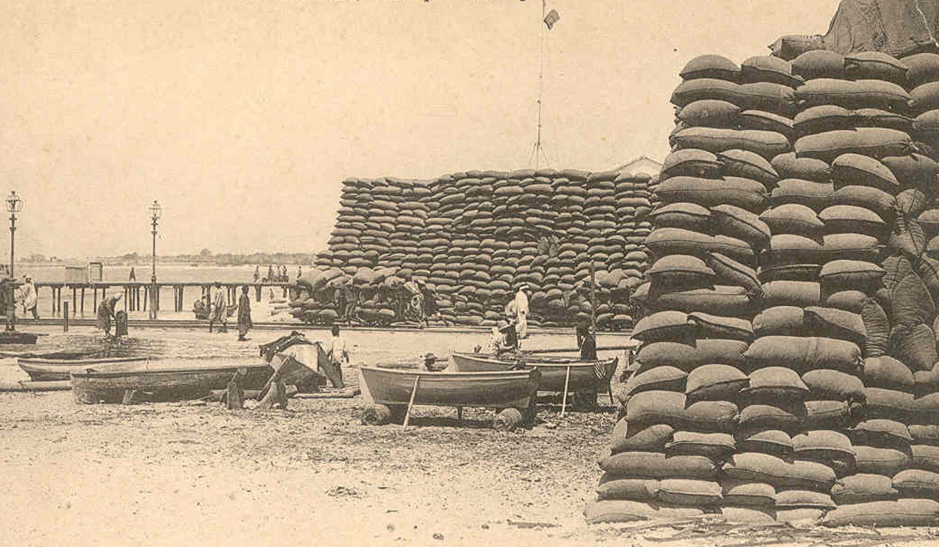
Optorg’s presence on the continent has never actually broken — it simply changed ownership structures repeatedly, from French founders to Moroccan royalty.
What This Actually Meant for African-Owned Enterprise
It’s worth stating the structural consequence this piece was specifically asked to examine. For the better part of a century, any African entrepreneur seeking to build wholesale distribution capacity at genuine regional scale faced not three genuinely independent commercial paths to potentially partner with, undercut, or compete against, but three firms sharing an identical extraction model, operating within a trading environment where formal inter-company coordination to restrict competition was demonstrably normal practice, and which ultimately proved so structurally interchangeable that two of the three simply folded into the third once conditions made consolidation convenient. There was never, in practice, a genuine “third option” or a “fourth option” that African-owned capital could have realistically built toward at comparable scale — not because African entrepreneurs lacked capability or ambition, as this blog’s own coverage of figures like Ellis, Biney, and Brown in Ashanti Goldfields’ founding has already demonstrated, but because the entire wholesale trading structure above them was never actually organized around genuine, open competition in the first place.
Close
CFAO, SCOA, and Optorg spent the better part of a century being described, including in some of this blog’s own earlier essays, as competing French trading houses vying for dominance across West African wholesale distribution. The evidence this piece has traced — an identical underlying extraction model shared by all three, a trading environment where explicit inter-company pacts to restrict rivals were documented, ordinary practice, and an ending in which CFAO directly absorbed both of its supposed competitors’ African vehicle distribution operations following the 1994 devaluation — suggests this framing understates what actually happened considerably. These were never three independent paths offering West Africa a genuine competitive marketplace. They were three parallel expressions of the same colonial commercial structure, competing at the margins while sharing the same fundamental model, until the moment arrived when simply becoming one company made more sense than continuing to pretend otherwise.

Sources and further reading.