
Bolloré didn’t just sell its African ports and rail empire for €5.7 billion in 2022.
It walked away with a €3.15 billion profit on that single transaction — booked
directly into its 2022 earnings.
Three years later, a coalition of African organizations went to a Paris prosecutor
and said, in effect, that this sale wasn’t a clean business exit. It was how Bolloré
laundered the proceeds of decades of alleged corruption.
They didn’t just sell the company. According to this complaint, they sold the
evidence — and banked billions doing it.
Here’s What Actually Happened
Let’s walk through the 2022 sale itself, cleanly, before getting into the allegations
surrounding it.
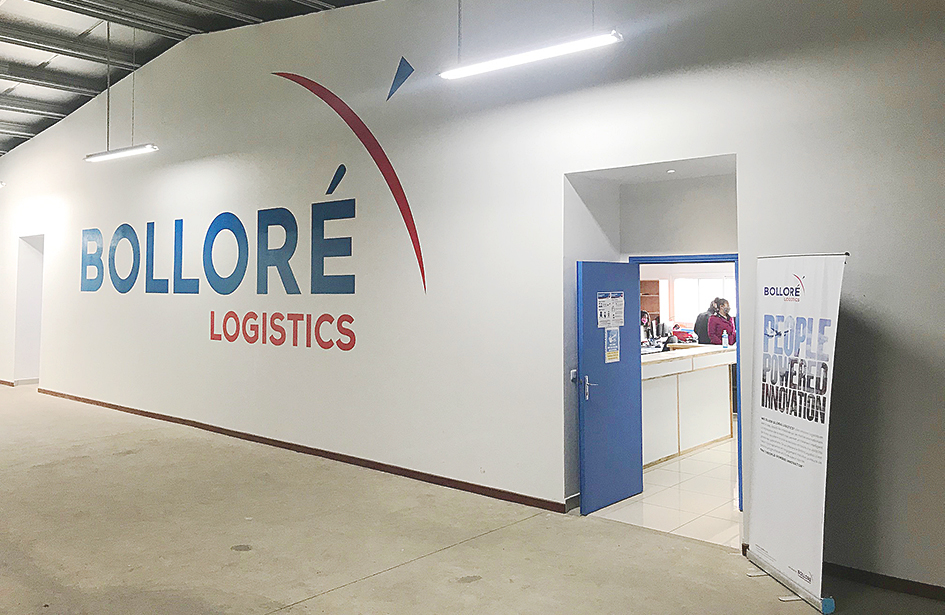
After months of exclusive negotiations announced in December 2021, Bolloré
signed a deal on March 31, 2022, to sell 100% of Bolloré Africa Logistics — every
port, rail, and logistics operation the group held across the continent, including
the Sitarail concession already covered in this series — to Mediterranean
Shipping Company (MSC).
The numbers are precise and worth stating exactly: a €5.7 billion enterprise
value, made up of a €5.1 billion share price plus €600 million in repaid
shareholder loans. The deal formally completed in December 2022. What
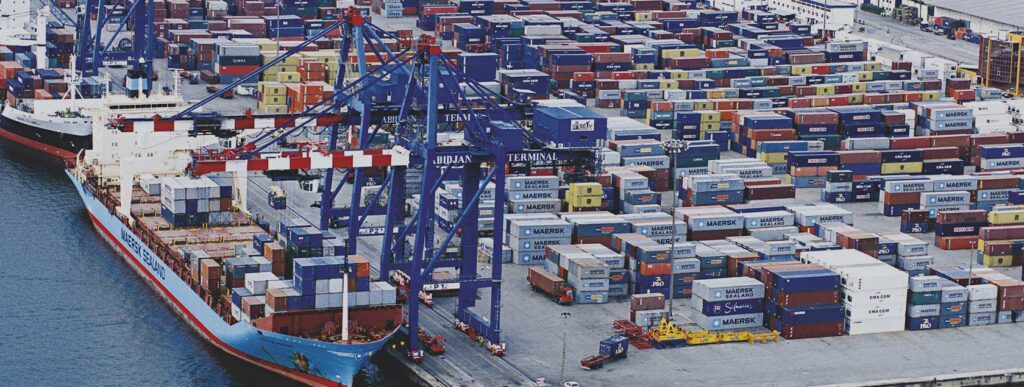
changed hands was enormous: Bolloré Africa Logistics operated in 49 countries,
across 42 ports, including 16 container terminals — one of the largest transport
and logistics footprints on the entire African continent.
Here’s the myth-check. Burkina Faso and Côte d’Ivoire’s governments did not lose
or gain anything structurally in this specific transaction. Their roughly 15%
minority stakes in Sitarail — set by the 1995 privatization already covered earlier
in this series — simply passed to a new majority owner, without either government
being a party to negotiating who that new owner would be. The sale didn’t create
their minority position. It just handed control of it to someone else.
The Complaint: What Exactly Is Being Alleged
On March 19, 2025, a coalition called Restitution pour l’Afrique (RAF) — eleven
NGOs based across six African countries, including Togo, Guinea, Cameroon,
Ghana, Côte d’Ivoire, and the Democratic Republic of Congo — filed a formal
complaint with France’s National Financial Prosecutor’s Office.
The legal theory here is genuinely novel, and worth explaining precisely. The
complaint doesn’t simply allege that Bolloré obtained its port concessions
through corruption. It alleges that the 2022 sale to MSC was itself the mechanism
used to launder the proceeds of that corruption — converting allegedly ill-gotten
port concessions into clean, transferable cash.
RAF’s president, Jean-Jacques Lumumba, framed the strategy directly: the
collective is trying to condemn what he called “the Bolloré method” — the
practices and system built to win elections and secure port management
interests across Africa.
The complaint lays out specific, documented allegations by country rather than a
vague general accusation. In Cameroon, a national anti-corruption commission
report cited in the complaint alleges Bolloré withheld €60 million in fees and
fines owed to the state for its operations at the ports of Douala and Kribi. In
Ghana, the complaint alleges Bolloré secured a port contract from
then-president John Dramani Mahama in 2014 “secretly and without tender,”
despite 56 competing companies bidding for the project — at an alleged net cost
to Ghana of $4.1 billion.
A New Legal Strategy, & a New Kind of Target
This case marks a genuine departure from the earlier Guinea and Togo case
already covered in this series. As Paris-based lawyer Antoine Vey put it, this
complaint focuses on “the corrupters” — the people and companies paying, not
just the African officials receiving.
The legal mechanism RAF is trying to activate is specific: a French policy circular
from November 2022 on returning “ill-gotten gains,” building on a 2021 French law
that established a framework for transparently restituting improperly acquired
assets to the populations of the countries the funds originally came from.
There’s a striking follow-up development worth including here, because it shows
this case is still actively expanding. RAF didn’t stop at Bolloré itself. The collective
has since gone after the banks that helped structure and value the MSC sale —
asking a Paris judge to compel Morgan Stanley to hand over internal documents
related to its advisory role, and pursuing HSBC, Société Générale, and Crédit
Mutuel over their involvement in the transaction, on the theory that facilitating
the sale of allegedly stolen assets makes them part of the laundering chain too.
This is no longer just a case about one company. It’s now testing whether the
banks that help structure large international sales can be held responsible for
the origins of what’s actually being sold.
The Myth vs. The Reality
| What people assume | What actually happened |
|---|---|
| The 2022 sale to MSC was a routine, unrelated business transaction | The sale itself is now the subject of a formal 2025 money-laundering complaint, alleged to be the mechanism that converted corrupt gains into clean profit |
| Bolloré’s 2021 fine closed the book on its African corruption allegations | That fine resolved only the company’s portion of the earlier Guinea-Togo case; individual criminal trials, including Vincent Bolloré’s, remain pending |
| This case targets only Bolloré and its executives | The case has expanded to target the banks that advised on the 2022 sale — Morgan Stanley, HSBC, Société Générale, and Crédit Mutuel |
| Burkina Faso and Côte d’Ivoire’s ownership positions changed as a result of the 2022 sale | Their roughly 15% minority stakes, set by the 1995 privatization, simply passed to a new majority owner — the underlying imbalance predates this sale entirely |
Why This Still Matters
The same railway concession secured through Burkina Faso’s uncompetitive 1995
tender, and the same “Bolloré method” documented in Guinea and Togo, are now
cited directly in a complaint arguing that the entire African logistics empire —
built through decades of concessions like these — was ultimately cashed out
through a single €5.7 billion transaction that gave Bolloré a €3.15 billion profit
and, according to RAF, a clean exit.
Whether or not the courts ultimately agree with RAF’s legal theory, the complaint
itself represents something new: African civil society organizations directly using
French law to try to claw back value from a company whose West African
infrastructure empire, this entire series has argued, was never built on a level
playing field to begin with.
This case is still active and developing — with the 2026 action against Morgan
Stanley and other banks showing it continues to expand rather than wind down.
This series will return to it as rulings and further developments emerge.