
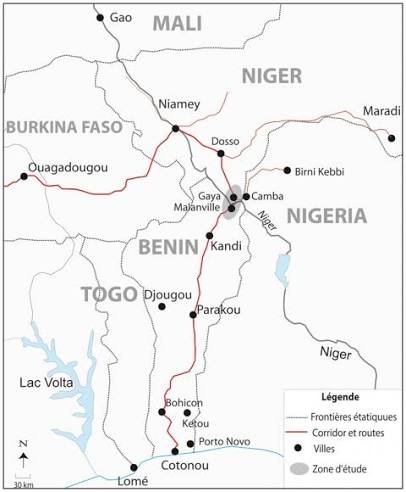
● Niger’s continued closure of its official Gaya-Malanville crossing with Benin
forces trade through workaround corridors via Nigeria. (2026)
Nine border checkpoints between Benin and Niger, fully staffed and physically
ready to reopen, sit closed anyway. Not because of any remaining technical
obstacle. Because two governments still haven’t agreed on the political terms.
This is a walkthrough of an actual, live negotiation — what each side is
demanding, what the closure has cost, and what finally got two governments
back to the table after nearly three years.
Section One: What’s Actually on the Table
On June 16, 2026, Benin and Niger issued a joint communiqué announcing that a
committee of experts tasked with examining conditions for reopening had
completed its first cycle of work and submitted conclusions to both presidents.
The recent momentum behind this is worth tracing directly. Benin’s President
Romuald Wadagni visited Niger on June 2, 2026, becoming the first Beninese
leader to visit since the 2023 coup, building on what’s been described as a
nine-point roadmap for restoring relations.
It’s worth explaining why a change in Benin’s presidency matters here specifically.
The original standoff hardened around Niger’s accusations against the previous
administration, under President Patrice Talon, who had backed ECOWAS’s
posture, including its threatened use of force against Niger’s junta. Wadagni’s
arrival as a new president gives both sides a genuine reset point that wasn’t
available while Talon remained in office.
This produced a working structure. Technical delegations from Cotonou and
Niamey closed out an initial round of talks on June 21, 2026, working from that
roadmap toward specific, actionable terms.
Section Two: The Non-Negotiables
Niger’s stated conditions are specific rather than vague. Niamey’s negotiators
have tabled two terms they describe as non-negotiable: a bilateral
non-aggression pact explicitly ruling out either country’s territory being used to
destabilize the other, and full disclosure of any foreign military presence on
Beninese soil.
These specific terms matter, tying back to the root of the dispute already
documented elsewhere in this blog. This is a direct legal and diplomatic answer
to Niger’s original, contested accusation that Benin was hosting French forces
aimed at destabilizing the AES — rather than simply denying the claim
indefinitely, this pushes toward a verifiable, binding commitment.
The negotiating dynamic here is worth stating honestly. Niger has signaled it
“won’t reopen the frontier on trust alone” — meaning nearly three years of denials
from Benin and France haven’t been sufficient on their own to resolve the
standoff, and a formal, binding instrument is now being treated as the actual
price of reopening.
The Scandal: The Price Tag on Three Years of Deadlock
Here’s the scandal at the center of this piece. Niger has lost an estimated 117
billion FCFA in public revenue as a direct consequence of the border closure — a
striking, quantified cost attached to a dispute that has spent years being fought
primarily through public accusations rather than verified evidence.
The broader economic toll fell on both sides, since neither government escaped
the cost of its own position. The IMF cited the closure as a key reason it trimmed
Benin’s 2023 growth outlook from 6% down to 5.4%, while the port of Cotonou —
once handling the vast majority of Niger’s transit trade — continued operating
well below its pre-crisis capacity years into the standoff.
This wasn’t a dispute where both sides quietly absorbed a manageable cost while
waiting out a political disagreement. It was a documented, nine-figure revenue
loss for Niger alone, compounding month after month, while the underlying
accusation driving the closure was never independently verified by either side.
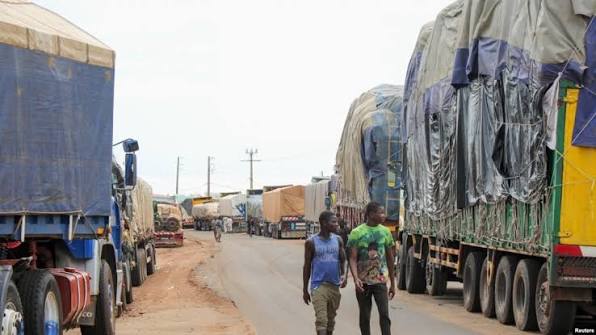
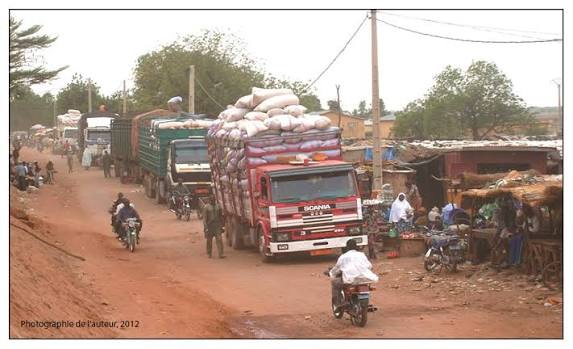
The Nigerian workaround corridor already covered extensively in this blog
stands as direct evidence of the cost. Nigeria’s reopening of the Tsamiya-Kamba
corridor at Niamey’s specific request, which helped move over 1,600 stranded
trucks in early 2026, exists entirely because the direct, cheaper route through
Benin remained closed — an entire alternate logistics network built and
maintained just to avoid resolving one bilateral dispute.
Section Three: The Wildcard
Here’s the actual turning point, worth stating plainly. This diplomatic thaw did
not follow new evidence resolving the original French military base accusation. It
followed a change in who was sitting in Benin’s presidential office.
This suggests something worth sitting with about the underlying nature of the
dispute. If a change in personnel, rather than a change in facts, was what finally
reopened negotiations after years of stalemate, it raises real questions about
how much of the original standoff was actually about verified security concerns
versus the specific political relationship between Niger’s junta and Benin’s
previous president.
Both readings deserve space here, since this is genuinely fair to read either way.
It’s possible Wadagni’s arrival simply created diplomatic room that always could
have existed under different personal circumstances. It’s also possible the
underlying security concerns were genuine and simply needed a less adversarial
counterpart to actually negotiate a verifiable resolution.
Close: Reopening Isn’t Resolution
As of mid-2026, the border has not yet reopened. Nine checkpoints remain staffed
and idle, technical talks continue, and Niger’s two non-negotiable conditions
remain unmet.
It’s worth noting what would actually constitute resolution here, as distinct from
simple reopening. A signed non-aggression pact and verified disclosure of
foreign military presence would represent something more durable than a
border simply reopening on renewed diplomatic goodwill, the way it closed in the
first place.
This negotiation, if it succeeds, will be a rare thing in this blog’s ongoing
coverage of West African trade disputes — a case where a political rupture over
sovereignty and security accusations gets resolved through a binding, verifiable
instrument rather than simply fading with time or changing leadership alone.