
Niger nationalizes the SOMAÏR uranium mine, stripping French firm Orano of
control and citing decades of disproportionate extraction (86% of output vs. 63%
ownership stake). (June 2025)
- Niger nationalized the SOMAÏR uranium mine in June 2025, stripping
French firm Orano of a stake it had held since 1968. - Niger’s stated justification: Orano took 86.3% of the mine’s output despite
holding only a 63.4% ownership stake. - Orano disputes the framing, and the two sides are now negotiating over a
specific 156-ton uranium stockpile — with Niger publicly offering to pay
France’s own shipping costs to collect its share. - The standoff has accelerated Niger’s pivot toward Russia and Iran, with
reports that Russia’s state nuclear firm was exploring a takeover of Orano
itself.
This had stopped being just a fight over percentages. It had become a live
geopolitical realignment, with a uranium mine as the board and three world
powers — France, Russia, and increasingly Iran — as the players.
This is a chess match told through each side’s actual moves, not just their public
statements.
Move One: Niger Nationalizes
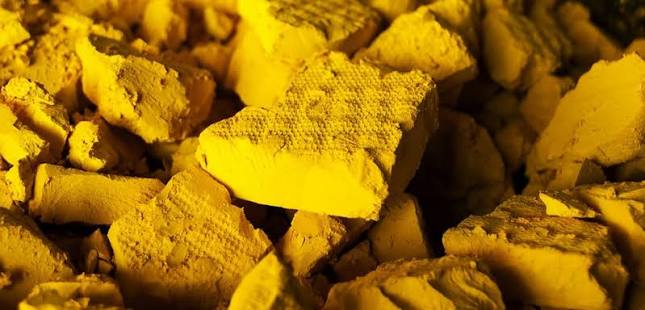
On June 19, 2025, Niger’s government announced its intent to nationalize
SOMAÏR, a joint venture Orano and Niger’s state mining company SOPAMIN had
co-owned since 1968.
The government’s stated justification was direct: “Faced with the irresponsible,
illegal, and unfair behaviour by Orano, a company owned by the French state, a
state openly hostile toward Niger since July 26, 2023 … the government of Niger
has decided, in full sovereignty, to nationalise Somair.”
The specific number driving this claim is worth restating. Orano held a 63.4%
stake in SOMAÏR, but Niger’s government said the company had taken 86.3% of
everything the mine produced between 1971 and 2024 — the gap already explored
in this blog’s earlier coverage of the dispute’s competing explanations.
This wasn’t Niger’s opening move in the broader standoff. In 2024, Niger had
already stripped Orano of operational control at its three main sites — SOMAÏR,
Cominak, and Imouraren, one of the largest untapped uranium deposits on Earth
— making the June 2025 nationalization the culmination of a longer campaign,
not a sudden strike.
Move Two: Orano Counters
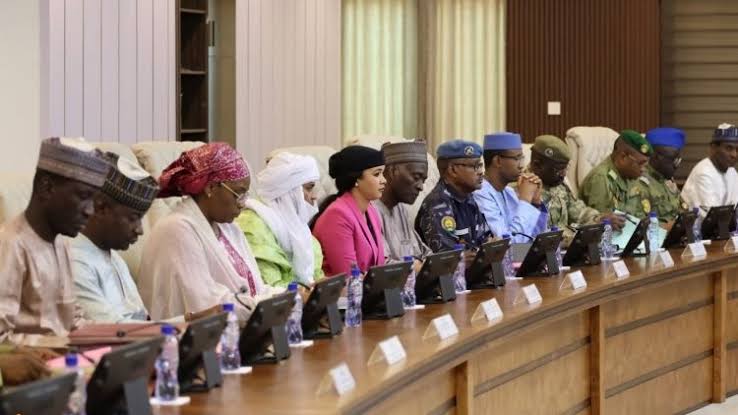
Orano’s response escalated the dispute into formal international legal territory.
The company filed for arbitration at the International Centre for Settlement of
Investment Disputes (ICSID) in March 2025, seeking compensation for its losses
and asserting rights over its share of the stockpile.
Orano’s own stated position on the escalating campaign against it was pointed:
the company condemned what it called a “systematic campaign to dispossess the
group of its mining assets,” in violation of agreements it said bound both the
company and the Nigerien state.
There’s financial pressure Orano says it was already under before
nationalization, worth adding for necessary balance. The company stated its
Nigerien state partner SOPAMIN had avoided sharing production costs during
periods of low uranium prices, forcing Orano to purchase additional uranium
above its shareholding just to keep the joint venture financially viable — a claim
that complicates a purely one-sided reading of the “86% vs. 63%” figure.
The Scandal: The “Poisoning Campaign” Accusation
Here’s the sharpest, least-covered accusation in this dispute, since it escalates
well beyond a standard commercial or ownership disagreement. Niger’s
government has also accused Orano of running a “campaign to poison” the
Nigerien government, and separately linked the company to supporting
terrorism in the Sahel — allegations far more serious than a dispute over
extraction percentages.
This deserves careful, fair framing, since these are serious, unverified claims
made by one party in an active dispute. There is no independent corroboration
of a literal poisoning plot presented in the available reporting, and Orano has
firmly denied any wrongdoing, describing Niger’s actions as part of a strategy to
damage the company’s reputation.
Regardless of whether these specific allegations hold up, their public use signals
just how far this dispute has moved from a contract disagreement into full
political warfare, with rhetoric on both sides shaping international perception as
much as the actual legal proceedings.
Move Three: The Board Widens — Russia and Iran Enter
As relations with France collapsed, Niger’s military government moved to build
closer ties with Russia and, more recently, Iran — explicitly framing new resource
partnerships as a path to genuine sovereignty rather than a straightforward
business decision.
Here’s a striking, specific detail about Orano itself potentially changing hands. A
June 2024 Bloomberg report indicated that Russia’s state-owned nuclear
company, Rosatom, was in talks to acquire Orano — raising the possibility that
the very company Niger was fighting to remove could end up under the control
of the country Niger was now courting as a replacement partner.
There’s a framing risk in this pivot worth stating fairly. One perspective, reflected
in commentary examined for this piece, argues Africa should be cautious about
trading one set of unequal foreign partnerships for another, cautioning nations
to look for genuine “partners,” not simply new “masters” wearing a different flag.
Move Four: The Latest Position — Niger’s February 2026 Offer
Bring the chess match to its most current position. In a televised address,
President Abdourahamane Tiani laid out Niger’s calculation for the specific,
disputed uranium stockpile still sitting at the mine.
Tiani’s own words are strikingly specific, and even generous in tone: “France is
entitled to 63.4% of the 156.231 tons. If they want it shipped tomorrow, we will cover
the transport costs ourselves, because they were present when it was produced.
But everything produced since then belongs to Niger. And it will remain Nigerien,
Inshallah.”
This offer signals something worth unpacking. Niger isn’t simply refusing to
engage with Orano’s ownership claims — it’s proposing a specific, calculable
settlement for uranium produced before the nationalization, while drawing an
absolute line at everything extracted afterward. That suggests the dispute may
be moving toward a negotiated, if still unresolved, resolution on at least this
narrow question.
Close: Who’s Actually Winning This Match
Neither side has achieved a clean win. Niger has secured physical and legal
control of a resource it argues was extracted unfairly for decades, but remains
locked in international arbitration it cannot simply walk away from. Orano has
lost operational control of a strategic asset but retains a live legal claim and, so
far, hasn’t fully lost French government backing.
The board itself has changed shape entirely. What began as a bilateral mining
dispute has pulled in Russia, Iran, and international arbitration bodies,
transforming a question about extraction percentages into a live test case for
how resource-rich African nations navigate sovereignty claims against former
colonial partners in an increasingly multipolar world.
This is the same underlying dispute already explored in depth elsewhere in this
blog — but viewed here through its geopolitical dimension, showing that a fight
over uranium percentages was never really contained to just Niger and France to
begin with.