
Here’s what you need to know:
● ECOWAS reaffirmed its 1979 commitment to free movement of people and
goods in 2025, even as the AES rupture strained the bloc’s cohesion.
● ECOWAS’s own Director of Free Movement has publicly admitted member
states themselves are the primary obstacle to enforcing it: “We are the
killers ourselves.”
● This isn’t a new problem — Nigeria expelled up to 1.3 million West Africans,
mostly Ghanaians, in 1983 and 1985, in direct violation of the same protocol,
giving rise to the infamous “Ghana Must Go” bags.
● Today’s enforcement gap looks different but persists: one Nigerian driver
reported paying bribes at more than 30 checkpoints on a single
Lagos-to-Accra run.
This is a case file — evidence gathered across more than four decades —
examining a single, simple legal commitment ECOWAS made to its own citizens in
1979, and just how consistently that commitment has been broken.
Three exhibits, one confession, and a verdict.

Exhibit A: The Original Promise
The ECOWAS Protocol on Free Movement of Persons, Right of Residence and
Establishment was adopted in May 1979, promising three phased rights — 90-day
visa-free entry, right of residence, and eventually the right to establish a
business — across all member states.
The ratification pattern set up decades of trouble from the very beginning. While
all member states ratified the core 1979 protocol, only 4 of 15 states ever ratified
the supplementary protocols meant to interpret and enforce it, leaving
enormous room for individual national interpretation from day one.
It’s worth being clear about what this protocol was actually meant to fix. It was a
direct corrective to the arbitrary colonial-era borders already documented
extensively elsewhere in this blog’s history series — borders that had split
families, ethnic groups, and trading networks apart. Free movement was
conceived as reversing that colonial legacy, not just offering an economic
convenience.
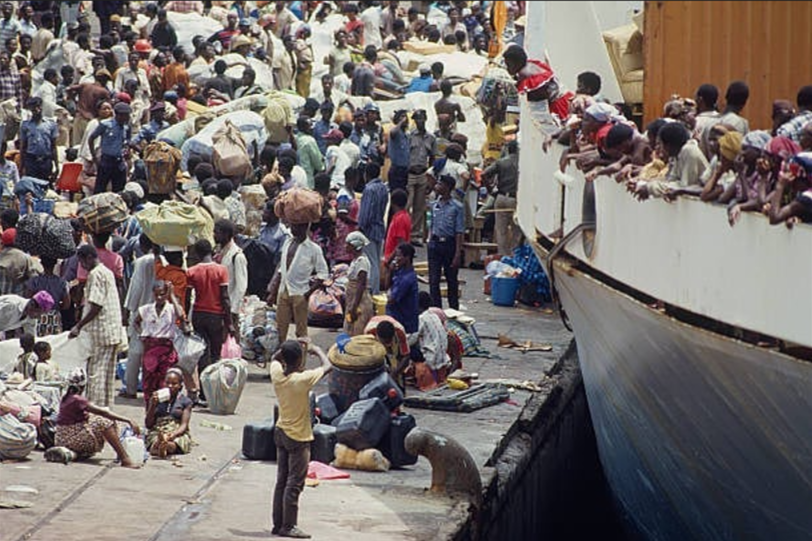
Exhibit B: The First Major Violation
Here’s the case file’s most damning early evidence. In 1983, and again in 1985,
Nigeria’s government invoked its own domestic law to revoke Articles 4 and 27 of
the very protocol it had signed, expelling between 0.9 and 1.3 million non-national
residents — the overwhelming majority of them Ghanaian.
The human and cultural legacy this left behind is still visible today. The mass
expulsions gave rise to the term “Ghana Must Go,” now permanently attached to
the woven plaid bags migrants used to carry their belongings during the exodus
— a phrase and an object that remain instantly recognizable across West Africa
and beyond, decades later.
This wasn’t a minor technical breach. It was one of the founding members of
ECOWAS unilaterally reversing its own free movement commitment, at the exact
moment the protocol was supposed to be proving itself, over a genuine domestic
economic downturn that made hosting foreign nationals politically inconvenient.

Exhibit C: The Modern Pattern
Bring the case file into the present with direct testimony. Joseph Dibang, a
Nigerian commercial driver, described his regular Lagos-to-Accra route in detail,
noting the trip takes 12 to 13 hours specifically because of “unnecessary
stoppages.”
His specific, granular account of the extortion is worth quoting directly: “Each
Ghanaian checkpoint collects 10 cedis (over 1,000 naira) and there are more than
30 checkpoints.” A single route, one country’s checkpoints alone, adding up to a
running informal tax nobody in the ECOWAS treaty ever authorized.
There’s an aggravating security context specific to 2025 worth including. Reports
found terrorist attacks on Nigeria, Benin, and Niger’s shared borders rose by
262% in 2025 — meaning the same borders where extortion checkpoints already
slow legitimate travelers have simultaneously become significantly more
dangerous, compounding the protocol’s practical failure.
The Confession
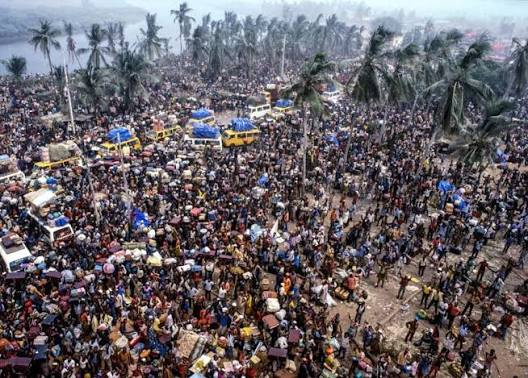
Here’s the scandal’s centerpiece — an admission from inside the institution
responsible for enforcement. Albert Siaw-Boateng, ECOWAS’s own Director of
Free Movement of Persons and Migration, addressed the ECOWAS Parliament
directly on the protocol’s poor enforcement.
His statement is as close to a confession as an institutional case file ever gets: “It
tells us that we member states are the killers ourselves. These are clearly signed
by the authority of members of states for member states to implement. Nobody is
implementing. We don’t have ECOWAS police or immigration but then, these are
dependent on member states to implement.”
This admission matters enormously for the case file. This isn’t an outside critic or
an advocacy group making this accusation — it’s the ECOWAS official whose
actual job is free movement enforcement, stating plainly that the institution has
no independent mechanism to compel the very governments that signed the
protocol to actually honor it.
Closing Argument: The Verdict
ECOWAS’s 2025 reaffirmation of free movement commitments, even amid the AES
rupture, has to be read against this full 46-year record — a protocol reaffirmed
rhetorically far more often than it’s been reliably enforced.
There is a genuine, open question about reform. Lawmakers have called for a
binding West African Parliamentary Action Plan with enforceable timelines for
eliminating illegal checkpoints, alongside urgent calls to ratify the African
Union’s own continental free movement protocol before a December 2027
deadline.
The case file doesn’t show a single dramatic betrayal. It shows a pattern,
stretching from a mass expulsion in 1983 to a driver counting checkpoints on his
phone in 2025, of a promise that has been formally reaffirmed at nearly every
ECOWAS summit and genuinely enforced at almost none of them.