
● AES imposes a 0.5% import levy on all goods from ECOWAS countries,
directly contradicting the ETLS’s duty-free framework. (March 28, 2025)
A bold new “Confederal Levy,” introduced as a declaration of financial
independence from ECOWAS — a symbol of the Sahel states finally standing on
their own.
That’s how AES presented it. Here’s the twist. The rate they chose was 0.5%. The
exact same rate, applied to the exact same kind of transaction, that ECOWAS
itself has been charging for over 18 years to fund its own operations.
They didn’t invent a new system to break free from ECOWAS. They copied
ECOWAS’s own homework, changed whose name was on the bank account, and
called it sovereignty.
Here’s What Actually Happened
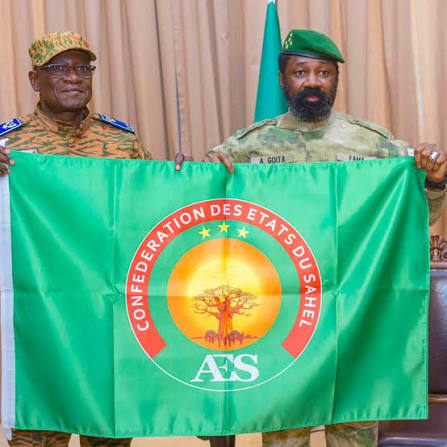
On March 28, 2025, the heads of state of Mali, Niger, and Burkina Faso jointly
announced the “Confederal Levy” (PC-AES) — a 0.5% charge applied to goods
entering the AES bloc from outside countries.
Here’s how it works. Humanitarian aid, diplomatic goods, and intra-bloc trade are
exempt. Customs authorities in each of the three countries collect the funds and
deposit them into a special AES account, with annual audits and financial
reports promised for transparency.
The stated purpose, in the AES’s own words, is to fund the alliance’s operational
capacities and “integration objectives” — including plans for a shared biometric
passport system and closer military and economic coordination.
Here’s the myth-check. There’s a real contradiction sitting right in the middle of
this policy. The levy applies specifically to goods from ECOWAS countries, even
though ECOWAS had explicitly stated that AES countries would continue to be
treated under the ETLS’s duty-free framework during the separation period. This
was not a tax on outside trade partners. It was a tax aimed directly at the bloc
AES had just left.
The Scandal: The “Independence Tax” Is a Copy of the System
They Left
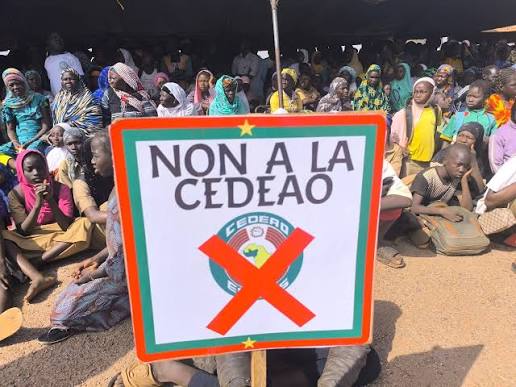
Here’s the sharpest fact in this entire story. ECOWAS’s own Community Levy — in
place for more than 18 years — charges exactly 0.5% on goods imported from
non-ECOWAS countries, and functions as the bloc’s primary funding source,
covering roughly 75 to 80% of all ECOWAS programs and activities.
Lay the comparison out side by side: same rate, same basic mechanism. A flat
percentage charge on qualifying imports, collected by national customs
authorities, funneled into a shared regional account to fund joint political and
administrative projects.
AES’s central pitch for this levy was “financial independence” from ECOWAS. Yet
the actual instrument chosen to build that independence is structurally identical
to the exact ECOWAS mechanism it claims to be moving beyond — just redirected
toward a new set of institutions and a new set of leaders.
This is the real scandal of the story, distinct from any single act of corruption. It’s
a rhetorical and political sleight of hand: sovereignty framed as a clean break,
delivered through the reuse of the departed institution’s own financial
architecture.
Why Copying the Levy Doesn’t Mean Copying the Trust
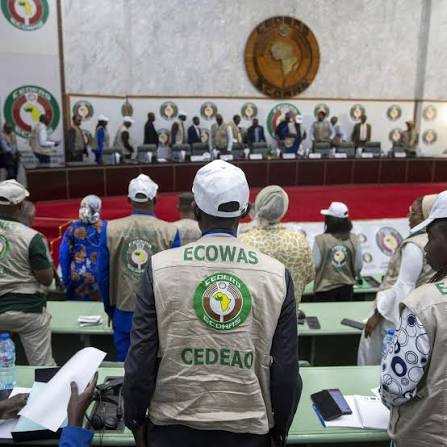
There’s a crucial difference underneath the identical rate, because a similar
mechanism doesn’t guarantee a similar outcome. ECOWAS’s levy operates within
a 15-member bloc with established audit institutions, a functioning Parliament,
and decades of accumulated — if imperfect — accountability infrastructure.
Contrast that directly with AES’s version: a brand-new, three-country levy,
administered by governments that came to power through military coups,
promising “annual audits and financial reports” with no long track record yet to
judge those promises against.
The immediate economic fallout has already been documented elsewhere in this
series. Analysts warned the levy would increase trade costs, disrupt supply
chains, and drive inflation in the AES countries — exactly the kind of
consequence that materialized in the 18% Sahelian food inflation figure already
covered in this blog.
Here’s the sovereignty point worth making precisely. Adopting the same revenue
mechanism as the institution you’re rejecting isn’t inherently wrong. But branding
it as a clean, independent break while quietly relying on the departed bloc’s own
playbook raises real questions about how much of this is genuine structural
change versus political rebranding.
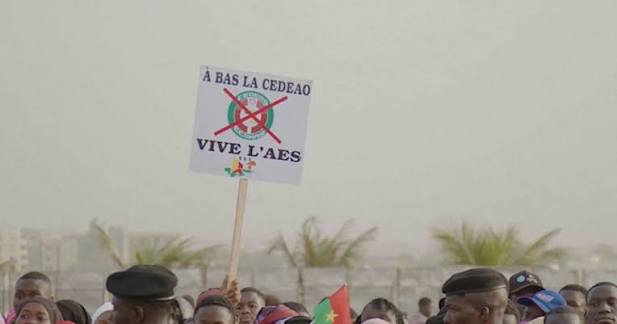
The Myth vs. The Reality
| What people assume | What actually happened |
|---|---|
| The AES levy represents an entirely new, independent economic system | It charges the identical 0.5% rate as ECOWAS’s own longstanding Community Levy |
| The levy is a standard tariff any sovereign bloc would introduce on outside trade | It directly targets ECOWAS member states, despite ECOWAS’s stated intention to maintain duty-free treatment during the separation period |
| This measure was purely symbolic and had little real economic impact | It has already contributed to documented inflation and trade disruption in the very countries it was meant to benefit |
| AES’s financial model is structurally distinct from ECOWAS’s | The rate, mechanism, and basic revenue logic mirror ECOWAS’s own Community Levy almost exactly |
Why This Still Matters
Whether it’s a currency whose name got hijacked, a border reopening that’s really
a workaround, or an “independence tax” borrowed almost line for line from the
institution it claims to reject, this series keeps finding the same pattern:
declarations of sovereignty that turn out to be more rebrand than rebuild.
AES may well build genuine independent institutions over time. But on day one,
its flagship financial independence measure was, structurally, ECOWAS’s own
idea, wearing a different flag.