

A Historical In-depth Discovery of Trade in West Africa Since 1896
Here’s what you need to know:
- Lebanese and Syrian traders became essential middlemen in West Africa’s colonial economy by extending credit to farmers “sometimes at exorbitant rates,” a practice serious enough to spark direct intervention from colonial governments in the 1920s.
- When diamonds were discovered at Sierra Leone’s Kono District in 1930, the first Lebanese trader arrived on the scene two years before British colonial administrators did.
- The scandal: by the 1950s, as much as 20% of the entire world’s diamonds may have passed through Lebanese trading networks smuggling out of Sierra Leone — and after independence, one Lebanese businessman, Jamil Mohammed, was handed direct control of the nationalized diamond mines by President Siaka Stevens, before being sentenced to death for his role in a failed 1987 coup plot.
- The pattern hasn’t ended: a modern Lebanese-Sierra Leonean businessman, Kassim Tajideen, was convicted of money laundering tied to diamond trading and separately investigated for financial ties to Hezbollah, showing the same trading networks still operate at the center of West Africa’s most sensitive economic and security questions today.
This is the story of how Lebanese and Syrian traders went from extending small loans to West African farmers to having one of their own effectively run a nation’s diamond industry — and later stand trial for plotting to overthrow its president.
This is a generational history, tracing how a small trading community accumulated real economic and political power in West Africa across roughly a century, and the scandals that marked nearly every stage of that climb.
Generation One: The Credit Trap
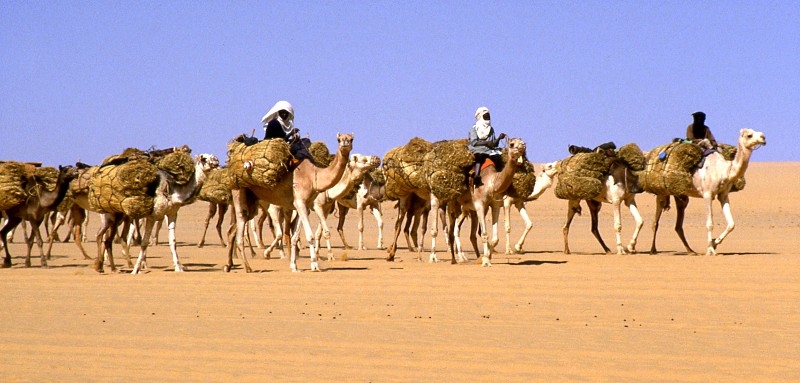
Lebanese and Syrian traders built their initial foothold in West Africa’s colonial economy through credit. By the 1920s, they had gained meaningfully better access to credit than most competing traders, and began extending that credit directly to agricultural producers in the interior.
Here’s the scandal, and it’s essentially identical to a mechanism this blog has already documented with CFAO’s factorerie system. This credit was extended “sometimes at exorbitant rates” — usury serious enough that it directly sparked intervention from colonial governments trying to rein in the practice.
The strategic advantage this built over time is worth explaining. Rather than diversifying into other business sectors, Lebanese traders concentrated their returns from commerce directly back into expanding their purchases within the same trade — a deliberate reinvestment strategy that let them steadily outcompete indigenous traders through the 1930s.
Generation Two: The Crisis That Made Them Stronger
The Great Depression’s role is worth introducing directly, since it’s a striking and counterintuitive turn. Rather than weakening Lebanese trading networks, the worldwide economic collapse of the early 1930s actually strengthened their position, because smaller African-owned trading enterprises were hit hardest by the downturn and often couldn’t survive it.
The diamond discovery that reshaped everything that followed is worth bringing in. When diamonds were discovered at Sierra Leone’s Kono District in 1930, the first Lebanese trader reportedly arrived on the scene two years before British colonial rulers did — positioning Lebanese traders at the center of Sierra Leone’s most valuable resource before formal colonial administration had even caught up.
There’s a direct connection to a company already covered elsewhere in this blog worth noting. The Sierra Leone Selection Trust’s formal 99-year diamond mining monopoly, already documented in this blog’s earlier coverage, did little to actually stop Lebanese involvement in the trade — with many Lebanese traders deported in the 1940s specifically for illicit diamond trading.
The Scandal: One in Five of the World’s Diamonds
Here’s the scale of the smuggling operation, and the figure is genuinely staggering. By the 1950s, diamonds had become the single most important business sector for Lebanese traders in Sierra Leone, and as much as 20% of all diamonds on the entire world market may have passed through their hands during this period.
The mechanism that let this scale of smuggling persist for decades is worth explaining. As security tightened around the formal Kono diamond district and the Freetown export center, illegitimate diamonds were simply diverted around those high-security points and routed to Liberia instead, creating what researchers describe as an established illegal diamond pipeline between the two countries.
This wasn’t a marginal criminal fringe operating on the edges of a legitimate diamond industry. It was, by some estimates, a substantial fraction of the entire global diamond trade, running through a trading network that had built its position specifically because it moved faster than colonial administration itself.
Generation Three: From Trader to Kingmaker
Bring the story into the independence era directly. After Sierra Leone gained independence in 1961, President Siaka Stevens — already covered elsewhere in this blog’s coverage of the SLST nationalization — became the first leader to directly connect the diamond mines to political power and profit, actively encouraging illicit mining as a source of political leverage.
Jamil Sahid Mohamed Khalil is worth introducing directly, since his career is the clearest embodiment of this entire arc. Through his close association with Stevens, Jamil built his fortune exporting diamonds to Antwerp through the 1970s and 80s, expanding into fisheries, tourism, construction, and aviation, and became, alongside Stevens himself, one of the richest and most powerful men in the country.
The culmination of that power is worth stating directly. When Stevens nationalized the diamond mines and De Beers’ SLST holding through the newly created National Diamond Mining Company, he gave Jamil — a Lebanese businessman with no formal government position — effective control over the mines.
The fall completes the arc. In 1987, Jamil and several senior politicians, including Vice President Francis Minah, were implicated, convicted, and sentenced to death for a failed assassination plot against President Joseph Momoh. Jamil escaped and was exiled from Sierra Leone.

Generation Four: The Pattern Continues
Bring the story into the present, since the pattern this piece traces hasn’t actually ended. Kassim Tajideen, a modern Lebanese businessman holding citizenship in Lebanon, Belgium, and Sierra Leone, built a global commodities business exporting goods to Africa in exchange for diamonds.
The legal reckoning this drew is worth noting. Belgian officials arrested Tajideen and his wife on charges of large-scale tax fraud, money laundering, and trading in diamonds of questionable origin, ultimately convicting the couple of money laundering and forgery.
There’s the most serious allegation worth including directly, while being precise about its actual legal outcome. Tajideen was separately investigated in connection with terrorism-related financing allegations tied to Hezbollah — charges that were ultimately dropped, even as the underlying money laundering conviction stood.
This doesn’t mean the entire Lebanese trading community in West Africa is implicated in terrorism financing. It means the same trading networks and financial structures built over a century of colonial-era credit and diamond trading have, in at least this documented case, drawn scrutiny reaching all the way to international terrorism financing investigations.
The Myth vs. The Reality
| What people assume | What actually happened |
| Lebanese trading communities in West Africa are a relatively recent, purely commercial presence with no deep historical roots | These networks built foundational economic power starting in the 1920s through credit practices colonial governments themselves intervened against |
| The diamond smuggling associated with Lebanese traders was a minor, contained criminal problem | It may have accounted for as much as 20% of the entire world diamond market by the 1950s |
| Post-independence African governments operated independently of these colonial-era trading networks | President Siaka Stevens directly handed control of Sierra Leone’s nationalized diamond mines to a Lebanese businessman |
| Modern scrutiny of Lebanese trading networks in West Africa represents a new development | It’s a continuation of a pattern spanning decades, from 1940s deportations for smuggling to a 1987 death sentence to modern money laundering convictions |
Close: A Century-Long Climb, Still Unfinished
From small-scale agricultural credit in the 1920s to control over a nationalized diamond industry, to a modern conviction for money laundering investigated alongside terrorism financing allegations, this is a documented, escalating pattern of economic power spanning nearly a century — not a series of unconnected incidents.
Sources and further reading.