

A Historical In-depth Discovery of Trade in West Africa Since 1896
Here’s what you need to know
- Nigeria reopens the Tsamiya border corridor with Benin after a seven-year closure, reviving agricultural trade in onions, garlic, beans, and grains. (February 2026)
In 2019, Nigeria closed its border with Benin specifically to stop smuggling.
Seven years later, when the border finally reopened in February 2026, one of the first things officials had to promise was that they’d finally remove the barriers still blocking legal trade — because the smuggling never actually stopped.
While onion farmers and legitimate traders lost access to their biggest regional market for seven straight years, the people who actually knew how the smuggling worked were pointing fingers somewhere very specific: Nigeria’s own Customs Service.
They closed the front door to stop the smuggling. The smugglers just kept using the side door — the one, critics say, Customs was allegedly holding open.
Here’s What Actually Happened
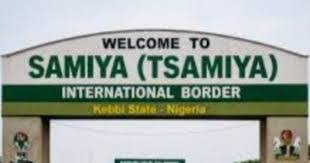
In February 2026, Nigeria’s federal government, under President Bola Tinubu, formally reopened the Tsamiya border corridor in Kebbi State, connecting Bagudo, Nigeria, to Ségbana, Benin.
This route carries something specific and vital: a critical outlet for Nigeria’s “northern food basket” — onions, garlic, white beans, dry pepper, maize, and sorghum — moving from Nigerian farms into Benin and the wider West African market.
Here’s how we got here. In August 2019, President Muhammadu Buhari ordered Nigeria’s land borders shut, escalating to a full closure with all neighboring countries by October 2019. Officially, this was framed as a response to large-scale rice smuggling and the illicit export of subsidized Nigerian petrol into neighboring countries.
Here’s the myth-check. The trade data that justified this concern wasn’t paranoia — it was real. By 2018, Benin, a country of roughly 11 million people, had become the sixth-largest rice importer in the world, and the largest importer of Thai rice specifically. That volume made sense to analysts only if most of it was being re-exported into Nigeria’s much larger market rather than consumed domestically in Benin. Paste the first body section here.
The Scandal: Who Was Actually Running the Smuggling?
Here’s where the story gets uncomfortable, and it comes from an on-record industry source, not speculation.
Emmanuel Ijewere, vice president of the Nigeria Agribusiness Group, told reporters at the time that “everybody on the streets knows that the Customs (service) is synonymous with corruption.”
He went further. Smuggling along the borders happened “with a cabal,” Ijewere said, and there were direct allegations “that it is the Customs that makes it happen.”
This allegation matters enormously for understanding the whole seven-year saga. If the very agency responsible for enforcing the border closure was itself allegedly complicit in facilitating the underlying smuggling networks, then closing the legal border wouldn’t stop the smuggling. It would simply push it entirely into the hands of the same networks, now operating through informal, harder-to-monitor routes with even less oversight than before.
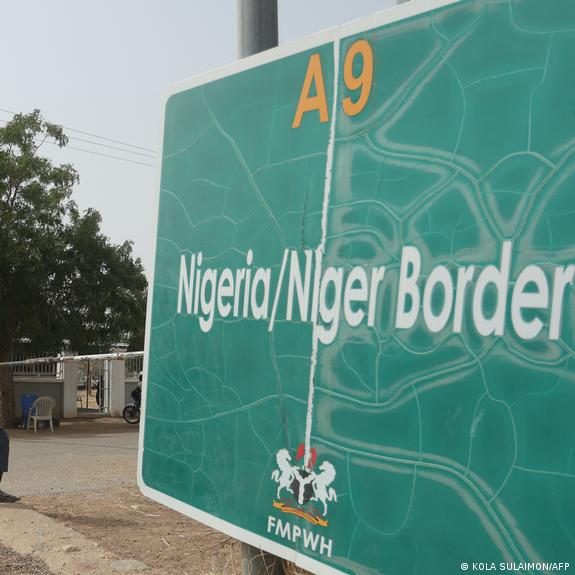
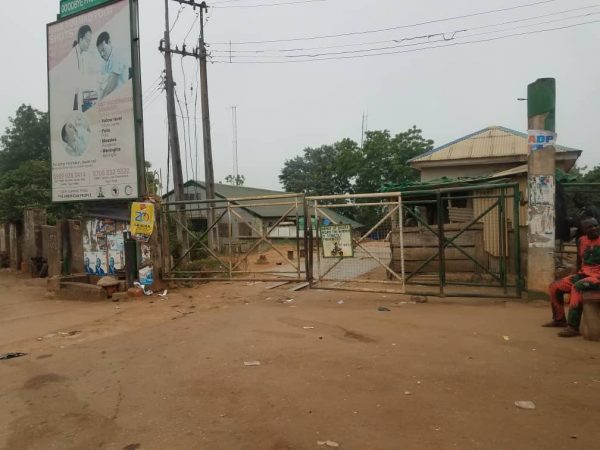
What actually happened next backs up this theory. Years after the closure, diplomats and security analysts confirmed exactly that outcome — smuggling continued through Nigeria’s roughly 780-kilometer border with Benin, much of which runs through dense forest and rivers that provide easy cover for anyone moving goods off the books, while legitimate traders lost their legal route entirely.

Who Actually Paid the Price
The people this closure hurt most directly were onion farmers and traders, whose product is highly perishable, and who had relied on the Tsamiya corridor specifically because delays of even a few hours could mean total crop loss.
Isa Aliyu, president of Nigeria’s onion producers’ association, put the human cost in plain terms at the reopening: “Onion is highly perishable. Every hour of delay translates to losses.” He added that closure simply “pushes trade to illegal routes, weakens regulation and reduces government revenue.”
Sit with the layered irony in that statement. The closure, justified as a way to protect government revenue and legitimate Nigerian producers from smuggling, ended up doing the opposite for seven years — driving legal traders into losses, pushing more activity into unregulated channels, and reducing the very government revenue it was supposedly meant to protect.
The damage wasn’t confined to Nigeria’s side of the border either. The closure devastated parts of Benin’s own economy, since border communities on both sides had built livelihoods around this legal trade corridor for generations before 2019.
The Myth vs. The Reality
What people assume | What actually happened |
| The 2019 border closure successfully stopped rice and goods smuggling into Nigeria | Smuggling continued for years through informal routes, with credible on-record allegations that Nigeria’s own Customs Service was complicit in enabling it |
| The closure only hurt smugglers, not legitimate businesses | Legitimate perishable-goods traders and border communities on both sides absorbed seven years of real, documented economic damage |
| Reopening the border in 2026 simply restores what was lost in 2019 | Officials are still working to remove “non-tariff barriers” left over from the closure era, showing the disruption’s effects hadn’t simply reset on their own |
| The closure primarily punished Benin for enabling re-exports | Nigerian onion farmers, traders, and border communities bore direct, sustained losses of their own throughout the closure |
Why This Still Matters
PThe Tsamiya reopening isn’t just a trade-policy correction. It’s an implicit admission that the 2019 closure’s central justification — that shutting the legal border would stop the smuggling — never actually held up.
Seven years, one Customs Comptroller-General publicly promising to remove remaining barriers, and one industry association still asking for the same protections they were promised back when the border first closed. This is what happens when a country tries to fix a corruption problem by punishing everyone except the people allegedly responsible for the corruption.
Sources and further reading.