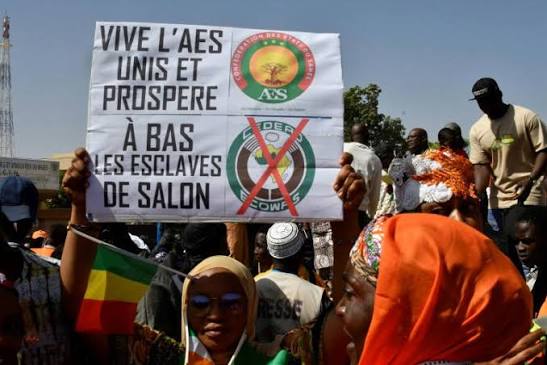

● AES formally completes withdrawal from ECOWAS, ending months of
transition negotiations. (January 2025)
On January 29, 2025, under Article 91 of the ECOWAS Treaty, Mali, Burkina Faso,
and Niger’s one-year withdrawal notice period expired, and the separation
became legally effective.
Not a dramatic walkout. A filing date arriving on schedule.
Like most real divorces, though, this one wasn’t clean. There were grounds cited,
a settlement negotiated, shared property nobody could actually divide, and
children — in this case, millions of ordinary citizens — caught in the middle.
Section One: Grounds for the Split
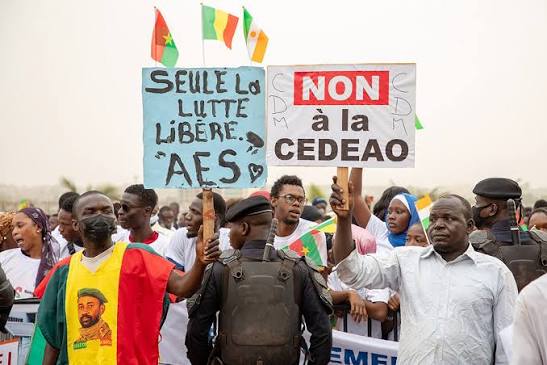
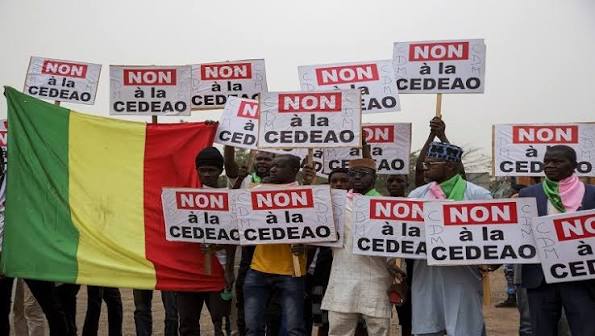
AES’s own stated grounds for leaving were direct. The three governments
accused ECOWAS of imposing “inhumane and irresponsible” coup-related
sanctions while failing to address their underlying security crises.
There’s a case study that makes this grievance concrete rather than purely
rhetorical. Analysts point to Nigeria’s use of electricity supply as a diplomatic
pressure tool against Niger as a defining example of exactly the kind of
grievance driving the split — a moment when economic interdependence
between neighbors was allegedly weaponized rather than used to build trust.
This example matters for understanding the divorce because it isn’t an abstract
complaint about sovereignty or colonial legacy. It’s a specific, tangible instance
of one member state using a shared regional resource as leverage against
another — precisely the kind of dependency AES’s founders pointed to when
arguing that ECOWAS membership left them vulnerable rather than protected.
The broader context is worth noting briefly, since it’s the backdrop this grievance
sits inside. Following military takeovers in all three countries between 2020 and
2023, ECOWAS’s sanctions response was the proximate trigger for the rupture.
But the electricity example suggests the underlying resentment ran deeper than
the sanctions alone.

Section Two: The Settlement Terms
It’s worth walking through what ECOWAS actually offered as separation terms,
because this reads like a genuine settlement negotiation rather than a simple
cutoff.
ECOWAS granted a six-month transition period, extending the effective break to
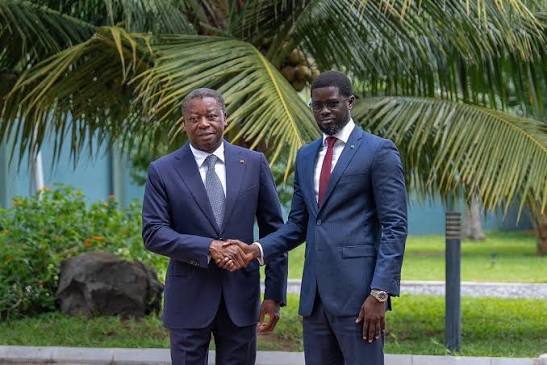
July 29, 2025, explicitly to allow continued mediation. Senegalese President
Bassirou Diomaye Faye and Togolese President Faure Gnassingbé were formally
tasked with continuing reconciliation efforts throughout that transition period,
with ECOWAS Chairman Bola Tinubu also credited for direct diplomatic
engagement.
The specific concessions ECOWAS extended despite the split function much like
alimony terms in a settlement: continued recognition of ECOWAS-branded
documents, ETLS trade benefits, visa-free movement rights, and continued
support for ECOWAS officials originally from the three departing countries.
There’s an immediate, unglamorous bureaucratic detail worth including here,
because it shows how real this separation was on a technical level. As of January
29, 2025, the ECOWAS “Brown Card” regional auto insurance scheme stopped
covering nationals of Mali, Niger, and Burkina Faso — a small but concrete sign
of formal separation hitting ordinary daily life almost immediately.
Section Three: What Couldn’t Be Divided
There’s a genuinely surprising wrinkle in this separation worth introducing
directly. The AES countries never left the West African Economic and Monetary
Union (UEMOA), the CFA franc currency zone that includes Côte d’Ivoire, Senegal,
and Benin. Free movement of people and goods within that separate economic
zone continued completely unaffected by the ECOWAS political rupture.
This matters for understanding the divorce accurately. This wasn’t a total
severance of every regional tie at once. It significantly narrowed the practical
scope of what actually needed to be negotiated between ECOWAS and AES, since
currency, and much of the underlying economic integration, remained
untouched throughout.
Think of this as the settlement’s version of jointly-owned property that simply
couldn’t be split: two blocs can formally divorce over politics and security policy
while remaining bound together by a currency union neither side chose to touch.
Section Four: The Human Cost
Bring this back to ordinary people, since divorces are ultimately measured by
their effect on those caught inside them. Analysts warned that the split
“exacerbates the lingering internal animosity, rancor, and hostility among the
leaders and citizens of AES and ECOWAS countries” and “hampers free trade and
free movement” in practice, regardless of the formal concessions on paper.
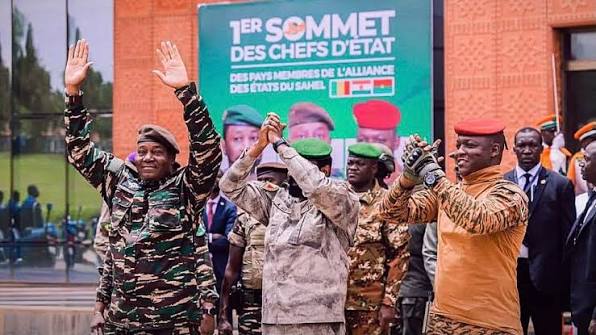
AES made its own countermove for its citizens directly. The bloc introduced its
own passport, usable for travel within AES territory, alongside declaring AES
territories visa-free for ECOWAS citizens post-exit — a reciprocal gesture even
amid the formal rupture.
Both sides tried to soften the landing for ordinary citizens even while the political
relationship fractured — proof that even an acrimonious divorce can still include
real efforts to protect the people who didn’t choose the split.
Close: Is Reconciliation Still Possible?
The mediators are still technically on the case. Faye and Gnassingbé’s mandates
were extended through the transition period, meaning formal reconciliation
efforts were still nominally underway even as AES leaders publicly and repeatedly
called the withdrawal “irrevocable.”
Like many legal separations, the paperwork was completed long before anyone
could say for certain whether the relationship was truly over. Mediators remained
appointed, shared economic ties remained intact through UEMOA, and yet by
every public statement from AES leadership, this was framed as final.
Whether this was a permanent divorce or simply a very long, very public
separation may not be answerable yet — and this blog will keep watching for
whichever comes next.