

Britain and the Ashanti Empire fought five separate wars over nearly 80 years.
Officially, these were framed around territorial disputes, treaty violations,
hostage-taking, and objections to what colonial officials called “barbaric
practices.” Read the actual treaty terms that ended these conflicts, though, and
the real prize shows up plainly: gold, and who controlled the routes it moved
through.
Here’s the smoking-gun detail. The treaty that ended the most decisive of these
wars didn’t just demand a payment. It demanded that Britain and its merchants
be guaranteed free passage on Ashanti trade routes, permanently.
This wasn’t a war about honor, or missionaries, or a stolen stool. Strip away the
pretexts, and it was a fight over who got to profit from West Africa’s gold.
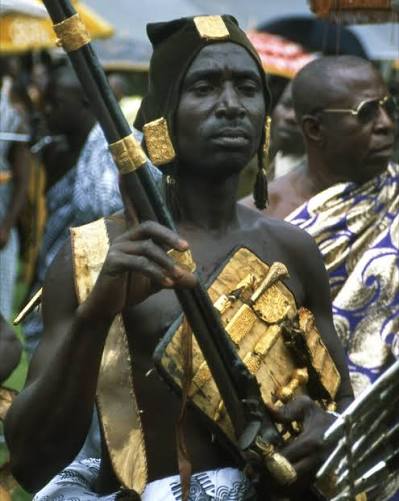
Here’s What Actually Happened
Let’s establish the foundation first. The Ashanti Empire was built in the late 1600s,
when Osei Tutu unified various Akan clans under one rule, centered spiritually
and politically on the city of Kumasi and the sacred Golden Stool.
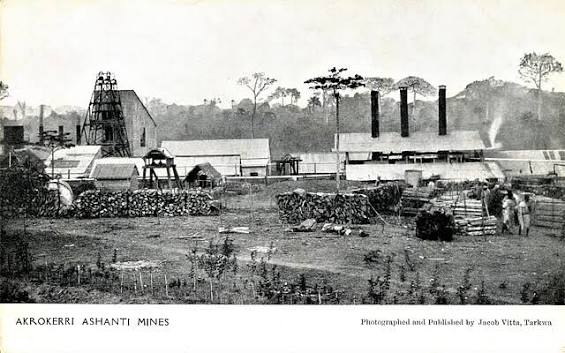
Here’s the economic reality underpinning that power: this was one of the
wealthiest gold-producing regions in all of West Africa. For centuries, European
powers — the Portuguese, the Dutch, and eventually the British — needed Ashanti
cooperation to access that gold and the trade routes carrying it to the coast.
It’s worth being honest about how this relationship started. This began as
something closer to a negotiated partnership than outright conquest.
Europeans paid taxes and tribute to trade safely in Ashanti territory, and the
wealth flowing through that trade helped the Ashanti purchase European
firearms and gunpowder — strengthening their own military in the process.
Here’s the myth-check. The five Anglo-Ashanti Wars, fought between 1824 and 1901,
weren’t a single sustained conflict. They were five distinct episodes, spread across
nearly 80 years, and each one needs to be read against what control over gold
and trade routes meant at that specific moment — not lumped together as one
generic colonial war with a single simple cause.

Elmina: The Trading Town at the Center of Everything
To understand this story, you need to understand one specific coastal town:
Elmina.
Elmina had functioned as a major gold, slave, and later palm oil trading hub for
centuries, originally under Portuguese and then Dutch control, with a
documented history of Ashanti influence over the site dating back to a formal
lease arrangement in 1701.
In 1871, Britain purchased the Dutch Gold Coast — including Elmina — directly
from the Dutch. This was a transaction the Ashanti had no part in and had never
agreed to.
Here’s why that mattered so much. Elmina wasn’t just a fort changing hands
between two European powers on paper. It was the Ashanti’s access point to the
sea. Losing control of it meant losing direct leverage over their own gold trade
route to the coast.
That’s what led directly to the Third Anglo-Ashanti War, in 1873–74. Fearing they
would lose access to the coast except through British-controlled ports, the
Ashanti moved to protect that access — and British forces used that response as
justification to invade the Ashanti interior itself.
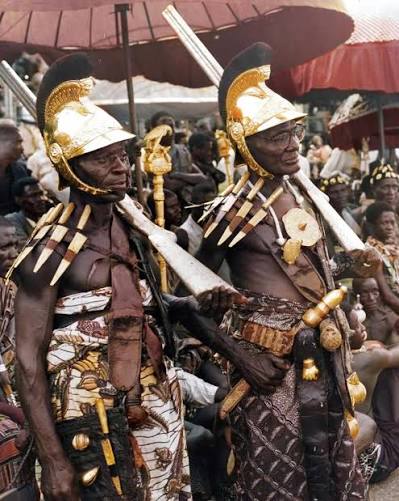
The Treaty That Reveals the Real Motive
The military outcome of that war is easy to summarize: British forces defeated
the Ashanti at the Battle of Amoaful in January 1874, marched into Kumasi, and
burned much of the city, including royal buildings and armories.
What matters more for this story is what came after — because the peace treaty
that followed does more to prove this case than any outside interpretation could.
The Treaty of Fomena, signed in July 1874, required three things worth breaking
down individually. First, a 50,000-ounce gold indemnity, paid directly to the British
monarch. Second, and most tellingly, the Ashanti were required to guarantee
open trade routes between Kumasi and the coast — for all traders, not just
British ones, but with British commercial interests as the clear primary
beneficiary. Third, separate from the treaty terms themselves, British forces
confiscated Ashanti gold regalia and treasures during the occupation of Kumasi
— much of which can still be seen today in the British Museum.
Here’s the argument worth sitting with: a treaty genuinely concerned with ending
“barbaric practices” or resolving a border dispute doesn’t need a clause
guaranteeing permanent commercial access to trade routes. That clause exists
in the Treaty of Fomena because trade access was the actual objective of the war,
not a side benefit of winning it.
The Fourth Anglo-Ashanti War, fought from 1894 to 1896, confirms this even more
explicitly. This conflict happened specifically because Britain wanted to secure
the Ashanti Empire — and its gold — before French or German colonial forces,
both expanding aggressively in the region at the time, could get there first. That
motive is stated plainly in the historical record, not something historians have
had to infer.
The Myth vs. The Reality
| What people assume | What actually happened |
|---|---|
| These wars were primarily about territorial disputes and British moral objections to Ashanti practices | The consistent throughline across all five wars was gold trade access and control, made explicit in treaty terms and British colonial strategy |
| Each Anglo-Ashanti war was a separate, unrelated conflict | All five wars, spread across nearly 80 years, trace back to the same underlying contest over who controlled Ashanti gold and the routes it moved through |
| The Treaty of Fomena was primarily a punishment for wartime losses | Its central term — guaranteed open trade routes to the coast — reveals that securing commercial access was the actual objective |
| The Fourth Anglo-Ashanti War was about restoring order in the region | Britain’s own stated motive was securing Ashanti gold before French or German forces could claim it first |
Why This Still Matters
This is the same pattern already documented elsewhere in this series: trade
access dressed up as territorial or moral conflict, with the treaty’s actual terms
giving away the real objective every time.
The Ashanti Empire didn’t lose its independence because of a dispute over
hostages or a stolen stool. It lost control of its own gold trade route, piece by
piece, treaty by treaty, until full annexation into the British Gold Coast Colony
followed in the early 1900s.
Next in this series: how West Africa’s own indigenous trade networks — the ones
running long before any of these institutions or conflicts arrived — actually
worked.