

A Historical In-depth Discovery of Trade in West Africa Since 1896
Here’s what you need to know:
- Road freight across Benin, Burkina Faso, Mali, Niger, and Senegal is formally governed by two layered conventions: the 1975 TIR Convention, ratified across the region in 1982, and the regional TRIE (Inter-State Road Transit Scheme), both meant to simplify and speed up customs clearance for goods crossing multiple borders.
- In practice, UNCTAD’s own research describes these formal procedures as “supplemented by multiple checkpoints on the road, a customs escort of trucks and vigorous” enforcement — a description that directly implies the paperwork alone was never treated as sufficient.
- The scandal: a 2011 agreement specifically committed to reducing checkpoints on the Dakar-Bamako corridor to just three and fully implementing TRIE by July of that year — researchers found those same problems “largely remain” a decade later, and a 2020 renewal effort re-raised many of the identical action points already identified in 2011, triggering real strikes by truck drivers protesting tolls, levies, and checkpoint harassment.
Sahel road freight already operates under two separate, formal international customs conventions designed specifically to simplify cross-border transit. The region’s own trade documentation describes these formal systems as needing to be “supplemented” by physical checkpoints and armed escorts anyway — a telling admission about how much the paperwork alone is actually trusted to work.
The System, The 2011 Promise, and The Decade That Followed.
The System: What TIR and TRIE Are Actually Supposed to Do
The TIR Convention is worth explaining directly, since it’s worth understanding the original international framework this regional system builds on. Signed in Geneva in 1975 and effective from 1978, the TIR Convention establishes an international customs transit system allowing goods to move in sealed vehicles from a customs office in one country to a customs office in another, without extensive border checks at every crossing in between, while still giving customs authorities the security guarantees they need.
It’s worth understanding how the TIR system’s sealing mechanism is actually supposed to work. Rather than customs officials at every single border physically re-inspecting a truck’s full cargo, the country of departure seals the vehicle or container, and that seal is only meant to be broken at the final destination — meaning the entire system depends on trust that the seal genuinely wasn’t tampered with anywhere along the route, the same trust-based mechanism underlying carnet systems worldwide.
The specific regional ratification is worth bringing in directly. Benin, Burkina Faso, Côte d’Ivoire, Mali, Niger, and Senegal ratified the TIR Convention in 1982, alongside developing their own regional supplement, TRIE (the Inter-State Road Transit Scheme, ISRT in English).
There’s a telling admission embedded in UNCTAD’s own description of how this system actually functions in practice, worth quoting directly. The same research states plainly that in the subregion, these formal customs procedures “are supplemented by multiple checkpoints on the road, a customs escort of trucks and vigorous” enforcement — language that reveals, even in a neutral trade policy document, that the formal paperwork system was never treated as sufficient on its own.
The 2011 Promise: A Real Commitment, With Real Institutional Follow-Through
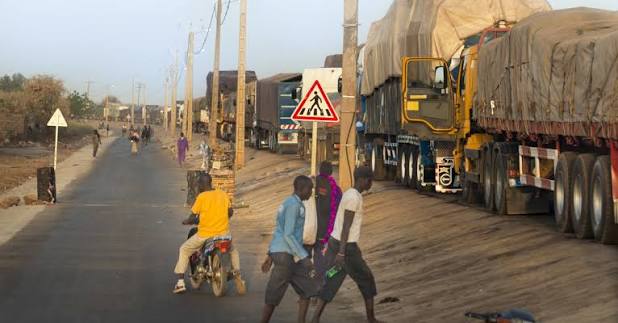
The specific 2011 agreement is worth bringing in directly, since it’s the piece’s central documented commitment. Following the Kayes Conference, participating countries agreed to implement TRIE by July 1, 2011, reduce the number of checkpoints on the Dakar-Bamako corridor to just three, and comply with UEMOA’s own axle-load regulation harmonizing truck weight limits between countries.
There’s genuinely serious institutional follow-through this commitment initially produced worth noting, since it deserves real credit. Joint committees were established with a permanent secretariat specifically to monitor progress, alongside national monitoring committees, with researchers describing the effort as starting out “as a model process, with high-level buy-in, a pragmatic, problem-driven approach, and clear work plan to follow-up.”

The Decade That Followed
Here’s the piece’s central and most consequential finding, worth introducing directly. Despite this genuinely serious institutional start, researchers found that “in spite of these commitments and institutional structures, the transport and transit problems cited in 2011 largely remain.”
The renewed 2020 effort is worth bringing in directly, since it shows officials themselves recognized the original commitments hadn’t been fulfilled. A second attempt, known as the Pacte de Saly, was launched in 2020, producing 58 separate points for action — but researchers noted plainly that “many of which had been raised in 2011,” with “little progress made in 2021,” when the underlying study was actually conducted.
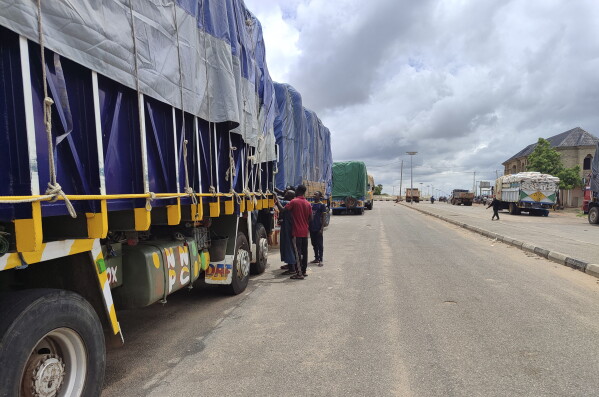
There’s a direct human consequence this produced worth bringing in, since it’s worth including as the scandal’s sharpest, most concrete evidence. The persistent, unresolved friction “led to strikes by the unions of drivers and others to protest the tolls and levies charged, harassment at checkpoints, and complaints around weighbridges in both countries.”
A specific, well-documented 2011 agreement — with real institutional infrastructure, a genuine work plan, and high-level political buy-in — still failed to resolve the exact problems it was designed to fix, badly enough that a follow-up effort nine years later had to re-raise many of the same action points, and truck drivers themselves eventually resorted to strikes over exactly the checkpoint harassment and toll collection issues the original agreement was meant to eliminate.
The Myth vs. The Reality
| What people assume | What actually happened |
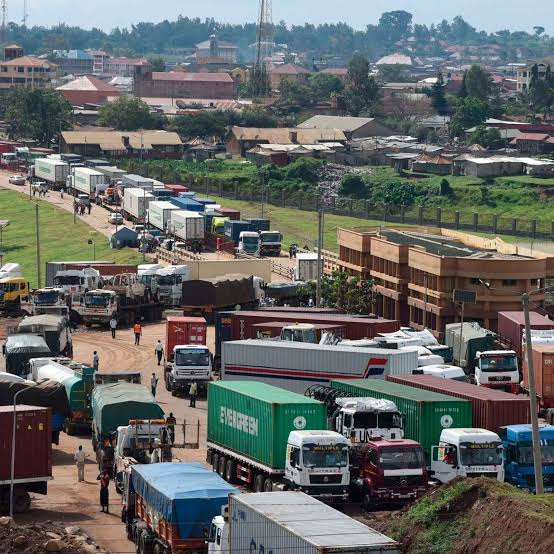
| The TIR and TRIE conventions provide a smooth, largely paperwork-based transit system across the Sahel, requiring minimal additional physical enforcement | UNCTAD’s own research describes the formal system as requiring supplementation by “multiple checkpoints,” customs escorts, and vigorous enforcement, well beyond the paperwork alone |
| The 2011 Kayes Conference agreement successfully resolved the region’s checkpoint and transit friction problems | Researchers specifically found the transit problems identified in 2011 “largely remain” a decade later |
| The 2020 Pacte de Saly represented an entirely new set of reform priorities | A 2020 renewal effort re-raised many of the same original action points already identified back in 2011 |
| Truck driver strikes on this corridor reflect isolated, unrelated labor disputes | They directly protested the same tolls, levies, and checkpoint harassment the 2011 agreement had already promised to eliminate |
Close: Two Conventions, a Reduction Plan, and the Same Problems a Decade Later
TIR and TRIE represent genuinely sound, internationally proven customs transit frameworks, and the 2011 Kayes Conference agreement built real, serious institutional machinery specifically to make them work better across the Dakar-Bamako corridor — but a decade of documented research shows the underlying checkpoint friction, toll disputes, and enforcement inconsistency these efforts were meant to resolve persisted regardless, eventually driving the truck drivers actually living with these systems to strike over exactly the problems officials had already promised, twice, to fix.
This connects directly to the pattern already extensively documented across this blog’s coverage of Sahel trade corridors — genuine institutional frameworks, real documented commitments with real follow-through infrastructure, and a persistent gap between what gets formally agreed and what the people actually moving goods across these borders continue to experience on the road.
Sources and further reading.