

A Historical In-depth Discovery of Trade in West Africa Since 1896
Here’s what you need to know:
- PZ’s earliest decades of prosperity rested on palm oil and palm kernel exports, produced not by any land the company owned or managed, but by West African smallholder farmers and a multi-layered chain of African brokers who controlled the actual harvesting, processing, and inland transport of the crop.
- This “produce trade” model had a genuinely disturbing origin: the trading networks European merchants used to buy palm oil in the Niger Delta were the exact same networks previously built for the transatlantic slave trade, with the same infrastructure and, in many documented cases, the same African brokers simply pivoting from trading enslaved people to trading palm oil once abolition made the former illegal.
- The scandal isn’t that this “arm’s length” model was gentler than direct land seizure — it’s that African merchants who tried to compete directly with European traders, bypassing the brokerage system entirely, were violently displaced through a documented “trade war” that ended specifically with the imposition of formal colonial rule, proving the produce trade model was never a genuine alternative to conquest, only its opening phase.
The System: How the Produce Trade Actually Worked
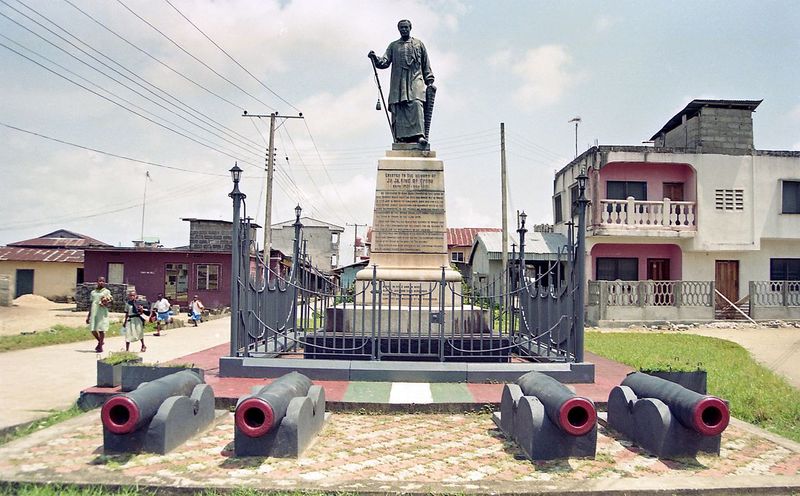
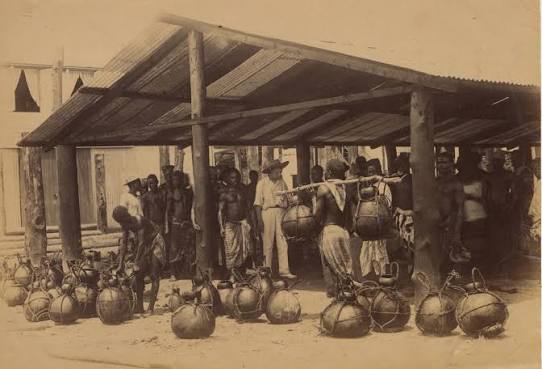
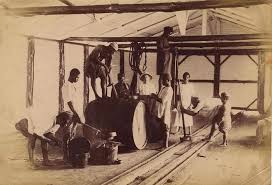
It’s worth explaining precisely how this trading model functioned, since it operated very differently from the direct plantation ownership this blog has already documented in Firestone’s Liberia and Halco’s Guinea. Rather than owning land or directly employing the people who grew and harvested palm produce, firms like PZ purchased finished palm oil and palm kernels from a chain of African intermediaries who controlled every stage of production and inland transport. In the Bight of Biafra region specifically, Uruan-Ibibio and Igbo producers brought oil to riverport markets, where it was purchased by intermediaries such as the Ikpa and Enyong-Ibibio traders, before finally being sold to the Efik merchants of Old Calabar — who then sold it onward to the European buyers waiting at the coast. This meant European trading houses like PZ never directly touched the actual labor of cultivation or extraction; they sat at the very end of a long, entirely African-controlled supply chain.
It’s worth understanding the specific historical origin of this trading network, since it reveals something genuinely disturbing about continuity rather than clean rupture. When Britain abolished its transatlantic slave trade in 1807, British West Africa traders “turned to European markets and natural resources as commodities, in particular palm oil.” Crucially, this shift did not require building new trading infrastructure from scratch — traders simply repurposed what already existed. Historical research states this directly: “the slave trade in the Niger Delta did not immediately stop with abolition but continued alongside the palm trade until the 1840s. Palm brokers and European traders continued to use the same network and system developed for the slave trade.” Even more striking, “many of the African brokers were themselves former slave traders” — meaning the transition from human trafficking to palm oil commerce, for a significant portion of this trading system’s participants, was a change of commodity, not a change of network, infrastructure, or personnel.
There is a further, less commonly noted detail worth including, since it complicates any simple assumption that Europeans dictated every term of this early trading relationship. European traders in this period lived and traded entirely aboard sailing ships anchored offshore, rather than establishing land-based facilities — a practice driven partly by genuine disease risk, but also, as historical accounts confirm directly, because “local authorities didn’t let them build on land.” In this earlier period, African political authorities actively restricted European traders’ physical access to territory, forcing them to conduct all business from ships and wait, sometimes for months, for African brokers to bring produce to them.
The African Agency: Merchants Who Tried to Cut Out the Middlemen
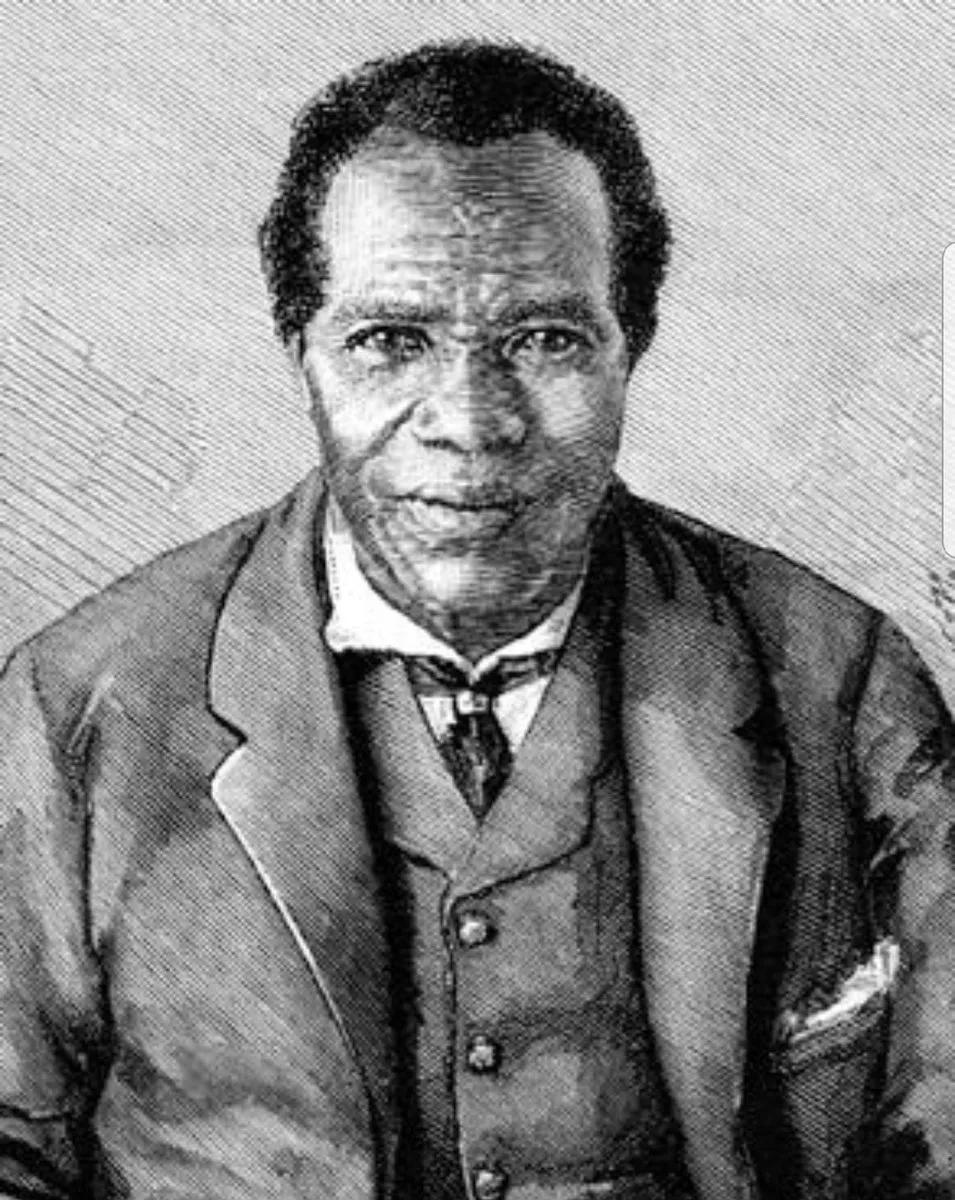
It’s worth stating directly that African participants in this trade were not passive suppliers accepting whatever terms Europeans offered — some actively sought to control the entire trade chain themselves, and their story reveals exactly how the produce trade model’s apparent fairness eventually collapsed. Historical research documents that “some African merchants acquired their own sail ships to transport oil directly to Britain, bypassing European intermediaries” entirely — a direct, ambitious attempt by African traders to capture the full value chain from production through to the European market, rather than surrendering the most profitable final stage of the trade to European middlemen.
This competitive challenge did not end peacefully. The same research states plainly that “competition between African traders and European intermediaries sparked an intense trade war over the marketing of the oil, which ended with the displacement of the African traders and the imposition of colonial rule.” This is worth reading with full weight: African entrepreneurs succeeded well enough at competing directly in international commerce that European interests responded not with continued market competition, but with formal colonial conquest specifically to eliminate that competition.
There is a specific, well-documented individual case worth including directly, since it personalizes this broader pattern. Jaja, the powerful merchant-ruler of Opobo, attempted to maintain his kingdom’s monopoly over hinterland trade against Britain’s insistence on unrestricted “free trade” access. His resistance ultimately resulted in his deportation to the West Indies by British authorities — a fate historical analysis describes as symbolizing “the limits of African agency under growing imperial pressures.” A West African ruler who had built genuine commercial power controlling access to his own kingdom’s trade was physically removed from the continent once that power became inconvenient to expanding British commercial interests.
The Scandal: What “Arm’s Length” Trade Actually Concealed
Here is the central finding this piece was built to examine, worth stating precisely. The produce trade model — buying finished commodities from African intermediaries rather than directly controlling land and labor — is often implicitly treated as a gentler, less exploitative form of colonial-era commerce than the direct plantation concessions this blog has documented in Firestone’s Liberia or the mining concessions in Halco’s Guinea. The evidence doesn’t support this comfortable distinction. The produce trade model functioned smoothly and profitably for European firms precisely as long as African brokers and merchants remained willing intermediaries who didn’t threaten to capture the trade’s more valuable final stages themselves. The moment African traders demonstrated they could compete directly — building their own ships, dealing directly with British buyers, bypassing the entire European middleman layer — the response was not adjusted commercial terms, but war and formal colonial annexation.
It’s worth stating what this reveals about the underlying nature of “arm’s length” exploitation. The model didn’t distribute value more fairly to African participants because it was inherently more equitable — it simply pushed the exploitative mechanisms further from view, embedded within a brokerage chain that looked, superficially, like ordinary voluntary commerce between willing trading partners. When that appearance of voluntary partnership was tested by African merchants actually trying to claim the full value their own labor and enterprise had generated, the underlying colonial power structure reasserted itself directly and violently. Historical analysis confirms the direct institutional consequence: “by the late 19th century, the palm oil trade was inseparable from imperial expansion,” with escalating British consular, naval, and commercial influence leading directly to formal protectorates — Lagos in 1861, the Niger Coast Protectorate in 1891 — that laid the foundation for Nigeria’s eventual full colonial amalgamation.
There is a final, directly relevant connection worth drawing to firms like PZ specifically. The same broader economic system that PZ participated in as a produce-trading firm eventually produced, through consolidation among the European companies that had displaced African competitors, one of the world’s largest consumer goods conglomerates: “the European traders who usurped and monopolised the Oil trade saw their fortunes rise during the early colonial period, leading to a series of mergers that created Unilever.” PZ’s own later pivot into soap manufacturing — acquiring the Aba factory in 1948, already documented elsewhere in this blog’s PZ coverage — placed it in direct competitive relationship with exactly this Unilever lineage, both companies drawing their industrial foundations from the same palm oil economy that had displaced independent African traders decades earlier.
Close
PZ’s earliest fortune rested on a trading model that never required the company to directly seize land or manage forced labor — the exact features that make Firestone’s Liberian concession and Halco’s Guinean mining operations so visibly documented as colonial exploitation. But the palm oil economy this model depended on was built directly on top of the transatlantic slave trade’s own infrastructure and, in many cases, its own personnel, and its apparent fairness toward African trading partners lasted only as long as those partners remained willing intermediaries rather than genuine competitors. When African merchants like Jaja of Opobo demonstrated they could control the full value chain themselves, the response was deportation, war, and formal colonial annexation — proving that the “arm’s length” produce trade model wasn’t a fundamentally different or fairer system than direct plantation control. It was simply the version of colonial extraction that hadn’t yet needed to reveal its underlying coercive power, until African success finally forced it to.
Sources and further reading.