A Historical In-depth Discovery of Trade in West Africa Since 1896
Here’s what you need to know:
- Burkina Faso’s cotton companies adopted Monsanto’s genetically modified Bollgard II cotton starting in 2008, chasing higher yields and reduced pesticide costs.
- Fiber quality collapsed instead — cotton classified as high-quality fell from over 90% of national production to as low as 20%, after researchers found the GM strain had been backcrossed only twice rather than the recommended seven times.
- In April 2016, Burkina Faso’s cotton association demanded 48.3 billion CFA francs (roughly $84 million) in compensation from Monsanto — a claim the company disputed, leading cotton companies to phase out Bt cotton entirely that same year.
- The dispute exposed a stark power imbalance: Monsanto’s $13.5 billion in 2016 revenue alone exceeded Burkina Faso’s entire national GDP.
In April 2016, Burkina Faso’s cotton industry formally demanded $84 million from one of the world’s largest agrochemical companies — and walked away from the negotiating table with nothing.
This is a trial told in four parts — the case for the prosecution, the evidence, the defense’s rebuttal, and a verdict that never actually arrived.
Opening Statement: The Case for Burkina Faso
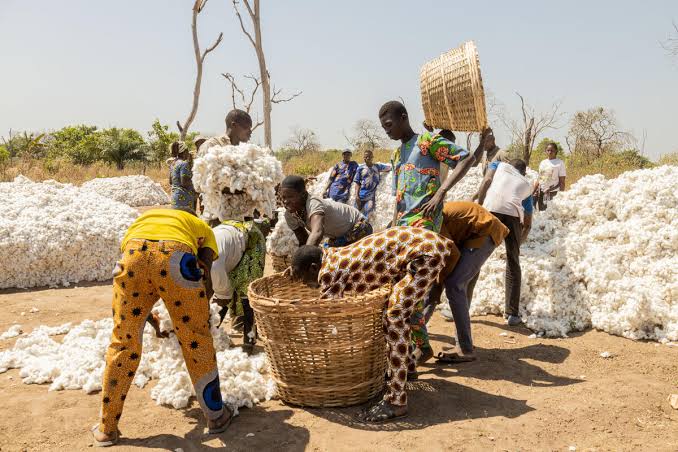
Cotton is Burkina Faso’s second-biggest source of national revenue after gold. By the early 2000s, bollworm infestations were devastating harvests — farmers were losing 20% to 65% of their crops even after spending an estimated $60 million a year on pesticides, with losses reaching 90% in untreated fields.
Here’s how Monsanto entered the picture. Following contact beginning in 1999–2000 between Burkinabè agricultural scientist Zangre, government officials, cotton companies, and the farmers’ union, Burkina Faso began testing Monsanto’s Bollgard II cotton — containing a natural pest-resistant bacterium called Bacillus thuringiensis (Bt) — in 2003, confirming it was effective against pests almost immediately.
It’s worth explaining what “backcrossing” actually means, since it’s the technical heart of the case. Backcrossing is the process of breeding a new genetic trait back into a plant’s original parent stock repeatedly, to preserve the parent variety’s other desirable characteristics. Burkinabè researcher Didier Zongo found Monsanto’s Bt gene had been backcrossed into Burkina’s native cotton only twice, far short of the roughly seven cycles normally required to keep a variety’s core qualities — including fiber length — intact.
The numbers make up the case itself. Cotton classified as high-quality, medium-to-long staple length fell from over 90% of national output before Bt cotton to as low as 20% afterward, undermining the country’s international reputation and market value.
The Evidence: What the Numbers Actually Show
SOFITEX’s own financial testimony is worth quoting directly. Managing director Wilfried Yameogo stated plainly: “We went from 39.2 billion (CFA francs) in losses to 49.3 billion in just one harvest. If we continue like that we’ll just dig the hole deeper.” A specific, escalating financial loss, cited as direct evidence of the trait’s cost.
The farmer-level testimony captures the human dimension the financial figures don’t. One farmer, describing the experience in a 2015 farmer-research project, said: “The cotton farmers were not consulted. We were told that Bt cotton would be good for us, and we would save money as we would have to spray less pesticides. This was true for the first year, but not after that. We now have to spray two to three times more, and the caterpillars still come.”
The formal compensation demand is worth stating precisely. The Inter-professional Cotton Association of Burkina (AICB) — representing all three of the country’s cotton companies plus the national farmers’ union, UNPCB — formally sought 48.3 billion CFA francs, roughly $84 million, in April 2016.
The Defense’s Rebuttal: Monsanto’s Case
Monsanto’s position deserves fair and direct presentation, since a real trial requires both sides. The company told Reuters its genetic traits had “consistently delivered increased yield potential” since launch, and separately claimed its technology had transformed the sector, improving conditions for 350,000 farmers and roughly 4 million Burkinabès who depended on them.
Monsanto’s own spokesman addressed the fiber-length dispute directly. William Brennan told Reuters that fiber-length variation “exists between all cotton varieties (conventional or biotech) and is independent of the Bollgard II trait” — a direct denial that the GM trait itself caused the quality collapse.
There’s an outside academic assessment worth including, since it complicates a purely one-sided reading. A 2016 study by CIRAD, the French government’s own agricultural research agency, found Bt cotton’s benefits for Burkinabè farmers were “barely acceptable” — concluding farmers did earn more money overall, but also took on significantly greater financial risk in the process.
The power-imbalance point is essential context for how this “trial” was ever going to play out. Monsanto’s $13.5 billion in 2016 revenue alone exceeded Burkina Faso’s entire national GDP, while the company was simultaneously being acquired by Germany’s Bayer in a $66 billion deal — a scale mismatch between plaintiff and defendant that shaped the entire negotiation from the start.
The Scandal: A Verdict That Never Came
Here’s what actually happened instead of a resolution. AICB and Monsanto representatives met in March 2016 but failed to reach any agreement on the financial claim — no settlement, no formal arbitration, no court ruling.
Burkina Faso acted unilaterally instead. The association asked farmers to stop planting GM seeds entirely until fiber-length problems were resolved, and by the 2016/17 growing season, Burkina Faso planted no Bt cotton at all — a market-level verdict delivered by farmers themselves rather than any legal or financial settlement.
The direct economic consequence of that unilateral phase-out is worth noting, since it shows the dispute’s costs didn’t simply disappear once GM cotton was dropped. International cotton fiber prices for Burkina Faso’s crop fell, and farmer revenue dropped in the immediate aftermath of the withdrawal — meaning Burkinabè farmers absorbed real financial pain both from the original quality collapse and from the abrupt transition back to conventional seed.
This is one of the most consequential documented GMO failures in African agricultural history, and it ended not with compensation, not with a ruling, and not with accountability. It ended with silence, an abandoned technology, and a bill that Burkinabè cotton farmers paid twice over. aste the final body section here.
The Scandal: A Verdict That Never Came
Eight years after the compensation demand was filed, no public record shows Monsanto — later absorbed into Bayer — ever paid Burkina Faso’s cotton sector the $84 million it sought.
There’s a deeper, structural point beneath the individual dispute. A company with revenue exceeding an entire nation’s GDP tested a genetically modified product on that nation’s flagship export crop, got the science demonstrably wrong on a defining quality characteristic, and faced no binding consequence beyond losing the contract itself.
This is the throughline running across this entire CFDT/SOFITEX corporate history series — institutions and companies built at a scale so far beyond the farmers they depend on that even a documented, quantified failure doesn’t guarantee accountability.