

A Historical In-depth Discovery of Trade in West Africa Since 1896
Here’s what you need to know:
- In 2022, as MSC prepared to acquire Bolloré’s port assets in Togo, company president Diego Aponte publicly promised that the resulting two terminals at Lomé would “remain operationally independent” and would “not face but complement each other” — a direct response to concerns raised by Togolese officials about handing MSC a monopoly over the port.
- The Port of Lomé’s genuine operational achievements since then are real and well-documented: a 2024 record of 2 million TEUs handled, 30.64 million tonnes of total cargo, and industry-leading productivity averaging 32.5 crane moves per hour.
- The scandal: by 2025, independent maritime industry analysis confirmed MSC’s “consolidation makes MSC the sole operator” of both of Lomé’s terminals, explicitly stating this is “raising new concerns about competition and access to the port” — the exact monopoly outcome Aponte’s 2022 promise was specifically designed to prevent.
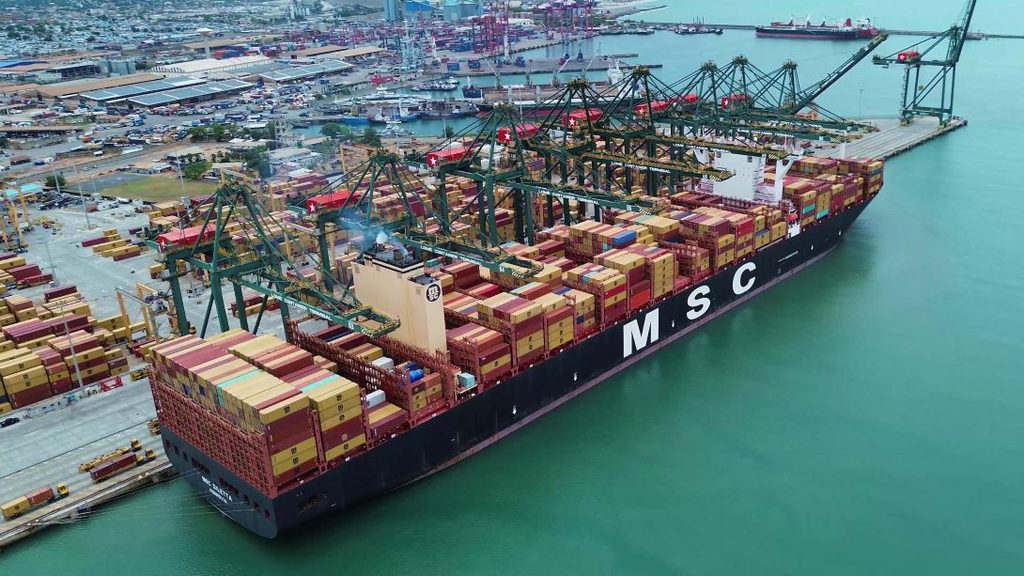
When MSC moved to acquire Bolloré’s African port assets, officials and observers in Togo raised one very specific worry — that MSC would end up controlling both of Lomé’s container terminals, eliminating any real competition at the port. MSC’s own president responded directly to that fear, on the record, with a promise.
Section One: Promised
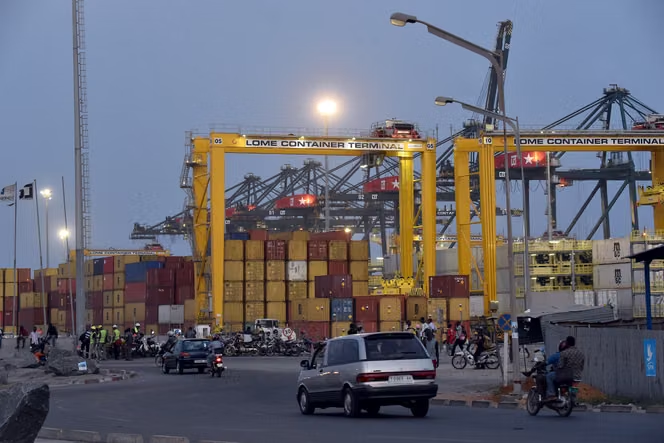
The terminal structure that made this promise necessary is worth explaining first, since it’s the starting setup. The Port of Lomé’s container handling has historically run through two separate operators — the Lomé Container Terminal (LCT), already controlled by MSC through its Terminal Investment Limited subsidiary, and a separate terminal operated by Bolloré Africa Logistics.
The Togolese concern is worth quoting directly, since it names the exact risk everyone was watching for. Port observers and officials were, in the words of contemporary reporting, “not fond of granting LCT full monopoly over the handling activities of the port of Lomé” — even while acknowledging the company had already “increased the port’s container traffic fivefold.”
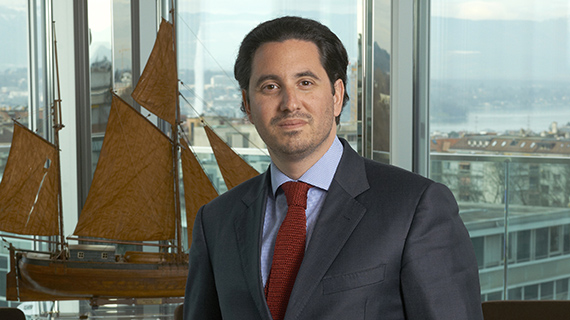
MSC president Diego Aponte’s specific public promise is worth bringing in directly, since it’s the exact commitment this piece checks against reality. Aponte stated that Bolloré’s Togolese subsidiary “will remain operationally independent, with its top management in Lomé,” insisting “we will not influence commercial policies and tariffs, nor the terminal’s management, to ensure that there is a real differentiation between the two port operators.”
Section Two: Delivered
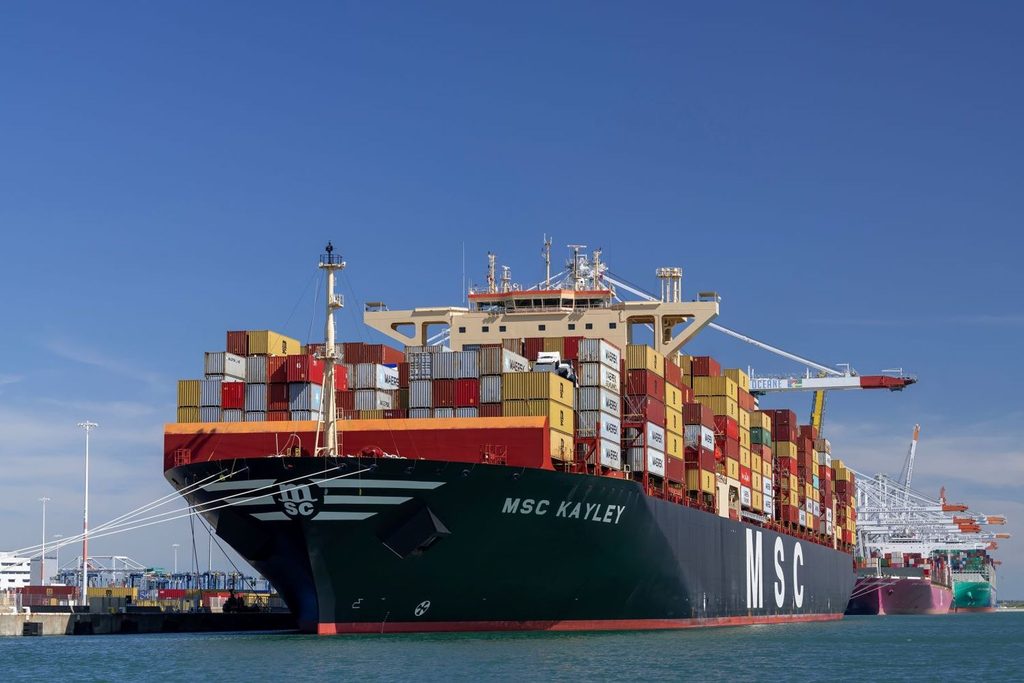
The port’s genuine, verified operational achievements are worth bringing in directly, since real success has followed regardless of the ownership question. In 2024, Lomé handled 30.64 million tonnes of cargo, up 1.85% from the previous year, with container throughput reaching a record 2 million TEUs — a 5.19% increase that positioned Lomé among Africa’s top five container ports.
There’s a specific productivity figure worth including, since it’s a genuinely strong operational metric. LCT continues to deliver high productivity, averaging 32.5 crane moves per hour, a figure that surpasses most African and global standards.
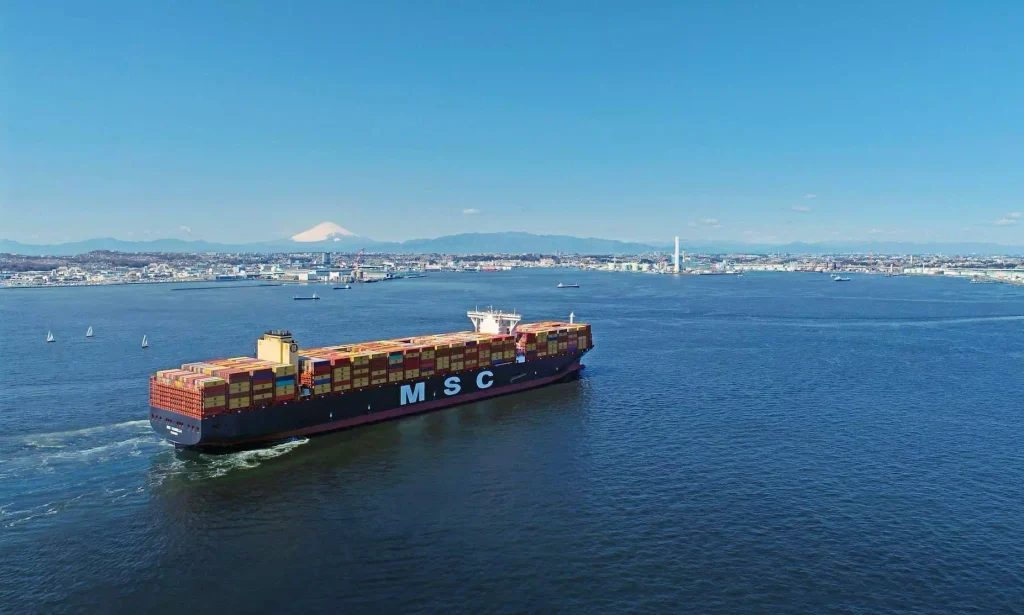
There’s recent infrastructure investment underway worth bringing in, since it shows continued commitment to the port’s competitive position. Dredging work by DEME’s Breughel vessel is deepening the basin, turning circle, and access channel specifically to prepare the terminal for the next generation of ultra-large container ships, part of what analysts describe as Lomé’s determination to strengthen its role as West Africa’s top transshipment hub.
Section Three: Still Pending
What remains in early, undetailed planning stages is worth noting, since the port’s ambitions extend beyond current capacity. MSC and China Merchants Holdings have signaled further expansion plans for the Lomé Container Terminal, though management has offered few specifics beyond a stated desire to “ensure the fluidity of logistical activity and allow the storage of more containers.”

The Scandal: The Red Flags
Here’s the piece’s central and most consequential finding. Independent maritime industry analysis published in 2025 states plainly that “after MSC’s full takeover of Bolloré Africa Logistics, the company assumed control of both terminals in Lomé,” with the analysis noting bluntly, “this consolidation makes MSC the sole operator, raising new concerns about competition and access to the port.”
The direct comparison to Aponte’s 2022 promise is worth making explicit, since it’s the scandal’s core. This is precisely the outcome Aponte’s public commitment was designed to rule out — “operationally independent” terminals, “real differentiation between the two port operators,” and no MSC influence over “commercial policies and tariffs” — none of which describes a port where the same maritime analysis now confirms a single company controls both terminals outright.
This connects directly to the same pattern already documented elsewhere in this blog, since it’s now a recurring feature of MSC’s African port acquisitions. This is structurally the same story already told about Sitarail, where spokesperson Marie-Antoinette Sorgho’s promise that “all agreements and commitments… will be maintained and executed as concluded” did not survive Burkina Faso’s 2024 concession withdrawal — a public assurance made during an acquisition, later overtaken by the practical reality of consolidated control.
Whatever operational successes Lomé has genuinely achieved, the specific competitive safeguard Togolese officials sought, and MSC’s own president publicly promised to honor, appears not to have survived the acquisition it was meant to make more palatable.

The Myth vs. The Reality
| What people assume | What actually happened |
| MSC’s 2022 promise of operational independence between Lomé’s two terminals has been honored since the Bolloré acquisition closed | Independent 2025 maritime analysis confirms MSC became the sole operator of both terminals, explicitly describing this as raising new competition concerns |
| Lomé’s genuine operational success proves the monopoly concerns raised in 2022 were overstated | Operational success and market concentration are separate questions — a port can improve its throughput while also consolidating into a single operator’s control |
| This is an isolated situation specific to Lomé’s particular market conditions | It follows the same pattern already documented elsewhere in this blog with Sitarail’s own broken continuity promise following its MSC acquisition |
| The Togolese government’s original monopoly concerns from 2022 were resolved through MSC’s public commitments | The same “concerns about competition and access to the port” language recurs in 2025 analysis, years after those commitments were made |
Close: A Promise That Outlived Its Usefulness
Lomé’s operational achievements — the record container volumes, the industry-leading crane productivity, the ongoing dredging investment — are genuinely real and worth documenting on their own terms, but they don’t answer the specific question Togolese officials raised in 2022, and MSC’s own president publicly promised to resolve: whether one company controlling the entire port’s handling capacity is actually good for the traders and shipping lines who depend on it.
Sources and further reading.