

A Historical In-depth Discovery of Trade in West Africa Since 1896
Here’s what you need to know:
- In 1890, two Fante merchants, Joseph E. Ellis and Chief Joseph E. Biney, along with their accountant Joseph P. Brown, negotiated a 100-square-mile mining concession from Ashanti traditional authorities, opened the Ellis Mine, and operated it successfully for five years using modern techniques including gunpowder blasting.
- In 1895, they sold this concession to Edwin Arthur Cade, a London clerk who married into the family of the merchant supplying their mining equipment. Sources differ on the exact price — one account puts it at £200 in deposit money, another at £2,500 total, allegedly unpaid for two years — but by June 1897, Cade had registered a company built on that same concession with £250,000 in nominal capital on the London Stock Exchange.
- The scandal: this transfer wasn’t purely a voluntary commercial decision. British colonial law, imposed following the 1896 annexation of the Ashanti kingdom, criminalized mine ownership by indigenous Africans — meaning the very legal system installed by the same colonial power benefiting from Cade’s acquisition made it illegal for Ellis, Biney, and Brown to continue owning the mine they had discovered and built.
The Discovery: What Three Fante Entrepreneurs Actually Built
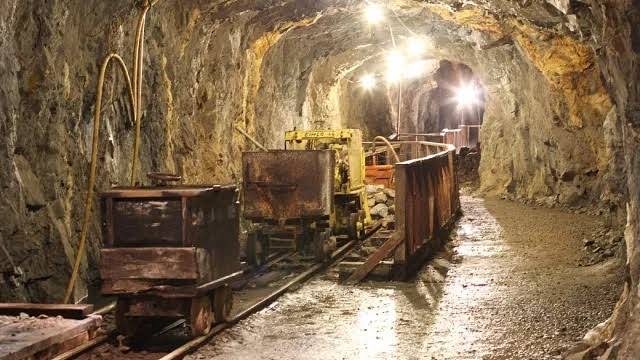
In March 1890, Joseph E. Ellis and Chief Joseph E. Biney, Fante merchants from Cape Coast, crossed the Pra River into Adansi territory and negotiated a mining concession spanning 100 square miles — roughly 260 square kilometres — in the Obuasi district. They secured this agreement from Ashanti traditional authorities; sources describe the granting party variously as the Ashanti king directly, the Bekwaihene (paramount chief of Bekwai), or the chiefs of Bekwai and Adansi jointly, reflecting some inconsistency in the historical record about the precise authority involved, though all accounts agree the concession was legitimately negotiated with recognized African traditional leadership.
Ellis and Biney were soon joined by a third partner, accountant Joseph P. Brown. Together, the three men opened the Ellis Mine and introduced modern industrial mining techniques to a site that had previously been worked by hand for generations — including the use of gunpowder for blasting, a genuine technological advance over traditional extraction methods. The mine operated successfully for five years under their direct ownership and management.
The scale of what they had actually found only became clear through a specific, documented event. Biney sent ore samples to a London merchant who had been supplying the partnership’s mining equipment. Those samples initially attracted little serious interest — until Edwin Arthur Cade, who had joined the merchant’s firm through marriage to his daughter, had the ore formally assayed at Johnson Matthey in London on April 20, 1895. The result: 10.5 ounces of gold per ton, an extraordinarily rich grade by any contemporary standard.
The Sale: What Ellis, Biney, and Brown Actually ReceivedSection Heading
The three Fante partners could not raise the capital required to develop a deposit of this scale on their own — a genuine, practical constraint that any account of this transaction should acknowledge fairly. In July 1895, Cade traveled to Obuasi together with Ellis and Biney specifically to obtain approval for the proposed sale from the Chiefs of Bekwai and Adansi, indicating the original founders were directly and visibly involved in legitimizing the transfer with the same traditional authorities who had granted them the concession five years earlier.
What they actually received for selling a concession that would go on to generate over a century of continuous gold production is where the documented record becomes genuinely troubling — and inconsistent. One historical account states the three Fante merchants “who had found the gold, staked the concession, and operated the mine for five years received £200 in deposit money.” A separate, independently sourced account states Cade “ended up buying out the three partners… for a meagre £2,500 for which he did not pay until two years later.” These figures may not be strictly contradictory — £200 could represent an initial deposit against a larger £2,500 total purchase price — but even reconciled this way, the resulting picture is stark: a total sale price of £2,500 for a deposit that would underpin a company capitalized at £250,000 within two years, and even that modest sum, by this account, went unpaid for two full years after Cade took control.
The Scandal: A Legal System That Made African Ownership Illegal
Here is the specific finding that transforms this from a story of simply unequal bargaining power into a documented case of engineered dispossession. Following Britain’s 1896 annexation of the Ashanti kingdom — the same annexation that let Cade secure formal, long-term ratification of his mining rights — colonial law was imposed that criminalized mine ownership by indigenous Africans. One direct account states this plainly: the concession “previously owned and operated by two Fante merchants: Chief Joseph E. Ellis and Chief Joseph E. Biney for seven years, was sold due to British colonial law that criminalized ownership of mines by indigenes.”
This detail matters enormously for how this transaction should actually be understood. Ellis, Biney, and Brown weren’t simply men who lacked sufficient capital and made a rational, if disadvantageous, business decision to sell to someone better positioned to develop their find — although that constraint was real. They were also operating under a colonial legal framework, imposed by the same power whose subject would go on to control the resulting company, that made their continued legal ownership of the mine they had discovered and built effectively impossible. The sale wasn’t purely voluntary in any meaningful sense once that law existed; it was a transaction conducted under the shadow of a legal prohibition specifically targeting African ownership.
Once Cade acquired the concession, he formed an intermediate holding vehicle called the Côte d’Or Mining Company, before formally registering the Ashanti Goldfields Corporation Ltd. in London on June 11, 1897, with the Côte d’Or company’s assets and liabilities transferred directly into the new entity. AGC listed on the London Stock Exchange that same day with a nominal capital of £250,000 in £1 shares. In early trading, the share price surged to £18 — driven partly by investors treating Ashanti gold as a safer alternative to increasingly unstable South African mining investments amid the political unrest leading into the Boer War.

They had five children: Ethel Della (1884), Gladys Mary (1886), Arthur Gordon (Jim, 1891), Cecil Ewart (Bobbie, 1899) and Theo Daphne (1903)
The Legacy: A Century of Extraction, and a Modern Echo
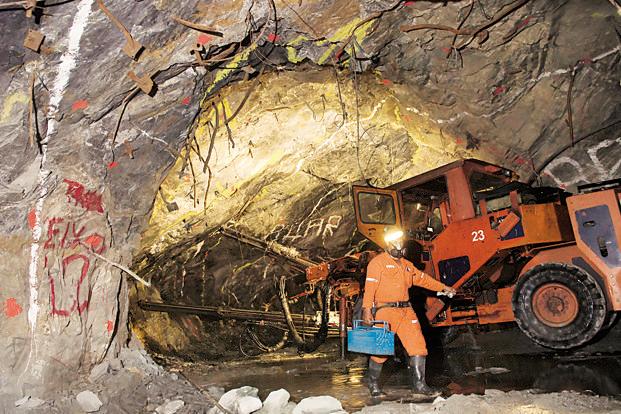
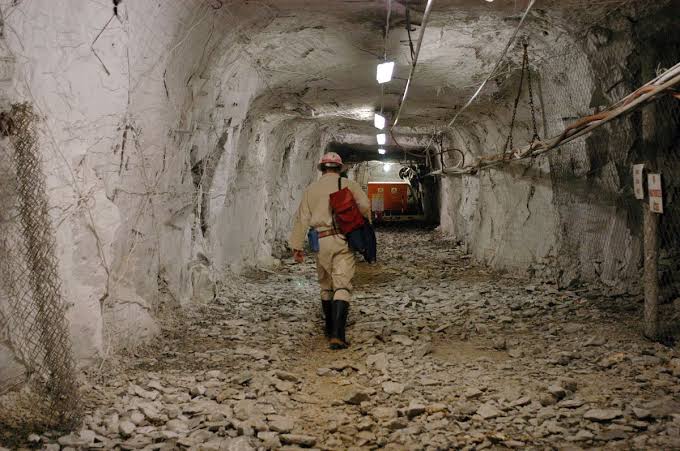
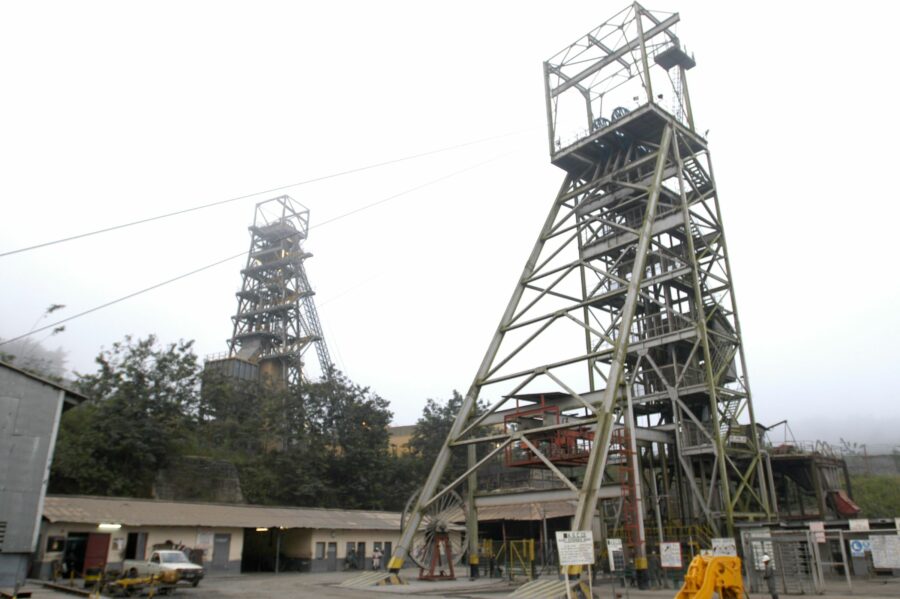
The mine Ellis and Biney founded went on to produce in excess of 30 million ounces of gold over more than a century of continuous operation, at its peak yielding more than 500,000 ounces annually from shafts sunk 1,500 metres into the rock. The concession’s exclusivity, secured through Cade’s 1897 acquisition, meant that “no one could effectively mine within the Obuasi area except this British company” — a monopoly position that persisted for generations and continues to shape land access disputes in the region today. The concession currently spans five administrative districts — Obuasi Municipal, Bekwai Municipal, Amansie Central, Adansi North, and Adansi South — territory within which independent small-scale mining, even by capable local operators, remains effectively prohibited by the same concession framework Cade originally secured.
The human cost of this exclusivity has continued into the present day. When the Obuasi mine closed in 2014, roughly 5,000 workers lost their jobs, and thousands of illegal miners moved into the resulting vacuum. When the mine reopened, soldiers guarding the site shot and killed nine illegal miners at the perimeter fence in January 2025 — a stark, current illustration of the ongoing tension between a concession framework established in 1897 and the communities living within its boundaries more than 125 years later.
The Myth vs. The Reality
| What people assume | What actually happened |
| Ashanti Goldfields Corporation was a purely British discovery and creation from its founding in 1897 | The concession was originally discovered, negotiated, and successfully operated for five to seven years by three Fante entrepreneurs — Ellis, Biney, and Brown — before Cade’s involvement began |
| The sale of the Ellis Mine concession was a straightforward, freely negotiated commercial transaction | It occurred under a British colonial legal framework that criminalized mine ownership by indigenous Africans, following the 1896 annexation of the Ashanti kingdom |
| Cade paid the full agreed price for the concession promptly upon acquiring it | One documented account states the agreed £2,500 purchase price went unpaid for two years after Cade took control |
| The three Fante founders received a fair or proportionate share of the value they had created | The concession they sold for a documented low sum became the foundation of a company capitalized at £250,000 within roughly two years |
Close
The modern story of Ashanti gold did not begin with a British discovery in 1897 — it began seven years earlier, with three Fante entrepreneurs who found the deposit, developed the technical means to extract it, and operated it successfully before any British company existed to claim it. What followed was not simply a story of insufficient African capital meeting available European investment. It was a transaction conducted under a colonial legal system specifically engineered to make continued African ownership illegal, resulting in a purchase price that bore no meaningful relationship to the value the founders’ own discovery and labor had already established — a value that would go on to generate over 30 million ounces of gold across more than a century of extraction from the same ground Ellis, Biney, and Brown first claimed in 1890.
Sources and further reading.