

A Historical In-depth Discovery of Trade in West Africa Since 1896
Here’s what you need to know:
- Edwin Cade’s original agreement to acquire the Ellis Mine concession was negotiated with African chiefs in July 1895 — while the Ashanti kingdom still held its own sovereignty, and before any British military conquest of the territory had occurred.
- Just months later, Britain launched the Fourth Anglo-Ashanti War (December 1895–February 1896), deposing and exiling King Prempeh I and formally annexing Ashanti territory. Only after this military conquest did British colonial authorities formally recognize Cade’s mining, trading, and agricultural rights for a full 90-year term.
- The scandal: Cade himself, in a written statement made before the war even began, explicitly anticipated and planned around British annexation strengthening his commercial position — stating directly that he intended to “shape my course” so that his company’s position “may still be a desirable one in the event of annexation by Her Majesty’s Government.”
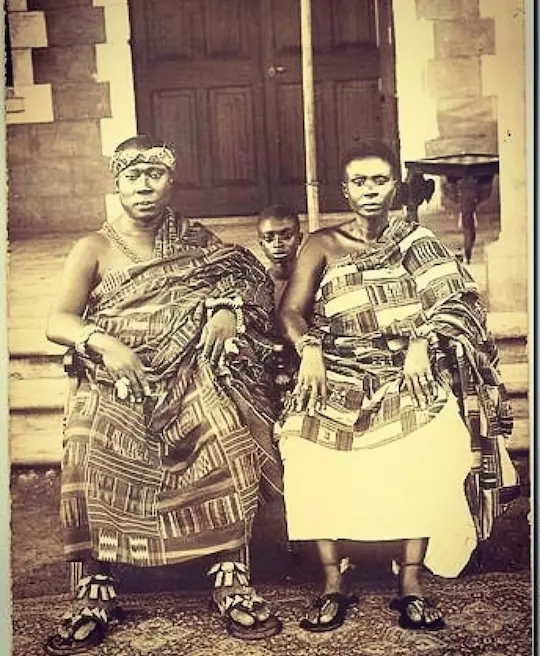
The Original Agreement: What Cade Actually Secured in 1895
In July 1895, Edwin Arthur Cade traveled to Obuasi together with Joseph Ellis and Chief Joseph Biney, the original Fante founders of the Ellis Mine, specifically to obtain approval for their proposed sale of the mining concession from the Chiefs of Bekwai and Adansi. This was, at the time, a negotiation conducted entirely within the existing Ashanti political order — the Ashanti kingdom remained sovereign, its traditional authorities remained the recognized power over the land, and Cade’s rights to the concession rested on their approval alone.
It’s worth being precise about what this meant legally at the time. Whatever agreement Cade secured in 1895 existed under Ashanti sovereignty, subject to Ashanti traditional law and authority. There was no British colonial government with jurisdiction over the Obuasi district to confirm or guarantee any long-term mining rights — the chiefs of Bekwai and Adansi were the only relevant authority, and their approval, while genuine, carried none of the durable, internationally recognized legal weight that a colonial government’s ratification would later provide.
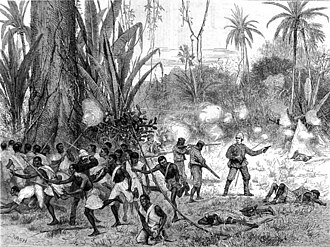
The War: How Britain Actually Conquered the Territory
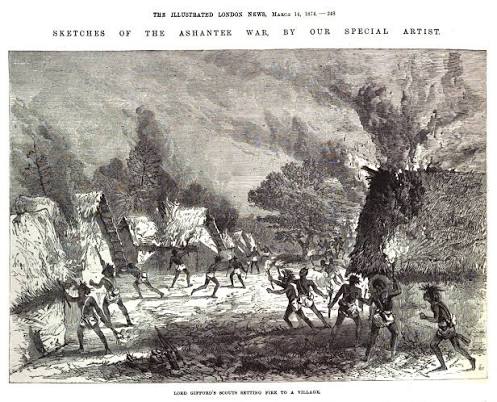
The context behind Britain’s subsequent military action against Ashanti is worth understanding in full, since the pretext given for war differed considerably from Britain’s actual underlying motive. The stated justification was Ashanti’s failure to pay fines of 50,000 ounces of gold that had been levied on the Ashanti king under the 1874 Treaty of Fomena, following an earlier Anglo-Ashanti war. But the real driver, according to historical analysis, was strategic: by the 1890s, both France and Germany were showing growing interest in the Ashanti region specifically because of its gold trade, and Britain feared Ashanti territory could become a corridor for rival European colonial penetration into the interior. When Ashanti had turned down an unofficial British offer to become a protectorate in 1891, Britain concluded that outright annexation, rather than negotiated partnership, was necessary to secure the territory.
The Fourth Anglo-Ashanti War ran from December 1895 to February 1896. Colonel Sir Francis Scott left Cape Coast with the main British and West Indian expeditionary force in December 1895 and arrived in Kumasi in January 1896. Ashanti’s king, Asantehene Agyeman Prempeh I, recognizing the overwhelming strength of the invading force, directed his people not to resist militarily — meaning the war’s outcome was effectively determined before serious fighting could occur, though disease claimed significant casualties among the British and allied forces regardless, including Queen Victoria’s own son-in-law, Prince Henry of Battenberg.
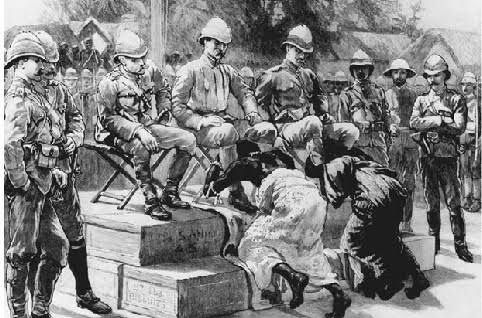
Prempeh I was arrested and formally deposed. He was forced to sign a treaty of protection and, along with other senior Ashanti leaders, was sent into exile — held first at Elmina Castle, then deported to Sierra Leone, and eventually to the Seychelles Islands, where he would remain in exile for years. As he was being taken away, Prempeh I is reported to have said to a British administrator, “Nnaba Gyeme” — a moment of documented anguish at the loss of his kingdom’s sovereignty. Britain formally established its protectorate over Ashanti in 1896, effectively dissolving the Ashanti confederation as an independent political entity, even though British forces did not immediately achieve full territorial occupation.
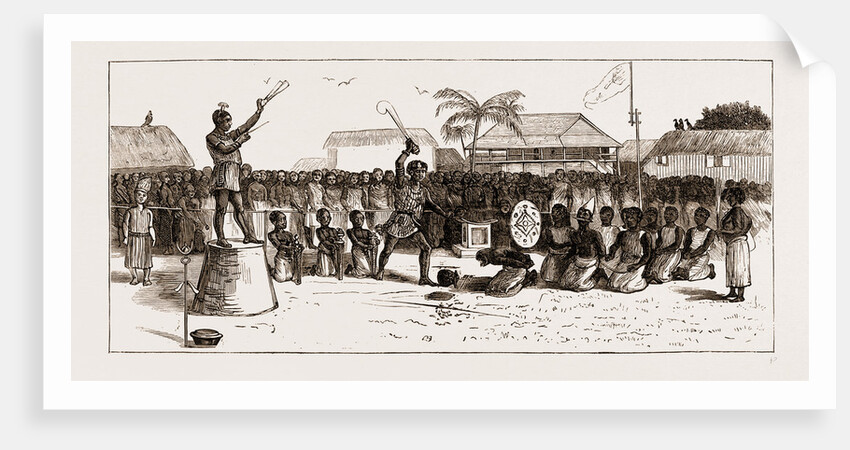
The Confirmation: What Changed Legally the Moment Sovereignty Ended
Here is the precise sequential link this piece set out to trace, and the historical record confirms it directly. Only after this 1896 annexation did British colonial authorities formally ratify Cade’s concession on the durable terms that would actually make his company viable as a long-term commercial venture. The historical record states this plainly: “In 1896 Ashanti had been annexed by the British Government and negotiations secured agreement whereby the concession to mining, trading and agricultural rights over a square mile area was recognised by the Government for 90 years, and the Ashanti Goldfields Corporation Limited was registered.”
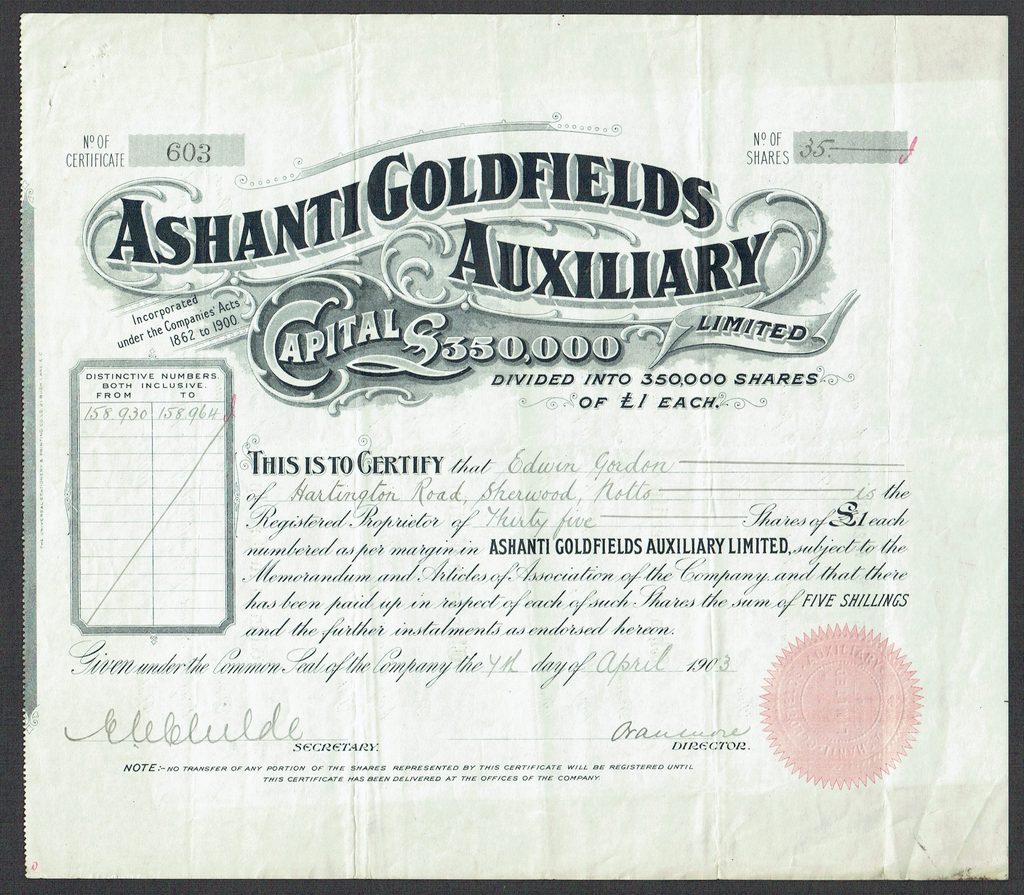
The distinction this reveals is worth stating precisely. Cade’s 1895 agreement with African chiefs was a foundation, but it was not the source of the durable legal rights his company would ultimately be built on. Those rights — the specific 90-year term that gave Ashanti Goldfields Corporation the long-term security it needed to attract London investors and build a company capitalized at £250,000 — came from the British colonial government, granted only after that same government had militarily conquered the territory and deposed its sovereign ruler. The war did not simply create favorable conditions for Cade’s business; it directly produced the legal authority under which his concession’s most commercially valuable terms were actually confirmed.
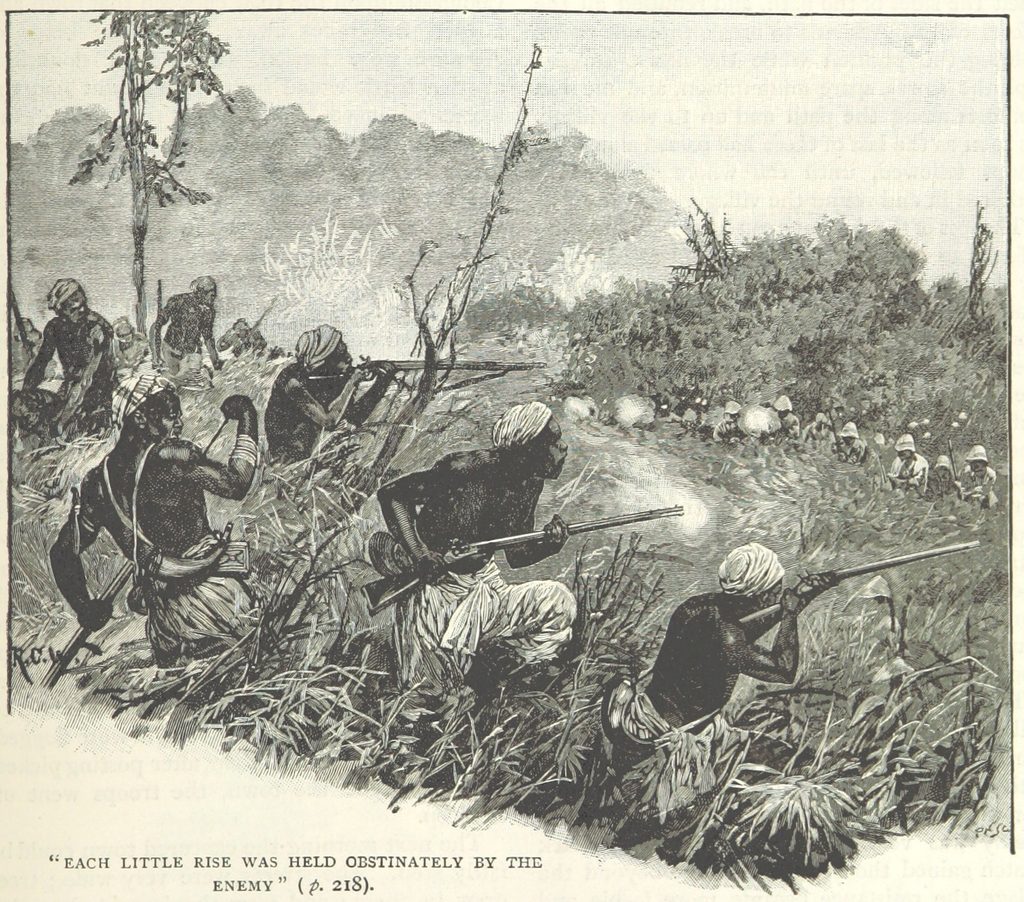
The Scandal: Cade Was Already Planning Around Annexation
Here is the most damning and directly documented finding in this entire sequence. Before the Fourth Anglo-Ashanti War had even begun, Cade himself put his own strategic thinking in writing. In a statement preserved in Ashanti Goldfields’ own corporate history, Cade wrote: “I am determined, however, to proceed at all risks, and so to shape my course that even in the event of a purchase not being at present possible, the position of the company may still be a desirable one in the event of annexation by Her Majesty’s Government.”
This sentence deserves to be read closely, because it reveals that Cade was not simply a businessman who happened to benefit from a war he had no connection to. He was actively structuring his own commercial strategy around the explicit possibility — one he clearly regarded as both plausible and desirable — that Britain would militarily annex the very territory his concession depended on, and that doing so would strengthen his company’s position. This wasn’t an opportunistic reaction after the fact; it was anticipated, written down, and factored into his planning before British troops had even marched on Kumasi.
Read alongside the actual outcome — Britain conquering Ashanti, deposing its king, and only then formally confirming Cade’s 90-year rights — this statement transforms the sequence from an unfortunate historical coincidence into something considerably closer to a documented alignment of interests between a private commercial venture and an imperial military campaign, each anticipating the other would benefit from the same outcome.
The Myth vs. The Reality
| What people assume | What actually happened |
| Cade’s mining rights were secured through a single, stable agreement negotiated once with legitimate authority | His rights existed in two distinct legal phases: an informal 1895 agreement under Ashanti sovereignty, followed by formal 90-year confirmation only after British annexation in 1896 |
| The Fourth Anglo-Ashanti War was an unrelated political and military event that happened to precede Ashanti Goldfields’ founding | Cade explicitly anticipated the war’s outcome benefiting his company’s position, in writing, before the conflict even began |
| Britain’s stated justification for war — unpaid gold fines from 1874 — reflected the actual underlying motive | Historical analysis identifies the real driver as blocking French and German colonial competition for Ashanti’s gold wealth |
| The 90-year mining term Ashanti Goldfields operated under was granted by Ashanti’s own traditional authorities | It was granted by the British colonial government, following the annexation that ended Ashanti’s independent sovereignty |
Close
The sequence connecting British military conquest to Cade’s own commercial rights is not a matter of historical inference — it is directly documented, from the pretext used to justify the war, through the king’s deposal and exile, to the specific timing of when Cade’s 90-year concession terms were actually confirmed. And Cade’s own written words, composed before the war began, show he was not a passive beneficiary of circumstances beyond his control. He anticipated that British annexation would serve his company’s interests, planned his strategy around that possibility, and watched that exact outcome materialize within months — leaving Ashanti Goldfields Corporation’s most durable and commercially valuable legal foundation resting directly on the conquest of the very kingdom whose gold it was built to extract.
Sources and further reading.