
A Historical In-depth Discovery of Trade in West Africa Since 1896
Here’s what you need to know:
- On June 20, 1979, the Voltaic government formally created the Société Voltaïque des Fibres Textiles, capitalized at 1.1 billion CFA francs and split roughly 55% state ownership to 45% CFDT ownership.
- The company inherited the physical assets and structure of the 1970–1979 “Association Haute-Volta/CFDT,” making it the direct institutional bridge between colonial-era cotton extraction and the modern national monopoly.
- Renamed Société Burkinabè des Fibres Textiles (SOFITEX) in 1984 alongside the country’s own renaming, the company held total governing authority for two decades before cotton farmers — the people actually growing the crop — won a single seat on its board in 1999.
- The scandal: under pressure from the World Bank and IMF, SOFITEX was formally stripped of its national monopoly in 2004, reduced to operating only in the country’s western zone as two new competing companies entered the market.
On paper, June 20, 1979, looks like a genuine moment of economic sovereignty — Upper Volta finally taking majority ownership of its own cotton industry, 55% to CFDT’s 45%.
Here’s the sharper detail. Majority ownership on a balance sheet is not the same thing as power over your own crop. For the next two decades, the farmers who actually grew that cotton had zero seats on the board of the company controlling their livelihoods.
Owning 55% of a company means nothing to the person planting the crop if that person doesn’t own a single seat at the table where the decisions get made.
Here’s What Actually Happened
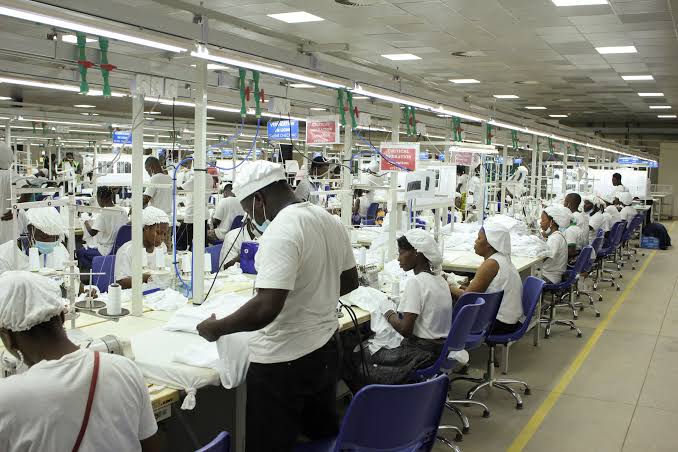
On June 20, 1979, the Voltaic government formally created the Société Voltaïque des Fibres Textiles, with initial capital of 1.1 billion CFA francs, split 55% to the state and 45% to CFDT.
It’s worth being clear about what this actually replaced. The company took over installations and operations that had been run since 1970 under the “Association Haute-Volta/CFDT,” a five-year transitional partnership. 1979 wasn’t a sudden break from CFDT — it was the formal conclusion of a bridge period that had already been running for nearly a decade.
This fit a broader regional pattern worth noting. While most Francophone African nations nationalized their cotton sectors as early as 1974, Upper Volta deliberately chose the slower, five-year transitional path — a notably more gradual approach to asserting formal control than most of its neighbors took.
The capital growth that followed is worth including for detail. In 1981, following the construction of a new factory at Dédougou and additional infrastructure investment, the company’s capital was increased to 2.2 billion CFA francs; further increases eventually brought it to 4.4 billion CFA francs under new ownership proportions.
1984: A New Name for a New Country
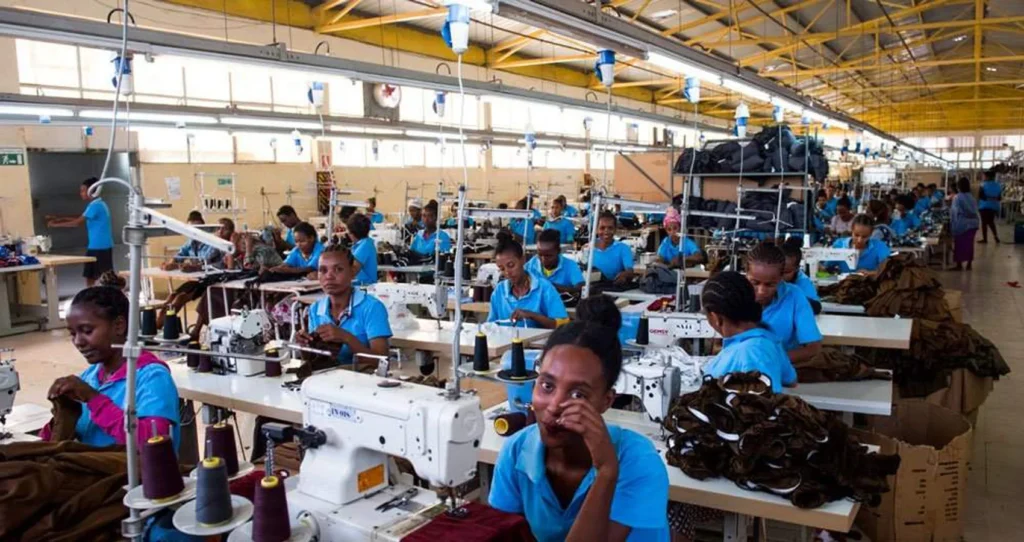
The renaming deserves to be tied directly to the country’s broader political transformation. In 1984, under the revolutionary government of Thomas Sankara, Upper Volta was renamed Burkina Faso — and the cotton company was renamed in step, becoming the Société Burkinabè des Fibres Textiles, abbreviated SOFITEX, the name it still carries today.
It’s worth noting what stayed consistent underneath the new name. The underlying ownership structure, monopoly position, and vertically integrated “filière” model inherited from CFDT carried over largely unchanged — a new national identity applied to essentially the same institutional machinery.
Renaming a company after a revolution doesn’t automatically revolutionize how that company actually operates. SOFITEX’s core structure in 1984 was still the same joint state-CFDT monopoly established five years earlier, now simply flying under a new flag.
The Scandal: Two Decades Without a Seat at the Table
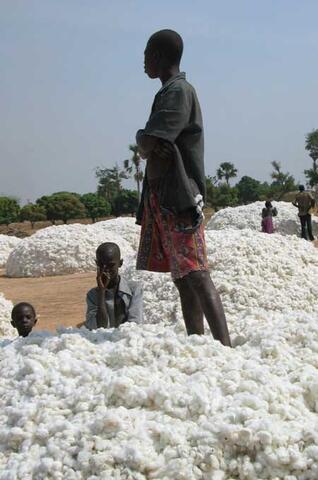
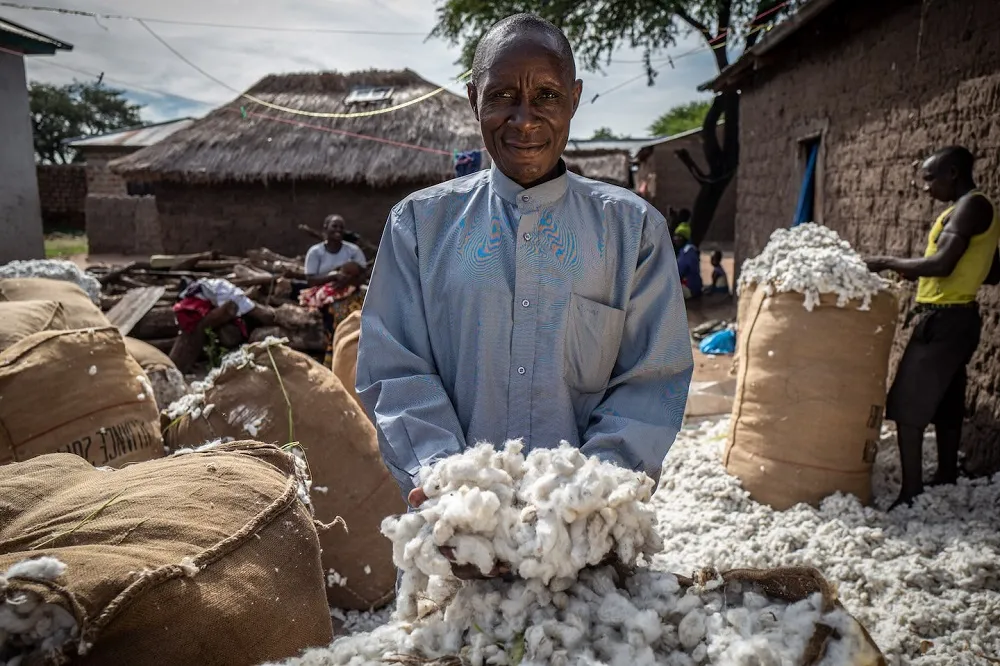
Here’s the sharpest, most concrete fact in this entire founding story. For twenty years after SOFITEX’s 1979 creation, the cotton farmers actually producing the crop that generated the company’s entire revenue had no representation whatsoever on its governing board.
It’s worth stating the correction plainly, and noting how long it took to arrive. It was not until 1999 — two full decades after the company’s founding — that cotton producers, represented through their national federation, the Union Nationale des Sociétés Coopératives des Producteurs de Coton du Burkina (UNPCB), finally entered SOFITEX’s Board of Directors.
This exclusion mattered directly. SOFITEX set purchase prices, determined input costs, and controlled every stage of the value chain from credit to export — decisions with direct, immediate consequences for hundreds of thousands of farming households, made for twenty years by a board that included the state and CFDT, but not a single producer.
There’s a consequence that followed directly from this structural pressure. Under mounting pressure from the World Bank and the International Monetary Fund, SOFITEX was formally stripped of its national monopoly in 2004, its operations reduced to the country’s western cotton-growing zone alone, as two new competing companies — Faso Coton and SOCOMA — entered the market for the first time in the company’s 25-year history.
Here’s the scandal’s core point, stated precisely. The 1979 founding created a governance structure so exclusionary that it took international financial institutions, not the company’s own reform instincts, to finally force open a monopoly that had operated for a quarter-century with the people actually growing its core product locked out of its own boardroom for the first twenty years.
The Myth vs. The Reality
| SOFITEX’s 1979 founding, with majority state ownership, represented genuine national economic sovereignty over the cotton sector | Majority state ownership on paper did not translate into producer representation, which took a full twenty years to arrive |
| The company’s 2004 liberalization was a voluntary modernization reform | The end of SOFITEX’s monopoly came under direct pressure from the World Bank and IMF, not from the company’s own internal reform agenda |
| SOFITEX’s 1984 renaming reflected genuine revolutionary transformation under Sankara | The company’s underlying ownership structure, monopoly position, and operating model remained essentially unchanged under the new name |
| Cotton farmers had some voice in company decisions from the start, given the company’s stated national mission | Producers held zero board seats for the company’s first twenty years, despite generating its entire revenue base |
Why this Still Matters
1979 looks, on the surface, like the moment Burkina Faso took control of its own cotton industry — and in terms of the balance sheet, it was. But majority ownership sitting in state hands, with CFDT retaining 45% and farmers holding zero seats at all, tells a more complicated story about who actually held power inside the institution that controlled millions of livelihoods.
It took twenty years for producers to get a seat on the board, and twenty-five years for international lenders to force open the monopoly altogether — meaning the “national” cotton company founded in 1979 spent more of its history excluding the people who grew its product than including them.
.