

A Historical In-depth Discovery of Trade in West Africa Since 1896
Here’s what you need to know:
- The ECOWAS Trade Liberalisation Scheme, first implemented in 1979 and expanded to industrial products in 1990, remains the foundational legal instrument behind the bloc’s promise of duty-free trade among member states — making it nearly 46 years old as of the 2025 review.
- ECOWAS’s own June 2025 summit communiqué openly admits the scheme still isn’t fully working: the Authority of Heads of State “deplores the persistence of numerous tariff and non-tariff barriers” along the Community’s road corridors, directing their “total elimination” — a directive nearly identical to ones issued in previous summits.
- The scandal, already partially documented elsewhere in this blog: even as ECOWAS extended ETLS treatment to AES member states despite their formal withdrawal, Mali, Niger, and Burkina Faso responded by imposing their own 0.5% import levy on ECOWAS goods — a direct trade barrier that, as one analysis put it plainly, “counters ECOWAS’s intention… contradicts ECOWAS’ objectives.”
ECOWAS promised duty-free trade among its members in 1979. Forty-six years later, the bloc’s own leadership is still issuing formal directives demanding the “total elimination” of the exact barriers that promise was supposed to remove.
The Promise: What ETLS Was Actually Built to Do
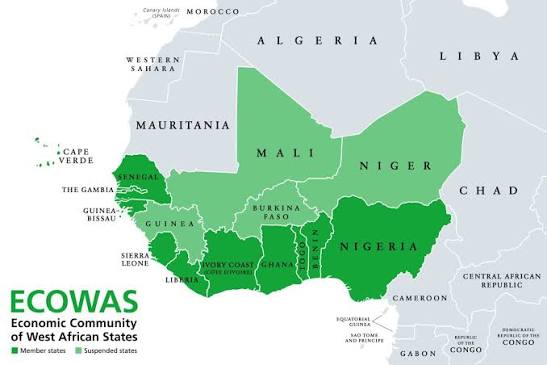
ETLS’s original scope and expansion are worth explaining directly, since it’s worth understanding the scheme’s actual legal foundation. First implemented in 1979, ETLS initially covered only agricultural products, handicrafts, and unprocessed goods; in 1990, the scheme expanded to include industrial products, broadening its reach across the region’s actual manufacturing base.
It’s worth understanding what ETLS’s core mechanism actually requires to function. Goods moving under the scheme must be accompanied by a Certificate of Origin and an ECOWAS Export Declaration form, verifying the goods actually originated within the ECOWAS region and therefore qualify for duty-free treatment — a documentation-heavy verification system whose reliability depends entirely on how consistently individual customs posts across fifteen different countries actually enforce it.
The scheme’s stated ultimate goal is worth bringing in directly, since it frames what “success” was actually supposed to look like. ETLS was designed as one step toward a genuine common market, established through “the liberalisation of trade by the abolition, among Member States, of customs duties levied on imports and exports, and the abolition among Member States, of non-tariff barriers.”

The Admission: What ECOWAS’s Own Leadership Says About It
Here’s the piece’s central and most surprising documented finding, worth introducing directly. At ECOWAS’s 67th Ordinary Session, the Authority of Heads of State and Government formally acknowledged the ETLS Task Force’s “advocacy missions to Member States” — while, in the very same communiqué, directly stating that the Authority “deplores the persistence of numerous tariff and non-tariff barriers” along the Community’s road corridors.
It’s worth stating what this admission actually represents. This isn’t outside criticism of ETLS’s implementation — it’s ECOWAS’s own top political body, in its own official summit record, acknowledging that a scheme nearly half a century old still hasn’t eliminated the exact barriers it was created to remove.
There’s a specific directive this admission produced worth bringing in, since it shows the response remained at the level of instruction rather than described enforcement mechanism. The Authority “directs” the total elimination of these barriers along Community road corridors — language that places responsibility back on individual member states to actually act, the same basic structure that has apparently produced 46 years of only partial compliance.
The New Complication: AES’s Direct Contradiction of the Reciprocal Arrangement
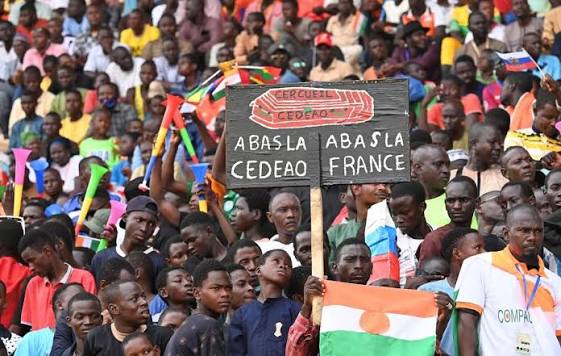
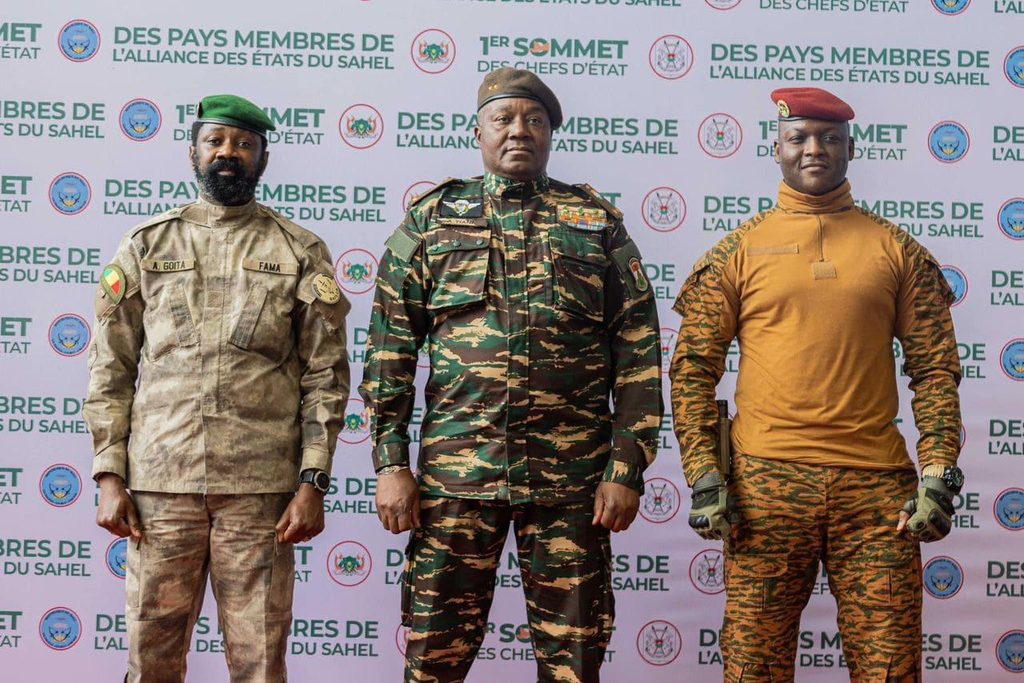
ECOWAS’s stated position on AES’s continued ETLS treatment is worth bringing in directly, connecting to material already documented elsewhere in this blog. Despite Mali, Niger, and Burkina Faso’s formal withdrawal from ECOWAS in January 2025, the bloc stated that goods and services from the three countries would still be treated under the ETLS and investment policy — a genuine, disclosed act of continued economic goodwill despite the political rupture.
AES’s direct response to this arrangement is worth bringing in, since it’s the piece’s sharpest documented contradiction. The three AES states imposed their own 0.5% import levy on goods from ECOWAS member states, applying to all incoming goods except humanitarian aid, with the stated purpose of generating revenue to fund the alliance’s own activities.
The contradiction is worth stating plainly. One direct analysis of this move noted that by imposing a levy on ECOWAS goods, “the AES is essentially introducing a trade barrier, which contradicts ECOWAS’ objectives” — describing a policy that directly countered the free-movement arrangement ECOWAS had specifically chosen to preserve.
This connects directly to the human cost already documented elsewhere in this blog, worth naming explicitly. This is the exact same 0.5% levy already covered in this blog’s “Either Way, I Lose” coverage, where a trader described losing goods worth over ₦8 million to a single seizure, saying plainly, “Either way, I lose” — meaning the levy directly complicating ECOWAS’s own 46-year-old free trade promise has real, documented consequences for the individual traders caught in the middle.
ECOWAS’s own leadership was already, in an official summit communiqué, acknowledging significant unresolved implementation gaps in a trade scheme nearly half a century old — and rather than that gap narrowing, the AES rupture added an entirely new, directly contradictory trade barrier on top of an already-incomplete foundation.
The Myth vs. The Reality
| What people assume | What actually happened |
| The ECOWAS Trade Liberalisation Scheme has functioned as a largely settled, well-implemented policy since its 1990 expansion to industrial products | ECOWAS’s own June 2025 summit communiqué explicitly acknowledges “the persistence of numerous tariff and non-tariff barriers” along the Community’s road corridors, nearly 46 years after the scheme’s original implementation |
| AES’s formal withdrawal from ECOWAS meant the bloc abandoned any effort to maintain free trade arrangements with the three departing states | ECOWAS specifically chose to continue treating AES goods under ETLS despite the formal withdrawal, only for AES to respond with a levy that directly contradicts that arrangement |
| ECOWAS’s admission of persistent trade barriers reflects a new, recently discovered problem | The Authority’s directive to eliminate these barriers uses language nearly identical to instructions issued in previous summits, suggesting a long-running, unresolved pattern |
| The 0.5% AES levy primarily affects large-scale formal trade with minimal impact on individual traders | A trader already documented elsewhere in this blog described losing goods worth over ₦8 million to a single seizure tied to this exact levy |
Close: A Review That Confirms What Was Already True
A formal implementation review of a 46-year-old trade scheme was never going to find a clean, uncomplicated success story — and this one didn’t, surfacing the same category of unresolved tariff and non-tariff barriers ECOWAS’s own leadership has apparently been directing member states to eliminate for years, now compounded by a new, directly contradictory barrier imposed by the very states ECOWAS chose to keep treating generously despite their departure.

Sources and further reading.