

A Historical In-depth Discovery of Trade in West Africa Since 1896
Here’s what you need to know:
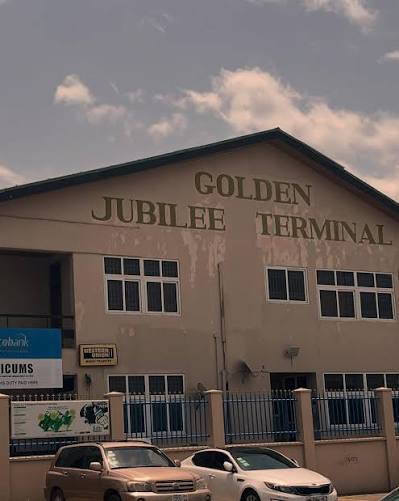
- The Golden Jubilee Terminal, completed in 2007-2010 to mark Ghana’s 50th independence anniversary, is a wholly state-run inland clearance depot at Tema — not a private concession like the Meridian Port Services terminal already documented elsewhere in this blog.
- Unlike most infrastructure stories in this section, GJT is a genuine, verified success: Tema Port exceeded its 500,000 TEU target two years ahead of schedule, and the Ghana Ports and Harbours Authority has been recognized as Ghana’s Best Performing State-Owned Enterprise.
- The honest complication here isn’t corruption — it’s a fair question this success raises: if Ghana’s own publicly-run terminal could deliver results this strong, why did the country’s largest port expansion, already documented in this blog, go to a foreign-led private consortium instead of scaling this public model further?
Most of this blog’s Ghana port coverage has focused on private, multinational-led consortiums — Meridian Port Services, Bolloré, MSC. This is a story about the part of Tema Port that Ghana built and has run entirely on its own, and how well it’s actually worked.
Symptom: The Congestion Problem GJT Was Built to Solve
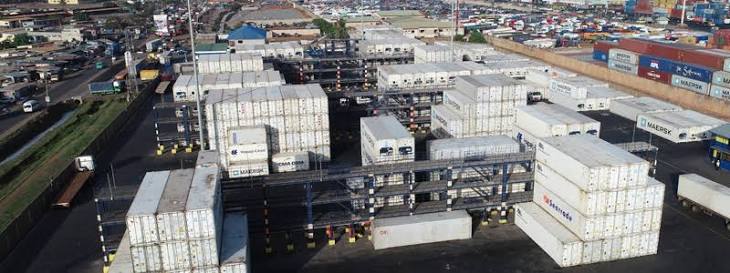
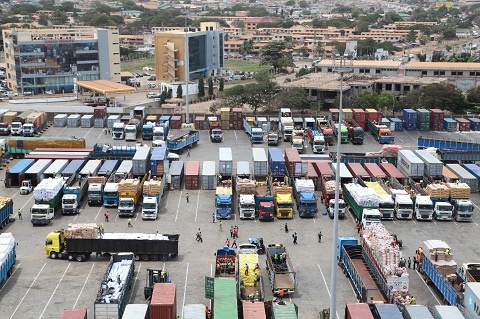
The original bottleneck is worth explaining directly, since it’s straightforward and well documented. By the mid-2000s, Tema Port needed off-dock space to handle container freight station activities separate from the main port itself, since keeping all devanning, storage, and clearance functions concentrated at the dock was contributing to congestion.
It’s worth explaining what an inland clearance depot actually does, since it’s a genuinely useful concept to explain plainly. Rather than every imported container being unpacked, inspected, and cleared right at the ship’s berth, an ICD moves those functions to a separate facility nearby — freeing up dockside space for the actual loading and unloading of vessels, while still keeping clearance close enough to remain efficient.
The Repair: What Ghana Actually Built, On Its Own
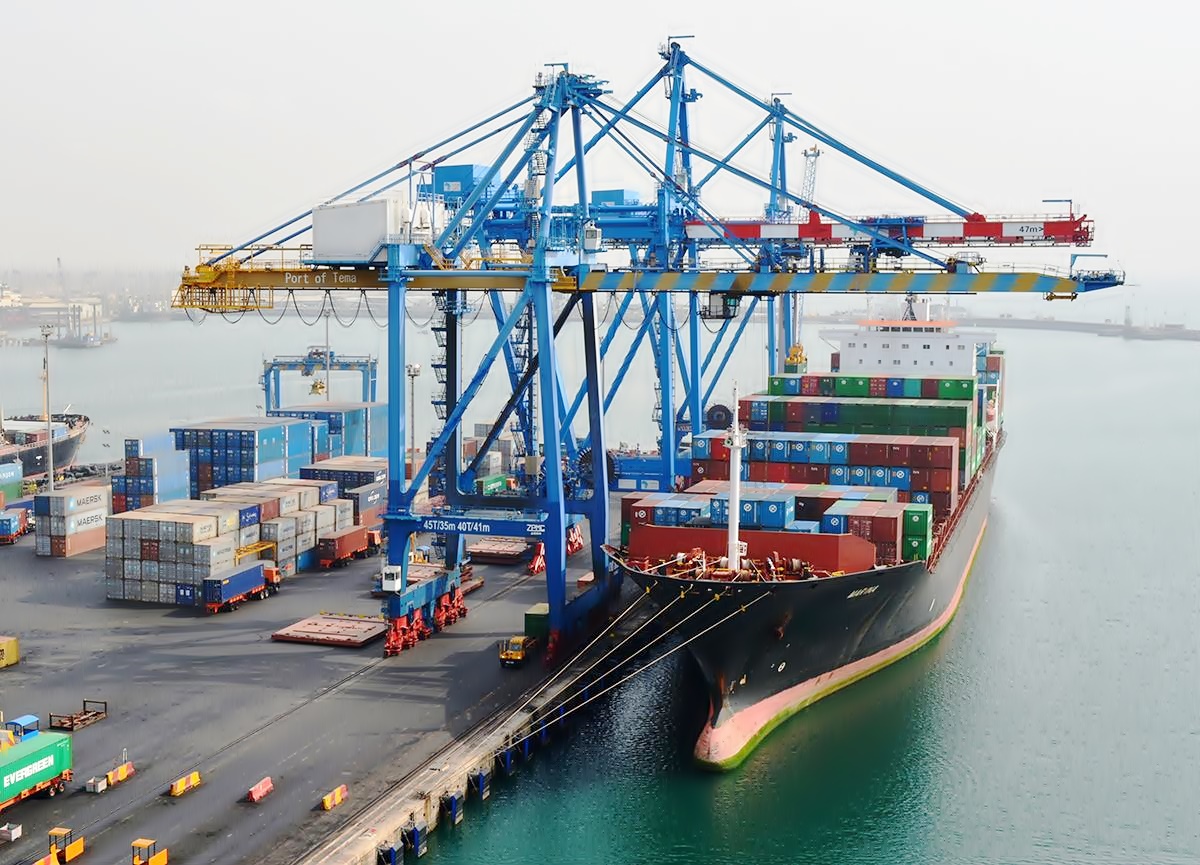
GJT’s origin and scale are worth laying out directly. Completed as part of a project marking Ghana’s 50th anniversary of independence, the Golden Jubilee Terminal spans 97,412 square metres on the western end of Tema Port, comprising a container freight station, a state warehouse, vehicle parking, open storage and un-stuffing areas, banking services, and customs and security operations.
There’s a specific operational capability worth noting that gives this topic its “24-hour” framing. The terminal operates 24/7, with scheduled delivery windows extending from early morning to evening on weekdays and reduced hours on Saturdays — genuine round-the-clock operational capacity built into a facility Ghana developed and continues to run itself.
There’s additional specialized capacity added since the terminal’s original completion worth bringing in. A dedicated reefer terminal, managed by GJT and opened in February 2016, added 840 temperature-controlled points specifically for frozen foods and fruit shipments requiring cold-chain handling.
The Track Record: The Numbers That Actually Back This Up
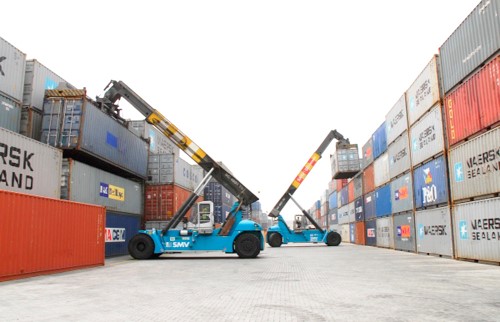
There’s genuine performance data worth bringing in directly, since it’s real and verifiable. GJT handled 120,199 TEUs in 2019, with annual traffic averaging around 116,189 TEUs between 2015 and 2019 — consistent, substantial throughput for a facility operating entirely under Ghanaian state management.
There’s broader institutional recognition this operational track record earned, worth noting. The Ghana Ports and Harbours Authority has been adjudged Ghana’s Best Performing State-Owned Enterprise, with Tema Port exceeding its 500,000 TEU target two years ahead of its original 2010 schedule under the same institutional leadership that delivered GJT.
This is worth stating plainly. This is a genuinely different story from most of what this blog’s Customs, Logistics & Infrastructure coverage has documented — a public institution building real capacity, hitting its own targets ahead of schedule, and sustaining strong throughput for well over a decade without the kind of foreign consortium ownership structure this section has scrutinized elsewhere.
The Honest Complication: Why Didn’t This Model Scale?
Here’s the fair question this success raises, worth introducing directly since it’s worth asking even without alleging wrongdoing. If GPHA’s own management delivered GJT successfully, on budget and ahead of target, why did Ghana’s subsequent, much larger $1.5 billion Tema Port expansion — already documented in this blog’s earlier coverage — go to a joint venture majority-owned by APM Terminals and Bolloré, rather than being developed under a similarly state-led model?
This deserves honest framing, without asserting a definitive answer the evidence doesn’t support. The likely explanation involves capital intensity and risk — a $1.5 billion deep-water expansion project carries financing requirements and technical complexity well beyond what GJT’s more modest inland clearance depot required, meaning the two projects may simply not be comparable in scale rather than reflecting any failure of the public model itself.
There’s what this comparison still usefully illustrates, even without a scandal to report. GJT’s track record is worth remembering specifically because it complicates any assumption that only foreign multinational capital and management can deliver genuine port infrastructure success in West Africa — Ghana’s own public institution has already proven it can, at least at this scale.
The Myth vs. The Reality
| What people assume | What actually happened |
| Successful, modern port infrastructure in West Africa requires foreign multinational ownership and management, as seen in most of this blog’s other Tema Port coverage | GJT is a wholly state-run facility that has delivered consistent, strong throughput for over a decade under Ghanaian public management |
| Ghana’s Golden Jubilee Terminal is a minor, secondary facility compared to the port’s main container terminals | It played a genuine, documented role in Tema Port beating its original 500,000 TEU target two years ahead of schedule |
| GPHA’s institutional performance is unremarkable compared to the privately-run consortiums documented elsewhere in this blog | GPHA has been recognized as Ghana’s Best Performing State-Owned Enterprise |
| A facility built to mark a 50th independence anniversary in 2007-2010 would likely be symbolic rather than operationally significant | GJT operates 24/7 with substantial, sustained annual container throughput well into the 2020s |
Close: A Quieter Success, Worth Remembering
Not every infrastructure story in West Africa is one of delay, corruption, or foreign consolidation — the Golden Jubilee Terminal is a genuine, well-run, entirely Ghanaian-managed success sitting quietly inside the same port complex this blog has spent considerable time scrutinizing for very different reasons.
Worth remembering the next time a foreign consortium’s involvement in African port infrastructure gets framed as simply necessary — Ghana’s own public sector has already shown, at least once, that it didn’t have to be.
Sources and further reading.