

A Historical In-depth Discovery of Trade in West Africa Since 1896
Here’s what you need to know:
- Following their formal exit from ECOWAS on January 29, 2025, Mali, Burkina Faso, and Niger introduced a unified 0.5% import levy on goods entering the AES bloc from outside member states, explicitly designed to fund confederal institutions including a roughly 5,000-strong joint military force.
- The AES’s own founding charter states its financing “shall be provided by contributions from the member states” — but reporting shows the bloc has continued relying substantially on Russian, Turkish, Gulf, and Chinese financing, raising real questions about whether genuine self-reliance has actually been achieved.
- The scandal: on the ground, traders now describe tariffs reaching as high as 200% and widespread goods confiscation, with one trader losing ₦8 million worth of goods in a single seizure and telling reporters plainly, “Sometimes I use formal routes, sometimes informal. Either way, I lose.”
A cross-border trader summed up AES’s new customs infrastructure in six words — “Sometimes I use formal routes, sometimes informal. Either way, I lose.” This is a look at the policy that produced that assessment.
Symptom: Why AES Needed Its Own Customs System
The formal withdrawal sequence is worth explaining directly, since it sets up why new infrastructure became necessary. Mali, Burkina Faso, and Niger announced their intent to leave ECOWAS on January 28, 2024, with the mandatory one-year notice period under Article 91 of the ECOWAS Treaty expiring on January 29, 2025 — the date the departure became formally effective.
It’s worth explaining what leaving ECOWAS actually meant for trade infrastructure. ECOWAS membership had meant AES states’ trade with the rest of West Africa operated under the bloc’s shared Common External Tariff and free-movement protocols; leaving meant AES needed to build its own parallel customs and levy system essentially from scratch, rather than simply continuing under existing regional rules.
The Repair: What AES Actually Built
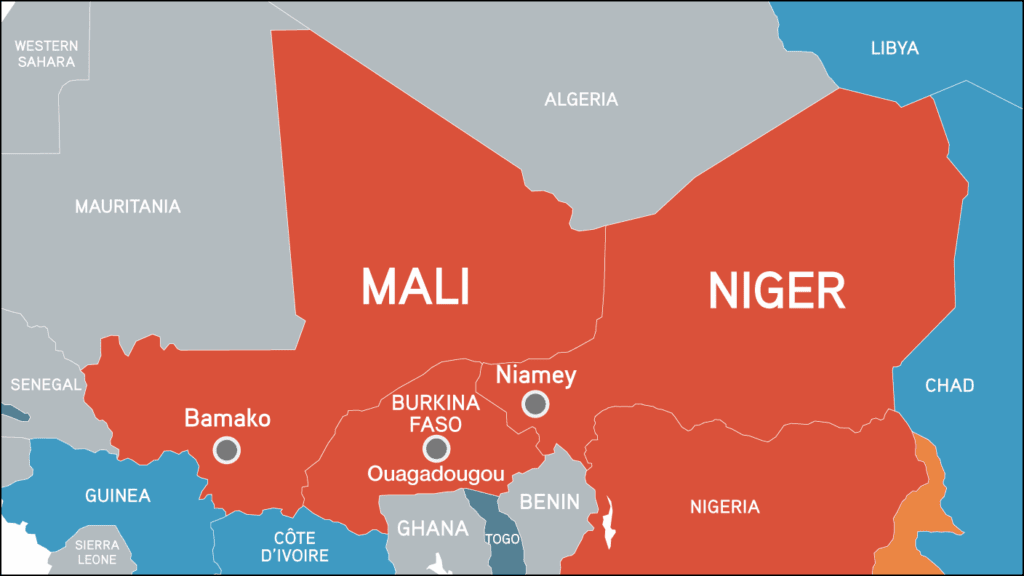
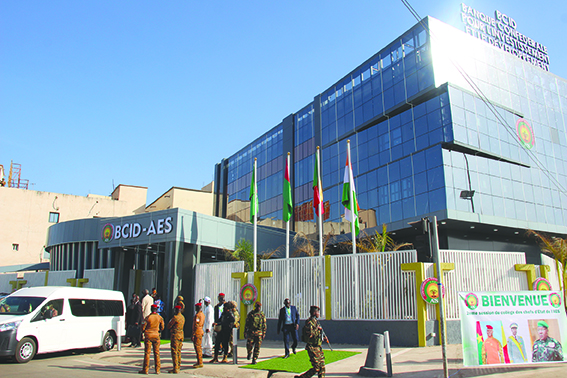
The core financial mechanism is worth bringing in directly. On March 28, 2025, the governments of Bamako, Ouagadougou, and Niamey agreed to introduce a 0.5% import levy across the bloc, designed specifically to fund confederal institutions, including the AES Unified Force — a roughly 5,000-strong joint military contingent commanded by Burkinabe General Daouda Traoré.
The AES charter’s own stated financing philosophy is worth quoting directly, since it frames the institutional ambition clearly. The founding charter stipulates that financing of the confederation “shall be provided by contributions from the member states” — an explicit commitment to self-reliance rather than dependence on the kind of external World Bank or African Development Bank financing the bloc’s members have historically relied on.
There’s an additional financial institution built alongside this levy worth noting. The AES separately created its own development bank, designed specifically to finance regional infrastructure without recourse to the World Bank or African Development Bank.
There are parallel integration measures introduced alongside the customs system worth bringing in, since they show a broader institution-building effort. The bloc eliminated mobile roaming fees between member states, developed a joint passport, and — as of December 2025 — Burkina Faso launched the first AES biometric ID card, intended to replace ECOWAS documents entirely within five years.
The Track Record: The Self-Reliance Question
Here’s the piece’s central and most consequential finding. Two years after the ECOWAS exit, cross-border traders report tariffs reaching as high as 200%, alongside widespread customs duties, non-tariff barriers, and outright goods confiscation that make moving goods across AES borders significantly harder than before.
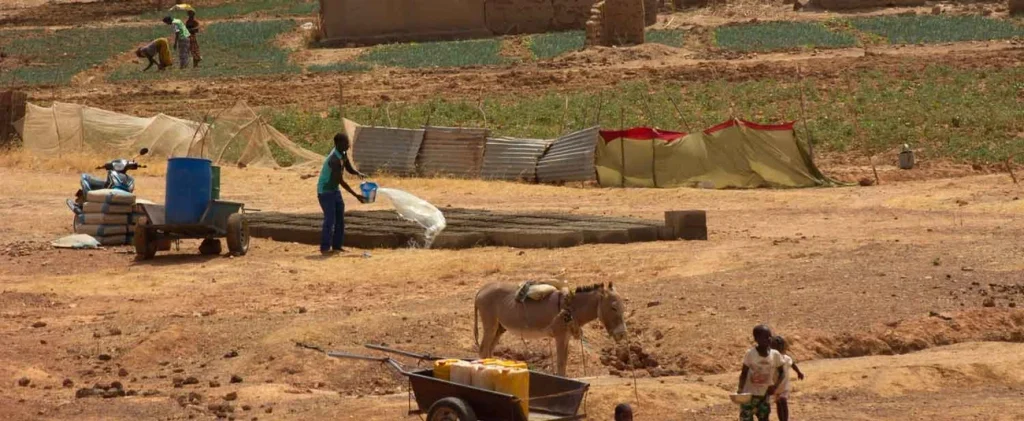
The specific trader’s account is the sharpest human evidence available, worth including directly. One trader described losing goods worth over ₦8 million after a single seizure, explaining that whether he uses formal or informal trade routes, “Either way, I lose.”
There’s specific price and income data this has produced, worth bringing in since it shows real, measurable economic harm. Food prices in Sahelian cities have risen 18% since the start of 2026 — even as farmers are being paid less for their crops, meaning the added costs from tariffs and border friction are being absorbed disproportionately by consumers and producers simultaneously, while presumably benefiting neither.
There’s specific market disruption this has caused for agricultural producers worth noting directly, since it shows the human toll beyond price statistics. Farmers now call traders daily, reporting excess harvests going to waste that would previously have moved smoothly into cross-border agro-processing supply chains.
A customs and levy infrastructure built explicitly to fund AES’s vision of sovereign self-reliance has, in its first two years of real operation, produced tariffs of up to 200%, goods confiscation serious enough to cost individual traders millions of naira in a single incident, and food price inflation that punishes both the farmers growing crops and the consumers buying them.
The Myth vs. The Reality
| What people assume | What actually happened |
| AES’s new customs infrastructure primarily affects large-scale formal trade, with minimal impact on ordinary cross-border commerce | Individual traders report tariffs as high as 200% and specific, documented losses in the millions of naira from single seizures |
| The bloc’s founding commitment to financing through member state contributions reflects its actual current financial practice | Regional analysts note the bloc’s continued substantial reliance on Russian, Turkish, Gulf, and Chinese financing |
| Higher tariffs on AES borders primarily hurt importers and formal traders | Food price increases directly affect ordinary consumers, while farmers are simultaneously paid less for their crops |
| Traders can avoid the new levy system’s costs by using informal routes instead | One trader described losing goods regardless of which route he chose, formal or informal |
Close: Sovereignty’s Price Tag Has a Name and a Number
AES’s new customs and levy infrastructure represents a genuine, coherent institutional response to the bloc’s formal break from ECOWAS — but the trader who lost ₦8 million to a single seizure, and the farmers watching their harvests spoil while consumers pay 18% more for food, are the ones actually paying the practical cost of that sovereignty project.
Sources and further reading.