
A Historical In-depth Discovery of Trade in West Africa Since 1896
Here’s what you need to know:
- George Paterson (Scottish) and George Zochonis (Greek) met working for the trading house Fisher & Randall in Freetown before founding their own firm in 1879, building their business on a specific exchange: West African palm oil, palm kernels, cocoa, groundnuts, and hides shipped out, Manchester cotton textiles and British manufactured goods shipped back in.
- This exchange pattern wasn’t a neutral commercial arrangement between equal partners — Manchester itself became one of the world’s dominant textile manufacturing centers substantially because its mills were fed, for generations, by raw cotton “planted and picked by enslaved African people and their descendants” on plantations across the Americas, meaning the very goods PZ shipped to West Africa in exchange for palm oil were themselves manufactured using raw materials produced by a different, geographically distant population of exploited Africans.
- The scandal is this genuinely double-layered exploitation, worth stating directly through a contemporary British colonial official’s own 1841 assessment: “Manchester’s opulence is as really owing to the toil and suffering of the negro, as if his hands had excavated their docks and fabricated their steam-engines” — a direct, contemporaneous acknowledgment that the manufacturing wealth firms like PZ were trading into West Africa rested on African and African-descended forced labor from the very start.
The Exchange: What PZ Actually Traded, and Why Manchester Specifically Mattered
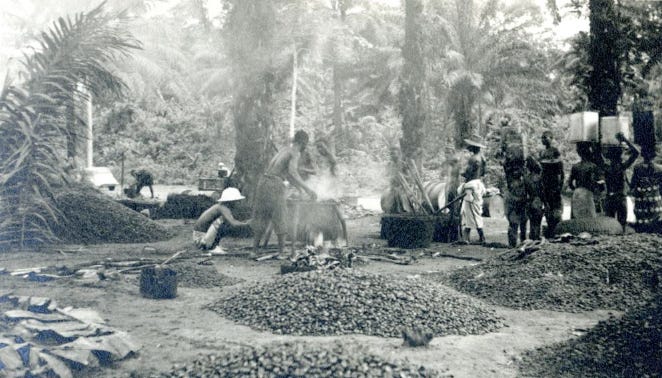
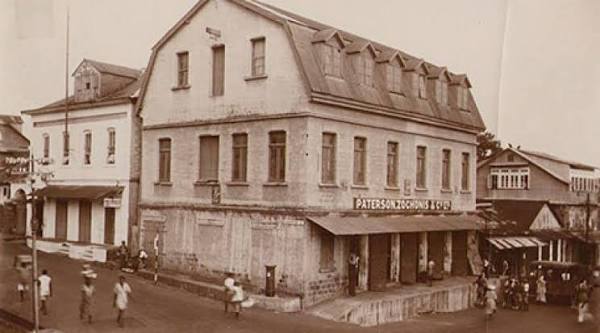
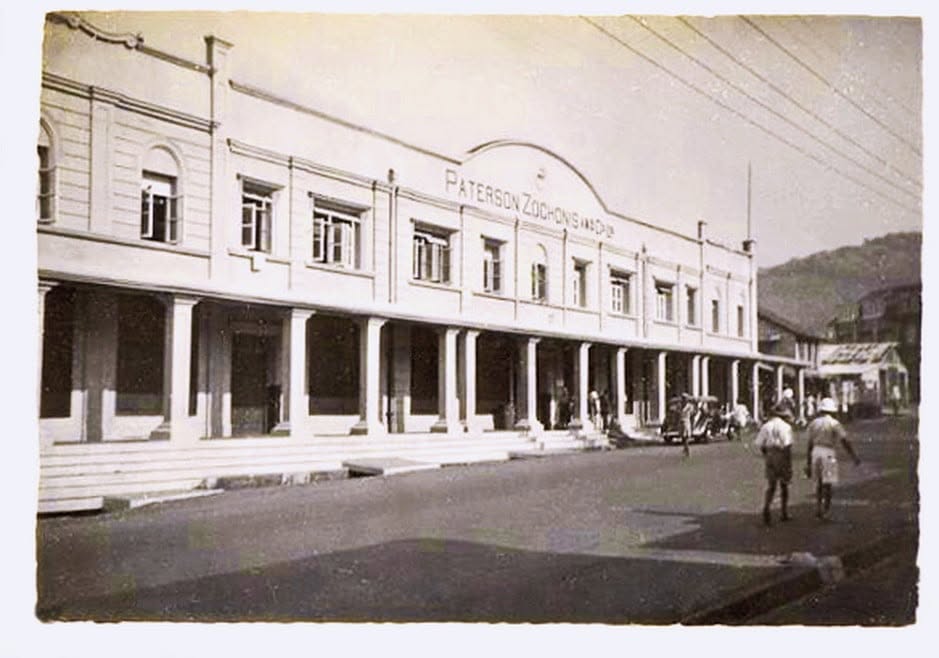
It’s worth tracing PZ’s founding partnership and its specific commercial structure directly, since the two men’s backgrounds and choices reveal a deliberately built trading system, not an improvised local arrangement. George Henry Paterson, from Scotland, and George Basil Zochonis, from Greece, met while working together at the trading house Fisher & Randall in Freetown, Sierra Leone, during the 1870s. In 1879, having become friends, they established their own independent trading post. Their business model was explicit from the outset: they shipped West African exports — palm oil, palm kernels, cocoa, groundnuts, seed cottons, animal hides, and skins — to Britain, while bringing back British manufactured goods, particularly cloth, for sale in West Africa.
It’s worth explaining precisely why PZ, having established its original operations in Sierra Leone, deliberately chose to open a head office specifically in Manchester in 1886, since this decision reflects a strategic understanding of exactly what made this exchange profitable. Manchester sat “at the heart of the Lancashire cotton trade” — the dense concentration of textile mills that made Britain the world’s dominant cotton manufacturing power throughout the 19th century. By locating its European headquarters there, PZ positioned itself directly at the source of the manufactured goods it needed to complete its trading cycle: raw African commodities converted into British capital, that capital converted into manufactured British textiles, and those textiles shipped back to West Africa to be exchanged for yet more raw commodities.
The Deeper Origin of “Manchester Goods”
Here is the piece’s central and most consequential finding, worth stating directly, since it fundamentally complicates any simple framing of this exchange as raw-materials-for-manufactured-goods commerce between two straightforwardly different economic categories. Manchester’s textile mills did not process cotton grown by free labor. Historical research from the Science and Industry Museum states plainly that “by the 1780s, most of the cotton spun and woven in Manchester was grown by enslaved people on plantations in the Caribbean and in South America, including Guyana and Brazil,” and that by 1860 — well within the era that shaped the trading environment Paterson and Zochonis would enter less than two decades later — “nearly 90 percent of the raw cotton imported to Britain was produced by enslaved labourers.”
This means the specific manufactured goods PZ carried into West Africa in exchange for palm oil and other produce were not simply “British” goods in any neutral sense. They were goods manufactured from raw cotton produced through the forced, unpaid labor of enslaved people of African descent, transported across the Atlantic to plantations an ocean away from the same continent PZ was now trading with directly. A contemporary British colonial bureaucrat, Herman Merivale, stated this connection with remarkable directness in 1841 — decades before PZ’s own founding, but describing the exact same underlying economic structure the firm would later operate within: “[Manchester’s] opulence is as really owing to the toil and suffering of the negro, as if his hands had excavated their docks and fabricated their steam-engines.”
There is a further, genuinely direct continuity worth including, since it shows this specific category of goods — Manchester textiles traded to West Africa — had an even more explicit and disturbing prior use before firms like PZ adopted it for “legitimate commerce.” Historical research confirms directly that “until the end of the British slave trade in 1807, large shipments of Manchester textiles were dispatched to Africa where they would be exchanged, alongside other goods, for enslaved people.” And even after Britain’s own slave trade was formally abolished, “merchants and manufacturers in Manchester continued to supply goods to Spanish and Portuguese slave traders until at least the mid-19th century” — meaning the exact same manufacturing city, producing the exact same category of trade goods, continued directly supplying active slave-trading operations well into the era immediately preceding PZ’s own 1879 founding.
The Scandal: An Exchange Built on Exploitation at Both Ends
It’s worth stating the core scandal precisely, since it reframes PZ’s founding trade relationship in a way that goes considerably beyond the standard colonial narrative of unequal terms between one African region and one European buyer. This wasn’t simply an exchange where West African producers received unfairly low value for their palm oil relative to what PZ eventually sold it for in Europe — a genuine and well-documented pattern in its own right. It was an exchange in which the manufactured goods flowing back to West Africa were themselves the product of a separate, geographically distant system of coerced African labor, meaning the entire trading cycle PZ built its earliest fortune on rested on exploited labor at both ends of the Atlantic — West African smallholders and brokers producing the raw palm oil on one side, enslaved Africans and their descendants in the Americas having produced the raw cotton that became the manufactured cloth on the other.
It’s worth including an honest, balanced nuance regarding the deindustrialization effect this exchange had on West Africa’s own existing textile industries, since the historical record here is more mixed than a simple narrative of total destruction. Academic research on Nigeria specifically found that “in much of western Africa… cloth manufacturing had continued alongside the rise of cash-crop production, creating sectoral linkages” — meaning West African weaving traditions, in many regions, did not simply collapse in the face of Manchester cloth imports the way some other global textile economies did. Kano’s own weavers, for instance, believed for a time that improved transport links and rising cloth imports would actually expand the market for their own higher-quality, locally woven textiles, rather than simply replacing them. This is worth including for accuracy, even as the broader pattern of British-manufactured imports displacing local production in many specific product categories and regions remains well documented elsewhere in the scholarly literature on West African deindustrialization.
Close
PZ’s founding trade — palm oil and produce flowing out of West Africa, Manchester manufactured goods flowing back in — has often been understood, when examined at all, as a relatively straightforward instance of colonial-era unequal exchange between raw material producers and manufacturing centers. The fuller history is considerably darker than that framing suggests. The specific manufactured goods PZ carried into West Africa were themselves built from raw cotton produced through the forced labor of enslaved Africans and their descendants across the Atlantic, using a textile-trade infrastructure that had, within living memory of PZ’s own 1879 founding, directly supplied active slave-trading operations. The “terms of exchange” this piece set out to examine weren’t simply about price or fairness between two trading partners — they were terms built on top of two entirely separate systems of African exploitation, one on each side of the ocean, meeting in the middle of a trading company’s ledger books.
Sources and further reading.