

A Historical In-depth Discovery of Trade in West Africa Since 1896
Here’s what you need to know:
- Joy Toilet Soap’s “Joy Girl” campaign, running through the 1980s and into the early 1990s, became one of Nigeria’s most culturally embedded advertisements of the era — its most iconic face was Benita Edith Uzoamaka Enwonwu, who won the Miss Nigeria title in 1977 and was the daughter of Ben Enwonwu, one of Nigeria’s most celebrated modern artists and sculptors.
- The campaign’s specific genius was pairing an already internationally respected Nigerian cultural pedigree — a Miss Nigeria titleholder, daughter of a globally recognized Nigerian artist — with a foreign-owned brand’s message of “flawless, glowing skin,” giving PZ’s product a level of local cultural legitimacy that a purely imported foreign brand could never have achieved on its own.
- The honest limitation worth stating directly: while the campaign’s cultural dominance is extensively documented through decades of continued public nostalgia, this research did not surface specific documented case studies naming individual indigenous Nigerian soap manufacturers who were driven out of business or measurably weakened by Joy Soap’s market position — a genuine evidentiary gap worth acknowledging rather than filling with invented specifics.
The Campaign: What Actually Made “Joy Girl” Work
It’s worth understanding precisely who Benita Enwonwu was, since her specific identity is what made this campaign strategically brilliant rather than simply well-produced. She was not an anonymous model selected purely for her appearance — she was Miss Nigeria 1977, a nationally recognized beauty pageant titleholder, and she was the daughter of Ben Enwonwu, widely regarded as one of the most important African artists of the 20th century, whose sculptures and paintings had already achieved genuine international recognition well before his daughter appeared in a soap advertisement. Contemporary accounts describe the advert directly: it “linked her image with the brand’s message of flawless, glowing skin,” running through the 1980s and into the early 1990s and becoming, in the words of one retrospective account, “a timeless Nigerian classic.”
It’s worth explaining why this specific combination — a foreign-owned company’s product, fronted by an already-celebrated Nigerian cultural figure — represented such an effective commercial strategy. A foreign company entering a newly independent African market faces an inherent trust and legitimacy gap: consumers may reasonably wonder whether a British-owned manufacturer genuinely understands, respects, or serves their specific needs, or whether the product is simply an import dressed up for local sale. By fronting its advertising with Benita Enwonwu specifically, PZ didn’t simply hire an attractive spokesperson — it borrowed an entire pre-existing reservoir of Nigerian national pride and cultural legitimacy (a Miss Nigeria titleholder, connected to a father whose artistic achievements were a genuine source of national cultural pride) and attached that legitimacy directly to a soap manufactured by a company whose ownership and profits remained, as this blog’s earlier coverage of PZ’s Zochonis family control has already documented, concentrated almost entirely in Britain.

The Broader Pattern This Fits
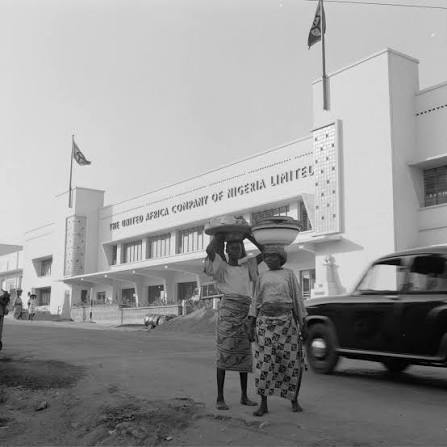
It’s worth situating this specific campaign within the broader commercial position PZ had already built by this point, since the Joy Soap campaign didn’t operate in isolation. By the 1970s and 1980s, PZ had already established manufacturing operations in Aba dating back to 1948, giving the company genuine local production infrastructure well before most indigenous Nigerian consumer goods companies could match that manufacturing scale. Combining established local manufacturing capacity with a culturally sophisticated advertising strategy meant PZ was competing on two fronts simultaneously that would have been genuinely difficult for a newer, smaller, indigenous Nigerian soap manufacturer to match at the same time — sufficient production scale to keep the product affordable and widely available, and marketing sophisticated enough to make the brand feel authentically Nigerian rather than foreign.
It’s worth stating plainly what this combination would predictably have meant for indigenous competitors trying to enter the same market, even without a specific documented case study to point to. A newly independent Nigerian entrepreneur attempting to launch a competing soap brand in this period would have faced an already deeply entrenched incumbent with decades of manufacturing infrastructure, an established distribution network built up since the 1879 trading-post era, and an advertising budget and marketing sophistication capable of associating its product with one of the country’s most recognizable young cultural figures. This is the standard economic mechanism by which early, well-capitalized market entrants can make it structurally difficult for later, smaller domestic competitors to gain meaningful market share — not through any single dramatic anti-competitive act, but through the simple, compounding advantage of having arrived first, built manufacturing scale first, and secured cultural legitimacy first.

The Honest Limitation Worth Stating Directly
It’s worth being transparent about what this research could not confirm, rather than presenting speculation as settled fact. This piece was framed around the question of what Joy Soap’s dominance “meant for indigenous Nigerian consumer goods manufacturers trying to compete” — but the available public research did not surface specific, named case studies of individual Nigerian soap manufacturers who can be directly shown to have failed or been meaningfully weakened because of Joy Soap’s market position specifically. The cultural dominance of the Joy Girl campaign itself is extensively and repeatedly documented — decades of continued public nostalgia, repeated retrospective social media tributes, and clear cultural memory confirm the brand achieved genuine, lasting market penetration. But the specific competitive harm to named indigenous rivals, while a reasonable and probable inference from PZ’s documented manufacturing head start and marketing sophistication, is not something this research can point to with the same level of direct, sourced evidence this blog has provided for other companies’ more explicitly documented scandals — the specific compensation figures in CBG’s land disputes, or the named officials in Firestone’s loan arrangement.
This distinction matters for maintaining the same standard of accuracy this blog has applied throughout its coverage. It would be easy to assert confidently that specific Nigerian soap makers were driven under by PZ’s marketing power — and it is a genuinely plausible, economically sound inference given everything else documented about PZ’s manufacturing head start and market position. But asserting it as a confirmed, specific historical fact without direct sourcing would be exactly the kind of unsupported claim this blog’s “check the math” approach has consistently guarded against elsewhere.

Close
The Joy Girl campaign represents a genuinely sophisticated piece of commercial strategy — a foreign-owned company successfully borrowing an already-celebrated Nigerian cultural figure’s legitimacy to build deep, lasting consumer loyalty for its product, achieving a level of cultural embeddedness that has outlasted the campaign itself by decades. This dominance almost certainly came at some real competitive cost to indigenous Nigerian manufacturers trying to build their own consumer goods brands in the same era, given PZ’s documented manufacturing head start and marketing sophistication — but this piece treats that specific claim honestly, as a reasonable and probable inference rather than a confirmed fact this research was able to directly document, in keeping with the same evidentiary standard this blog has applied throughout its coverage of West Africa’s foundational trading companies.

Paste the final body section here.
Sources and further reading.