

A Historical In-depth Discovery of Trade in West Africa Since 1896
Here’s what you need to know:
- By the early 2000s, the Zochonis family controlled as much as 80% of PZ Cussons’ stock — and remarkably, family members also represented roughly half of the entire company’s global payroll, meaning the founding family didn’t just own the company, it directly staffed and managed it across every market where PZ operated, including its African subsidiaries.
- Even as PZ’s African operations generated a significant share of company revenue, the company’s own reported 2003-era sales breakdown shows Europe — primarily the UK — had become the group’s single largest market at 43% of sales, with Africa accounting for just 26%, revealing where the commercial center of gravity had actually settled decades after the company’s African-derived wealth first built its fortune.
- The scandal, worth documenting as a genuine and still-unfolding shift: the family’s historically dominant ownership has eroded substantially in recent years, down to roughly 30% by 2025-2026, with the family’s remaining stake now split across a charitable trust and an estate rather than direct individual holdings, and company leadership passing to non-family executives — a genuine transition worth watching as it continues to unfold.
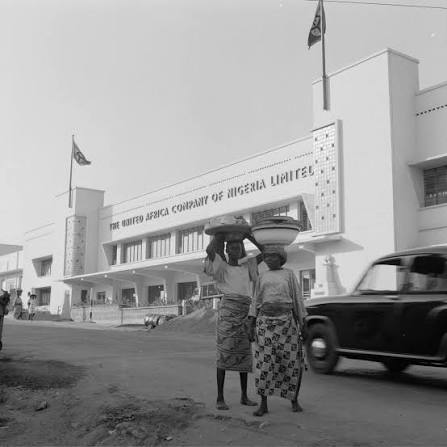
The Concentration: How Total Family Control Actually Worked
It’s worth understanding the scale of this family concentration precisely, since “family-controlled company” understates how thoroughly the Zochonis family actually dominated PZ’s operations for well over a century. Following co-founder George Paterson’s death in 1934, George Zochonis assumed full control of the company, and a formal company tradition developed of placing members of the extended Zochonis family directly into key management positions across every market PZ operated in. By the early 21st century, this practice had produced a genuinely extraordinary statistic: the Zochonis family was said to represent about half of the group’s entire global payroll. This wasn’t simply a family holding a controlling equity stake from a distance — it was a family embedded directly into the company’s actual day-to-day operational leadership across continents.
The equity concentration itself is worth stating precisely, since it represents one of the more extreme examples of sustained family control in modern British corporate history. Even after PZ became a public company listed on the London Stock Exchange in 1953 — a step that, in most companies, gradually dilutes founding family ownership as new capital is raised — the Zochonis family deliberately retained majority control. By the mid-2000s, historical company profiles confirmed the family “controls as much as 80 percent of the company’s stock,” with a family member, A.J. Green, serving as company Chairman.

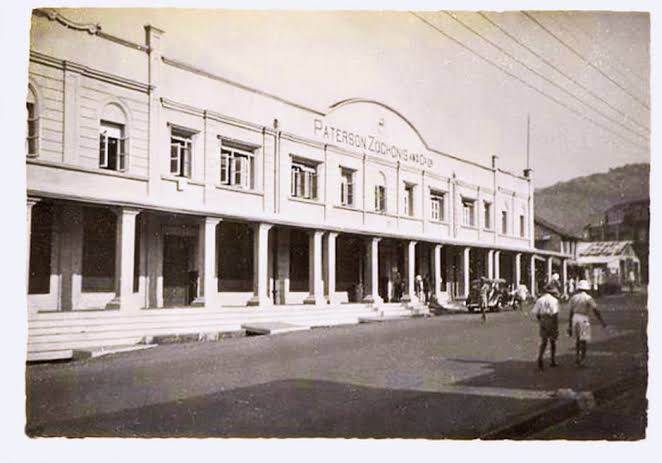
Key export commodities handled through this pipeline included palm produce, groundnuts, coffee, hides, skins, and timber — all raw materials in high demand from European industry at the time. Palm produce in particular was a critical input for the growing soap and margarine industries in industrializing Europe. This commodity mix reflected the broader pattern of colonial-era trade, where raw materials flowed out of Africa toward European manufacturing centers.
In the opposite direction, the same trading infrastructure handled imports of textiles and foodstuffs shipped into Sierra Leone for local consumption. This two-way trade model — raw materials out, manufactured goods in — was the classic structure of colonial-era commerce. It allowed the company to profit on both legs of the trading relationship rather than relying on a single direction of trade.
The Profit Flow Question: Where the Money Actually Ended Up
It’s worth addressing directly the question this piece was framed around — how profits and strategic direction flowed between Britain and the African markets that generated so much of PZ’s founding wealth. A revealing data point comes from the company’s own reported 2003-era regional sales breakdown: Europe, “especially the United Kingdom,” was the group’s largest market at 43% of sales, while its Africa segment — spanning Nigeria, Ghana, Cameroon, and East Africa, the exact markets that built the company’s original fortune over more than a century — accounted for just 26% of total sales, with the Asia Pacific region making up the remainder.
This is worth stating plainly, since it reveals something important about how the company’s commercial identity evolved over time. A company whose entire founding history, brand recognition, and original wealth accumulation traced directly back to West African trade had, by the early 2000s, restructured itself so that Britain — not Africa — represented its single largest revenue-generating market. The manufacturing capacity this blog has already documented being established in Aba and elsewhere across West Africa remained genuinely significant to PZ’s operations, but by the numbers, it had become one contributing region among several, rather than the company’s primary commercial center — even though West African trade was, quite literally, what built the company from its 1879 founding onward.
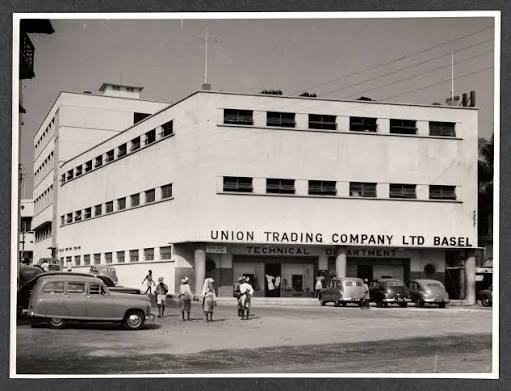
The Scandal: A Century of Concentration, Now Genuinely Unwinding
Here’s the piece’s most current and consequential finding, worth documenting carefully since it represents a genuine, still-unfolding structural shift rather than a static historical fact. The Zochonis family’s once-dominant 80% stake has eroded substantially in recent years. By 2023, shareholder analysis showed the family’s holdings had already fragmented and diminished considerably: the Zochonis Charitable Trust, Endowment Arm held roughly 15% as the largest single shareholder, with the separate Estate of John B. Zochonis holding a further 12% — meaning even the family’s remaining interest was, by this point, split across trust and estate structures rather than concentrated in direct individual family ownership, a pattern often associated with generational succession and long-term estate planning rather than active, hands-on family control.
By 2025-2026, this decline had continued further still: independent corporate governance analysis now places the Zochonis family’s holdings at approximately 30% of shares — still enough to grant, in the words of one analysis, “strong informal control,” but a genuinely dramatic reduction from the roughly 80% concentration the family held just two decades earlier. Company leadership has shifted correspondingly: as of 2025-2026, PZ Cussons’ board is chaired by Caroline Silver, with Jonathan Myers serving as Chief Executive Officer — the first time in the company’s documented recent history that its most senior leadership positions have been held by individuals outside the founding family.
It’s worth including a genuine, current complication connecting directly to material already extensively documented elsewhere on this blog. Recent financial analysis of PZ Cussons notes the company has faced real difficulties in recent years, including “painful currency losses in Nigeria” — a direct consequence of the same naira devaluation and currency instability this blog has already covered in extensive detail across its Nigerian economic coverage. The company’s reported 2025 revenue figure of negative £513.8 million (reflecting significant write-downs) suggests these Nigerian currency losses, layered onto broader operational challenges, have materially affected the company’s financial performance during exactly the period its historic family ownership structure has been unwinding — raising a genuine, open question about whether these two trends are connected, or simply coincidental developments occurring in the same window.aste the third body section here.
Close
For well over a century, PZ Cussons functioned as something close to a private family enterprise operating under public company rules — the Zochonis family not only owning up to 80% of the stock, but directly staffing roughly half the company’s global workforce and holding its most senior leadership positions, all while the African markets that built the company’s original fortune generated a steadily smaller share of total revenue than Britain itself. That concentrated structure has genuinely begun to unwind in recent years, with family ownership falling to roughly 30%, non-family executives now leading the company, and real financial strain connected directly to the Nigerian currency instability already documented extensively elsewhere on this blog. Whether this represents the genuine end of 140 years of family control, or simply its latest, more diffuse phase, is a question this piece can document honestly as still unfolding — a company built on 19th-century West African trade, only now, in its third century of existence, beginning to loosen the grip of the family whose name it has carried since 1879.

Sources and further reading.