A Historical In-depth Discovery of Trade in West Africa Since 1896
Here’s what you need to know:
- Paterson Zochonis listed on the London Stock Exchange in 1953 with an initial valuation of £1 million, explicitly “providing capital for further expansion in trading and manufacturing operations primarily in West Africa” — the same year its Nigerian soap subsidiary was formally renamed Alagbon Industries Ltd.
- Despite this formal step toward public ownership, the Zochonis family deliberately retained majority shareholding throughout — a control that persisted at roughly 80% into the 2000s, alongside the family occupying, at its peak, roughly half of the entire company’s global payroll.
- The scandal, worth stating precisely: going public in 1953 gave PZ access to broader capital markets and the reputational credibility of a publicly listed company, without ever meaningfully transferring decision-making authority away from the founding family — meaning the West African operations this capital was raised to expand remained answerable, in practice, to the same concentrated family interest that had governed them since 1879, rather than to any genuinely broad or accountable ownership base.
The Listing: What Actually Happened in 1953
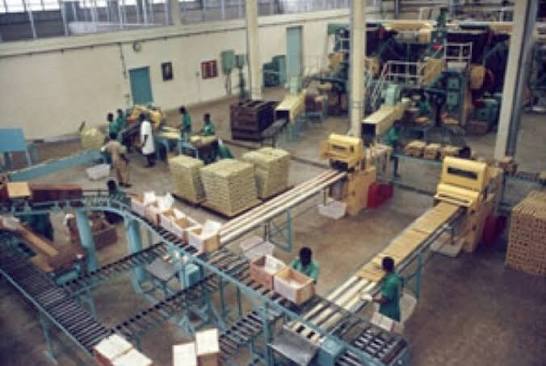
It’s worth understanding precisely what going public was intended to accomplish, since the timing and stated purpose reveal a deliberate financial strategy rather than a passive drift toward broader ownership. Paterson Zochonis & Company listed on the London Stock Exchange in 1953 with an initial valuation of £1 million, and the purpose was stated directly at the time: the listing was specifically designed for “providing capital for further expansion in trading and manufacturing operations primarily in West Africa.” This wasn’t a company being pressured into public ownership by outside investors or regulators — it was a deliberate capital-raising decision, timed to fund the exact industrial expansion this blog’s earlier coverage has already documented, following the 1948 Aba soap factory acquisition and preceding the 1961 second Aba factory for toiletries and pharmaceuticals.
It’s worth noting the precise timing coincidence, since it reveals how tightly integrated this financial step was with PZ’s broader industrial strategy. 1953 was also the exact year PZ’s Nigerian soap subsidiary was formally renamed Alagbon Industries Ltd. — meaning the London listing and the company’s continued manufacturing consolidation in Nigeria were unfolding as part of the same broader corporate restructuring, not as separate, unrelated developments.

What “Going Public” Is Normally Supposed to Change
It’s worth explaining what a public listing conventionally represents, since this is the standard against which PZ’s specific case should be measured. When a private, family-owned company lists on a major stock exchange, the conventional expectation is that ownership gradually diffuses — outside shareholders acquire meaningful stakes, institutional investors gain influence over strategic decisions, and the company becomes subject to public disclosure requirements, shareholder votes, and a board structure genuinely accountable to a broad ownership base rather than a single family. Academic research on British corporate history confirms this was indeed the dominant pattern across British business more generally during this period — one study of UK corporate governance describes how founding families at most companies “rapidly relinquish[ed] ownership” following public listings during the mid-20th century, even where they retained some influence through continued board positions.
The Scandal: A Public Company That Never Actually Diffused Control
Here is the piece’s central finding, worth stating directly: PZ did not follow this conventional pattern. The Zochonis family deliberately retained majority shareholding through the entire process, and this wasn’t a modest or temporary retention — historical company profiles confirm the family “controls as much as 80 percent of the company’s stock” well into the 2000s, over half a century after the original 1953 listing. Corporate history sources state this pattern plainly and repeatedly: “Paterson Zochonis and Company became a public company in the United Kingdom, although the majority shareholding was kept by the Zochonis family.”
It’s worth stating precisely what this meant in practice, beyond simple equity percentages. This blog’s earlier coverage of PZ’s family ownership structure has already documented that, by the early 21st century, the Zochonis family represented roughly half of the company’s entire global payroll — meaning family control extended well beyond boardroom voting power into the company’s actual day-to-day operational management, across every market where PZ conducted business, including its West African subsidiaries. A public listing conventionally introduces outside directors, independent oversight, and a management structure recruited on professional merit from a broad talent pool. PZ’s structure, for decades following its public listing, continued to place family members directly into “key management positions” as a matter of stated company tradition.
It’s worth making the core accountability question explicit, since it’s what this piece was framed around. A public listing is supposed to create a meaningful separation between ownership and management, subjecting company decisions to the scrutiny of a genuinely independent, broad shareholder base with real power to challenge leadership. For PZ’s West African operations specifically — the Nigerian soap manufacturing, the trading networks across Sierra Leone, Ghana, Cameroon, and Liberia that generated so much of the company’s original wealth — this scrutiny never meaningfully materialized during the decades following 1953. The company answered, in practice, to the same family that had answered to itself since George Zochonis assumed sole control in 1934. The London listing provided PZ with the capital markets access, credibility, and expansion funding of a public company, while the family retained the actual decision-making authority of a private one — a structure sometimes described in corporate governance literature as control retained “through their positions on the boards of directors” even as formal ownership structures shift.
There is a genuine, worth-noting historical finding connecting directly to this governance question. Wikipedia’s own sourced entry on PZ Cussons states that “under the management of C.P. Zochonis, the company allowed colonial attitudes to affect local African peoples” — a documented critical assessment of exactly the period when this concentrated, unaccountable family control was at its height, operating with the reputational cover and capital access a public listing provided, but without the independent oversight a genuinely diffused ownership structure might have introduced.
There is a fair, more recent counterpoint worth including, since this blog’s earlier coverage of the Zochonis family’s declining control has already documented genuine, ongoing change. By 2025-2026, family holdings had fallen to roughly 30%, with the family’s remaining interest split across trust and estate structures, and company leadership now held by non-family executives — analysts specifically noting the family “has reduced day-to-day management, enabling executive leadership to pursue turnaround initiatives.” This represents the genuine, if very belated, arrival of exactly the kind of ownership-and-management separation a public listing is conventionally supposed to introduce — arriving, notably, roughly seventy years after the original 1953 listing first created the formal appearance of it.

Close
Paterson Zochonis’s 1953 public listing gave the company genuine, real access to broader capital markets, funding the specific West African manufacturing expansion this blog has already documented in detail. But the listing’s formal appearance of broadened, accountable ownership masked a reality of continued, deliberate family control that persisted for well over half a century afterward — control extending not just to equity ownership, but directly into the company’s operational management across every market it served. The specific West African operations this capital was raised to expand remained governed, for the great majority of PZ’s public existence, by the same concentrated family interest that had run the company since 1879 — a gap between the appearance of public accountability and the reality of private control that only began genuinely closing in the past few years, nearly three-quarters of a century after the London Stock Exchange listing first created the appearance that it already had.
Sources and further reading.