

Usually, corruption stories involve a company bribing an official with cash. This
one is different.
The alleged currency here wasn’t money changing hands directly. It was
campaign help — discounted political consulting, delivered right before an
election, from a communications firm the target company happened to own.
Both politicians who received that help won their elections. Both then handed the
same company control of their country’s main port.
A French court didn’t just call this corruption. It said, in writing, that this scheme
undermined a nation’s sovereignty.
Here’s What Actually Happened
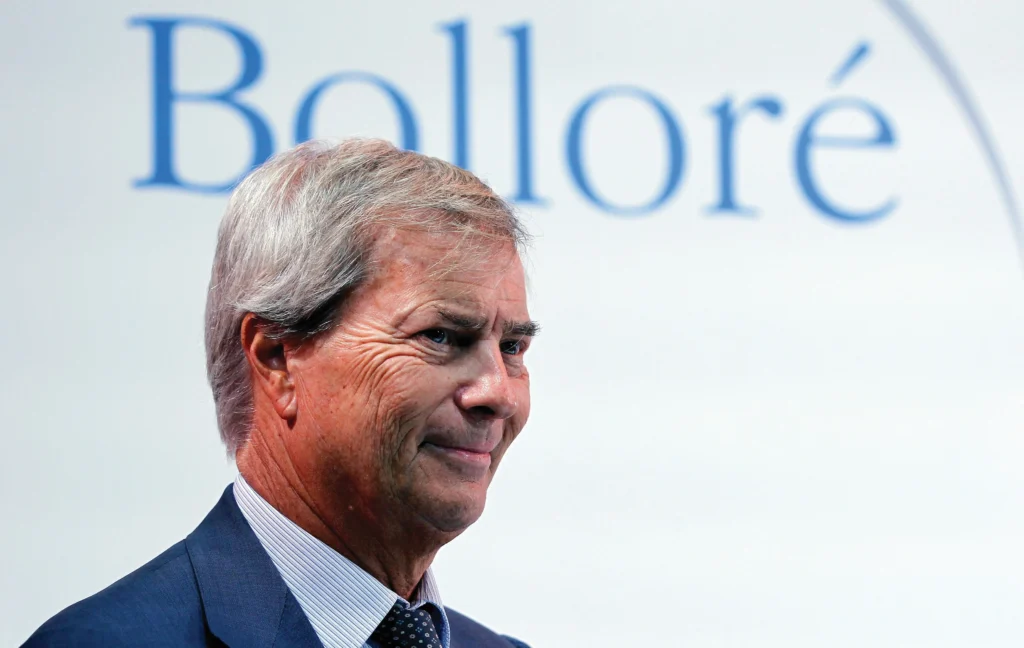
Investigators allege that Havas — an advertising and political consulting firm
controlled by Bolloré — provided heavily discounted communications and
campaign advisory work to two African presidential candidates around 2010:
Alpha Condé in Guinea and Faure Gnassingbé in Togo.
Here’s what happened after each election. Condé won Guinea’s presidency in late
2010, and within months, terminated the existing operator’s contract at the port
of Conakry and handed it to Bolloré’s SDV subsidiary — later renamed Bolloré
Africa Logistics. Gnassingbé, seeking re-election in Togo that same year, won his
race, and Bolloré secured a 35-year concession to manage the port of Lomé —
the only deepwater port in the entire region.
There was a company caught in the middle of the Guinea deal, and it’s worth
naming: a French court later ordered Bolloré to pay €2 million in compensation
to Necotrans, the previous Conakry port operator, for its lost investment — while,
at that point, still clearing Bolloré of having a direct hand in the president’s
decision.
Here’s the myth-check. This wasn’t uncovered quickly or resolved simply. The
investigation opened in 2013. Vincent Bolloré wasn’t formally detained and
questioned until April 2018 — five years later. And the case is still working its way
through French courts today, with a trial for Bolloré himself not scheduled until
December 2026. This is a legal process spanning well over a decade, not a
scandal that broke and quietly disappeared.
Why They Called It “The Bolloré Method”
It’s worth understanding what made this scheme structurally distinctive, and why
it became a named pattern rather than a one-off allegation.
Instead of a direct cash bribe, the alleged exchange ran through a legal business
relationship — discounted consulting services. That structure made the corrupt
exchange, if it happened, considerably harder to prove and easier to deny than a
straightforward bribery case would be.
The corporate structure behind it made this possible in the first place. Bolloré’s
ownership of Havas — the political consulting arm — sat alongside its ownership
of Bolloré Africa Logistics — the port operations arm. The same corporate
parent controlled both the tool allegedly used to help win elections and the
reward received afterward. That’s a vertically integrated approach to acquiring
infrastructure concessions, not an isolated coincidence.
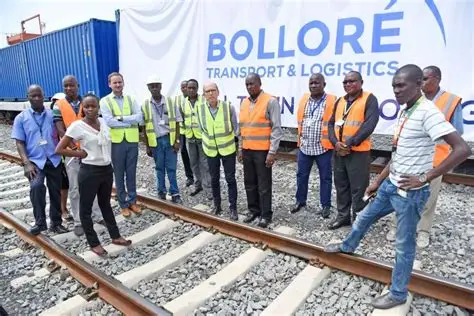
The scale context matters here too. By the time of Vincent Bolloré’s 2018
detention, the Bolloré Group held a near-monopoly on ports across West and
Central Africa — concessions to operate container terminals in 15 nations,
roughly 13% market share across the continent, and 25 dry ports in landlocked
countries, including Burkina Faso and Chad.
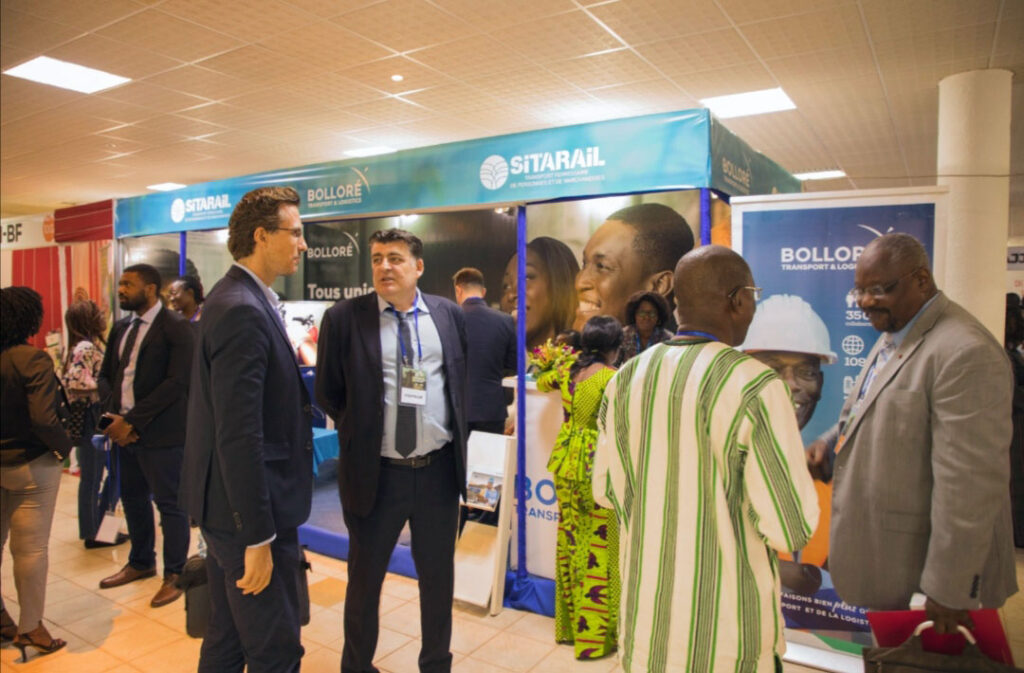
That last detail draws a direct line to the rest of this scandal series. This is the
same company, using an adjacent version of the same playbook, that entered
Burkina Faso’s rail sector through the 1995 Sitarail privatization already covered
in this series. Port control in Togo and Guinea. Rail control in Burkina Faso and
Côte d’Ivoire. The common thread is concessions secured through relationships
with the people holding political power, not through open, transparent
competition.

The Sovereignty Ruling
This is the part of the story that justifies putting sovereignty at the center of it —
and it deserves to be front and center.
In 2021, Bolloré SE resolved its portion of the case through a French legal
mechanism called a CJIP — a form of deferred prosecution agreement. The
company paid a €12 million fine and, critically, the agreement itself formally
acknowledged the existence of what was described as a “corruption pact.”
Here’s what happened next, and it’s the most striking part of the whole case.
Vincent Bolloré and two former executives separately tried to resolve their
individual charges through a guilty-plea procedure, agreeing to each pay a
€375,000 fine. The Paris Judicial Court refused to approve that deal.
The court’s own stated reasoning is worth quoting directly: it ruled that a public
trial was necessary because the allegations had “seriously undermined economic
public order” — and the sovereignty of Togo. A French court, using the word
sovereignty explicitly, to describe what this kind of corporate-political
arrangement does to the nation on the receiving end.
That’s not a minor legal technicality. It means a French judicial body directly
linked this scheme to an erosion of Togo’s own sovereign decision-making —
exactly the kind of harm this entire historical series has been tracing since the
Berlin Conference carved up trade routes without a single African representative
in the room.
The Myth vs. The Reality
| What people assume | What actually happened |
|---|---|
| This was a standard bribery case, no different from countless others | The mechanism was discounted campaign consulting rather than direct cash, making it harder to prove and structurally distinct from typical bribery cases |
| Bolloré paid its fine in 2021, and the matter is settled | The €12 million fine resolved only the company’s portion of the case; the individual executives’ trial, including Vincent Bolloré’s, remains pending, currently set for December 2026 |
| This is purely a financial crime case about corrupt payments | A French court explicitly ruled that the scheme undermined Togo’s sovereignty, not just financial and anti-corruption law |
| The scandal was limited to Guinea and Togo, unrelated to Bolloré’s other African operations | The same company, operating the same kind of concession-through-relationship model, controls rail infrastructure in Burkina Faso and dry ports across multiple landlocked nations |
Why This Still Matters
Whether it’s a railway concession in Burkina Faso or a port concession in Togo
and Guinea, the pattern documented here is the same one running through this
entire scandal series: control over West African trade infrastructure secured not
through open competition, but through relationships with the people holding
political power at the exact moment those decisions were made.
A French court has now put an official word to what civil society groups and
affected governments have argued for years — that this kind of arrangement
doesn’t just violate anti-corruption law. It reaches into a nation’s sovereignty itself.
Next in this series: the 2025 civil society complaint that draws directly on this
case’s “corruption pact” admission to pursue a broader, continent-wide claim.