

456,000 tonnes of refined fuel, shipped from Africa’s largest refinery to Côte
d’Ivoire, Cameroon, Tanzania, Ghana, and Togo between March and May 2026 — a
genuine milestone reshaping intra-African energy trade.
That’s how this story got told. Here’s the twist. At the exact same time this export
success was making headlines, Dangote Refinery was in Nigerian federal court,
accused by the country’s own state oil company of trying to seize monopoly
control of the domestic fuel market — and separately locked in a bitter dispute
over why it wasn’t receiving nearly enough Nigerian crude to meet Nigeria’s own
needs.
The same refinery being celebrated for feeding five African countries was, at the
very same time, telling its own government it wasn’t getting enough crude to
properly feed one — Nigeria
Here’s What Actually Happened
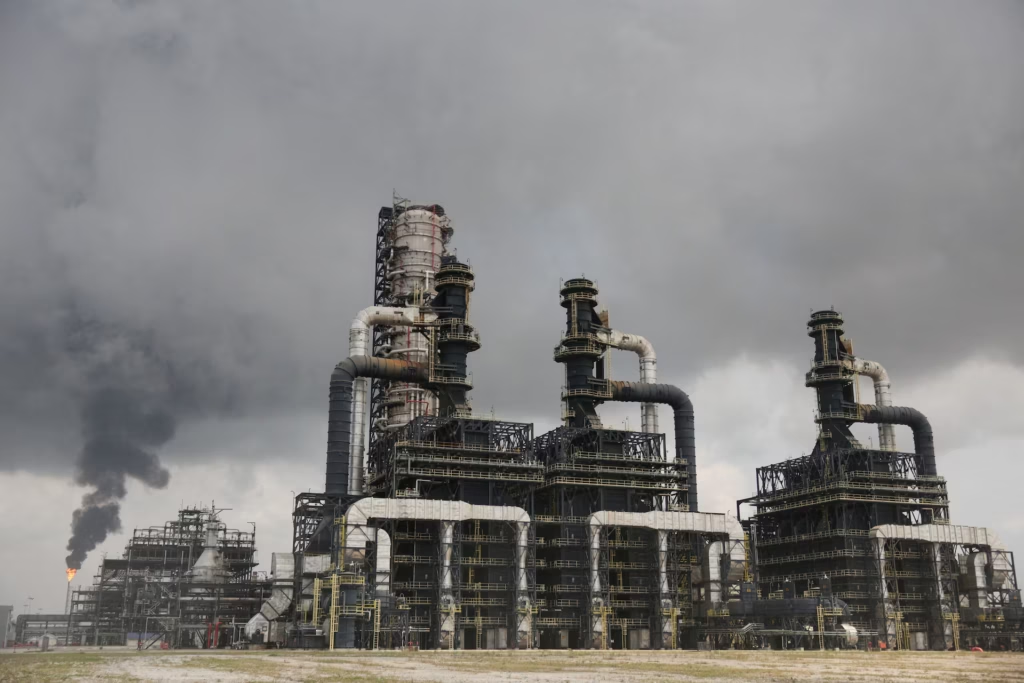
Between March and May 2026, Dangote Refinery exported 456,000 tonnes of
refined petroleum products to Côte d’Ivoire, Cameroon, Tanzania, Ghana, and
Togo, positioning Nigeria as a genuine refined-fuel exporter to its neighbors for
the first time in decades.
This didn’t happen in isolation. Dangote Refinery, commissioned in 2023 and
ramping toward full capacity through 2025 and 2026, had already made Nigeria a
net fuel exporter domestically, with NMDPRA data showing it supplied
approximately 79% of Nigeria’s petrol consumption by early 2026.
The regional significance here is real. For decades, West African countries
imported the bulk of their refined fuel from outside the continent. A Nigerian
refinery supplying five neighboring countries directly represents a genuine
restructuring of regional energy trade flows.
Here’s the myth-check. This export volume didn’t emerge from simple surplus
capacity. It emerged, in real and documented part, from a domestic supply
dispute that was pushing the refinery to look outward.
The Scandal: Why Dangote Was Exporting So Much While
Nigeria’s Own Supply Fell Short
Here’s essential context: Nigeria’s “naira-for-crude” program is a federal
government arrangement designed to let Dangote Refinery buy Nigerian crude
oil in naira rather than US dollars, specifically to keep domestically refined fuel
more affordable for Nigerian consumers.
Here’s the dispute, plainly. A senior Dangote Group executive stated the refinery
received only 3 of the 14 crude cargoes it expected under this arrangement in
2026, while a separate report cited the refinery receiving just 5 monthly cargoes
against the 13 it says it needs to operate at full capacity.
The Dangote executive put it directly: “The issue is straightforward. The expected
cargoes were 14, and only three arrived. That is the position.”
NNPC disputes this framing directly, and it’s worth presenting fairly. NNPC
spokesperson Andy Odeh stated the company had allocated 100% of all available
naira-denominated crude cargoes to Dangote in 2026, arguing that actual
deliveries depend on crude availability, cargo nomination timelines, and the
refinery’s own scheduling — not withholding.
Here’s the consequence that connects this dispute directly to the export
headline. Facing this shortfall, a Dangote Group official said the refinery was
turning to international crude traders at higher prices to keep operating — and,
separately, was set to export a larger percentage of its products in exchange,
since export sales help offset the higher cost of internationally sourced crude.
The Monopoly Lawsuit Sitting Underneath All of This
There’s a second layer of scandal worth bringing in directly. In April 2025,
Dangote Refinery filed a lawsuit against Nigeria’s attorney general, challenging
fuel import licenses the NMDPRA had issued to rival marketers and to NNPC
itself.
NNPC’s response was pointed. In May 2026, NNPC formally accused Dangote of
seeking to restrict competition and expose Nigeria’s fuel market to monopoly
control, arguing in court that voiding rival import licenses would risk supply
disruptions, price instability, and national energy security.
Fuel marketers separately opposed Dangote’s suit, and the Petroleum Products
Retail Outlets Owners Association of Nigeria (PETROAN) had already accused
Dangote of using product-quality claims as a pretext to protect its dominant
position.
Here’s the quiet ending, and it’s genuinely telling. In July 2025, Dangote Refinery
discontinued the lawsuit without publicly explaining why, leaving the underlying
competition and market-control questions completely unresolved.
A refinery accused, in its own government’s court filings, of seeking to control
supply, distribution, and pricing domestically was, in the very same window, being
celebrated internationally for its role expanding regional fuel access. Two very
different stories about the same company, unfolding at the same time.
The Myth vs. The Reality
| What people assume | What actually happened |
|---|---|
| Dangote’s export success reflects straightforward surplus capacity and regional generosity | A documented crude supply shortfall from NNPC, disputed by both sides, was pushing the refinery toward costlier international crude and offsetting exports |
| Dangote Refinery has a clean, uncontested relationship with Nigeria’s fuel supply system | NNPC formally accused Dangote of pursuing a domestic fuel monopoly in a 2025 lawsuit Dangote later dropped without explanation |
| The naira-for-crude dispute is a settled, one-sided story | NNPC and Dangote continue to dispute the actual numbers, with each side measuring “compliance” differently |
| Nigeria’s domestic fuel affordability program is functioning as designed alongside the export growth | Dangote’s own executives say the shortfall in naira-priced crude is a direct factor pushing it toward pricier imports and higher export volumes |
Why This Still Matters
A genuinely significant shift in regional energy trade — Nigeria supplying refined
fuel to five neighboring countries — deserves real credit. But the full picture
includes an unresolved domestic supply dispute and an abandoned monopoly
lawsuit that never got a public answer.
Whether Dangote Refinery becomes a stabilizing force for West African energy
trade or a dominant private gatekeeper controlling both domestic and regional
fuel access may depend on questions this series has already been asking about
other companies — who actually benefits when one company controls this much
of a critical supply chain, and who gets to hold that company accountable.