

In March 2026, for the first time in 66 years of oil production, Nigeria exported
more petrol than it imported. A single refinery, running at 94% capacity, finally
producing enough gasoline to cover the entire country’s domestic demand.
Here’s the obvious question the celebration skipped over. If the country was
finally producing enough fuel for itself, why were ordinary Nigerians still
watching petrol prices climb in the months that followed?
Nigeria hit a genuine historic milestone in March 2026. By July, the same refinery
had raised its price by 13% in a single move — proof that “net exporter” and
“cheaper fuel for Nigerians” were never actually the same promise.
Here’s What Actually Happened
In March 2026, Nigeria recorded a net export balance for petrol for the first time
in its history — exporting roughly 44,000 barrels per day against imports of just
41,000 barrels per day, a structural break from 66 years of dependency on
imported refined fuel.
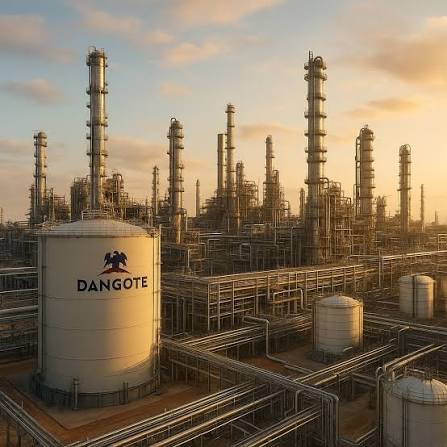
The mechanism behind this is direct: the Dangote Refinery, a 650,000
barrel-per-day facility in Lekki, reached 94% capacity utilization by March,
producing around 303,000 barrels per day of gasoline against national demand
of roughly 300,000 barrels per day. For the first time, a single facility was
sufficient to cover the country’s entire gasoline consumption.
This replaced a genuine, decades-long paradox. Nigeria, despite being Africa’s
largest crude oil producer, had for decades imported the majority of its refined
fuel at a significant premium — a situation President Bola Tinubu’s
administration had made a policy priority to end.
Here’s the myth-check. It’s worth being precise about what “net exporter” actually
measures, since it’s more technical than the celebratory headlines suggest. It
means production finally exceeded consumption in aggregate volume terms. It
does not, on its own, say anything about what price Nigerian consumers were
actually paying at the pump during this same period.
The Scandal: “Net Exporter” & “Cheaper Fuel” Turned Out to Be
Different Promises
It’s worth noting that consumers had genuinely benefited at points along the way.
Dangote had cut its ex-depot petrol price to around N774 per litre in February
2026, down from N799, specifically to stay more competitive than imported fuel
landing from Lomé at around N793 per litre — real, documented evidence the
refinery could and did lower prices when circumstances allowed.
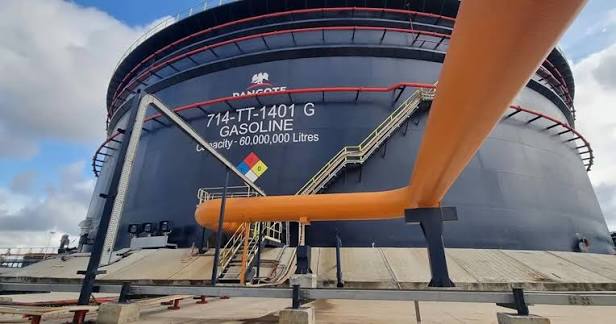
Here’s the reversal, and it’s the scandal’s core moment. On July 22, 2026, Dangote
reverted to naira-denominated pricing after a period of selling in dollars. Rather
than returning to the previous, lower naira price of N1,075 per litre, the refinery
set a new price of N1,215 per litre — a 13.02% increase.
The immediate consumer impact was severe. This single pricing decision rattled
Nigeria’s downstream sector almost overnight, with depot owners and marketers
raising petrol prices at least twice within the week, pushing retail prices in Abuja
and its environs to between N1,270 and N1,350 per litre.
This connects directly back to the crude supply dispute already covered in the
previous essay in this series. The refinery explicitly linked this price jump to a
sharp rally in global crude prices, and to the same naira-for-crude supply
shortfall that had forced it to pivot back and forth between dollar- and
naira-denominated purchases and sales. The exact structural problem behind
the export story was also the direct cause of this consumer price shock.

Who Actually Wins When the Headlines Say “Nigeria Wins”
Here’s the layered point worth making directly. The “net exporter” milestone is
real, and it represents genuine industrial progress. Ending a 66-year pattern
where Africa’s largest oil producer imported the majority of its own fuel is not a
small achievement.
But the celebration deserves honest complication. A refinery earning foreign
exchange through exports and international jet fuel sales to Europe —
reportedly around 100,000 barrels per day of jet fuel feeding a European supply
shortage — has a direct financial incentive to prioritize higher-margin export
and dollar-denominated sales whenever domestic naira-priced supply
arrangements fall short.
The IPO context offers the sharpest evidence of where the real value is flowing. As
Dangote Group prepares a planned initial public offering, internal projections
reportedly value the refinery business at up to $50 billion, explicitly reflecting its
growing role as an export earner, not just a domestic supplier. That valuation is
built substantially on the same export capacity that, this series has already
shown, is partly a byproduct of the refinery not receiving enough discounted
domestic crude.
Here’s the sovereignty and consumer point worth stating precisely. Nigerians are
being asked to celebrate a national milestone built on infrastructure they don’t
control pricing for, where the same company can pivot between serving the
domestic market cheaply and serving international markets profitably, largely
based on its own commercial calculations.

The Myth vs. The Reality
| What people assume | What actually happened |
|---|---|
| Nigeria becoming a net fuel exporter means Nigerian consumers are paying less for fuel | Nigeria’s export milestone in March 2026 measures production volume, not consumer pricing |
| The naira-for-crude program has reliably kept Nigerian petrol prices stable and low | The program’s own supply shortfalls directly triggered a 13% single-day price increase in July 2026 |
| Export growth and domestic affordability move together automatically | The refinery’s export and jet fuel sales carry higher margins, creating incentives that can pull in the opposite direction from domestic price stability |
| The July 2026 price jump was simply due to global crude market movements | The refinery itself tied the increase to both global crude prices and the ongoing naira-for-crude supply shortfall already documented in this series |
Why This Still Matters
This is the same pattern already documented with the export story itself — a
genuine, celebrated milestone sitting directly on top of an unresolved domestic
supply dispute, where the company’s own commercial decisions determine
whether that dispute shows up as an export success story or a consumer price
shock.
Nigeria really did become a net fuel exporter in March 2026. But four months
later, the same underlying crude supply problem that helped make that possible
also helped push petrol prices at Nigerian pumps up by double digits, in a
matter of days.