

Exports from AGOA countries to the US have fallen 34.7% under the current tariff
regime.
AGOA itself is still technically in force. It just doesn’t do what it used to do.
Economists modeling this out found something almost paradoxical: that steep
34.7% drop barely moves the needle on these countries’ overall economies,
because it’s concentrated in a small number of sectors and countries getting hit
extremely hard, while the aggregate GDP numbers barely shift at all.
AGOA didn’t get repealed. It just got buried under a bigger tariff — and the study
confirming that arrived right as the exact rival it was supposed to help Africa
compete with rolled out a zero-tariff deal of its own.
Here’s What Actually Happened
Economists and trade modelers at the German Institute of Development and
Sustainability (IDOS) built an economy-wide model tracking how the current US
tariff regime affects prices, production, consumption, and trade across African
economies.
Their headline finding is precise: AGOA countries’ exports to the US fall by 34.7%
under current tariff conditions — but in the context of these countries’ total
global exports, that decline equates to just 1.1%.
There’s a second major finding that reframes the whole story. The researchers
found that real GDP of AGOA-eligible countries remains largely unchanged in
aggregate, meaning the damage, while severe, is heavily concentrated rather
than economy-wide for most countries.
Here’s the myth-check. A fact that surprises most people helps explain why this
damage happened so easily. AGOA’s duty-free benefit only ever waived the
standard US tariff rate applied to all World Trade Organization members —
called the Most Favoured Nation tariff — which averaged just 3.3% in 2017. AGOA
was never a massive discount. It was a modest one. That made it far easier for a
much larger new tariff to simply overwhelm it entirely.

The Scandal: The Warning From Essay One Just Came True
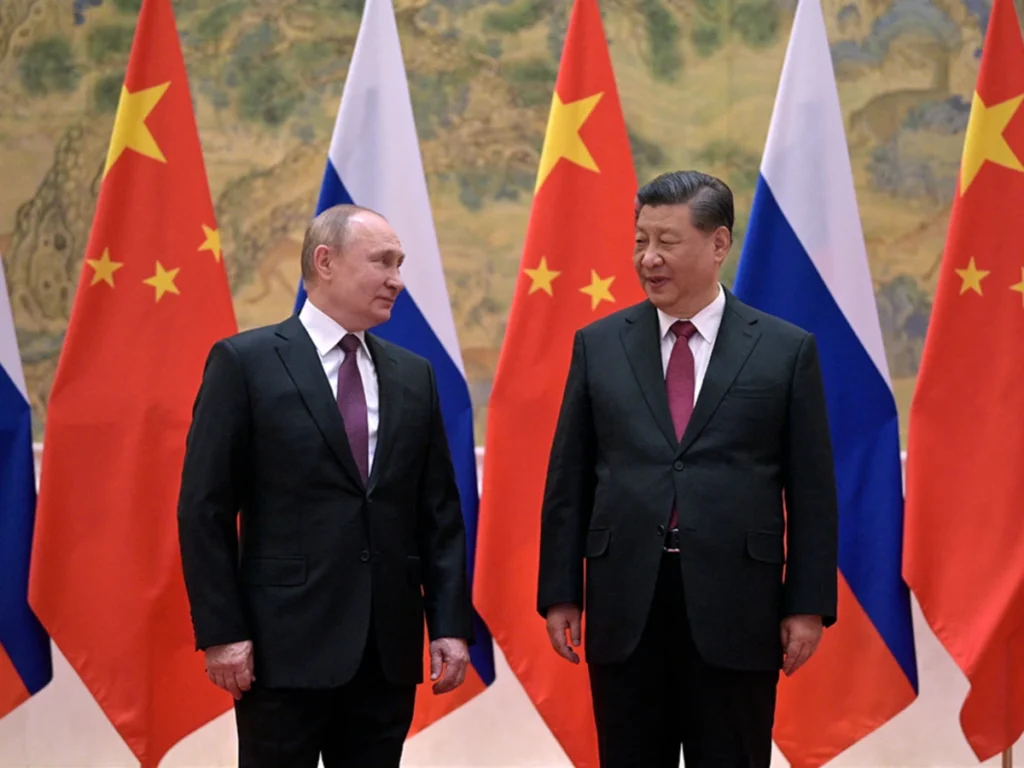
Here’s something already documented earlier in this series. A CSIS witness
warned Congress in 2025 that “champagne corks will pop in Beijing and Moscow”
if the US allowed AGOA to lapse, framing it as a direct opportunity for China to
expand its influence across Africa.
Here’s the outcome, and it’s the scandal payoff of that earlier warning. On May 1,
2026, China launched a zero-tariff policy covering all tariff lines for 53 African
countries — expanding preferences that had previously applied only to the
continent’s 33 least-developed countries to a much wider group, including
middle-income exporters like Kenya, South Africa, Nigeria, Egypt, and Morocco.
The timing matters precisely here. This Chinese policy arrived within months of
the IDOS study confirming AGOA’s practical value had been “effectively
eliminated” — meaning China’s offer landed at the exact moment US preferential
access was proving least reliable.
This isn’t a coincidence dressed up as irony. It’s the specific, named consequence
that American policy analysts explicitly warned Congress about over a year
earlier — delivered on schedule, while US lawmakers were still processing the
fallout from their own tariff disputes.
AGOA Saves the Furniture, Not the House
Here’s the sharpest, most quotable explanation of the actual mechanics at play.
Wandile Sihlobo, chief economist of the Agricultural Business Chamber of South
Africa and a senior fellow at Stellenbosch University, explained that without
AGOA, some South African goods wouldn’t face a 30% tariff but rather around
33% — since the extra roughly 3% is simply the standard US tariff that would
otherwise apply on top of the emergency levy.
It’s worth unpacking what that difference actually represents in practice. AGOA’s
retention spares exporters the added indignity of the full Most Favoured Nation
rate — but it does nothing whatsoever about the 30% “reciprocal” or Section 122
tariff sitting underneath it, crushing margins regardless of AGOA’s legal status.
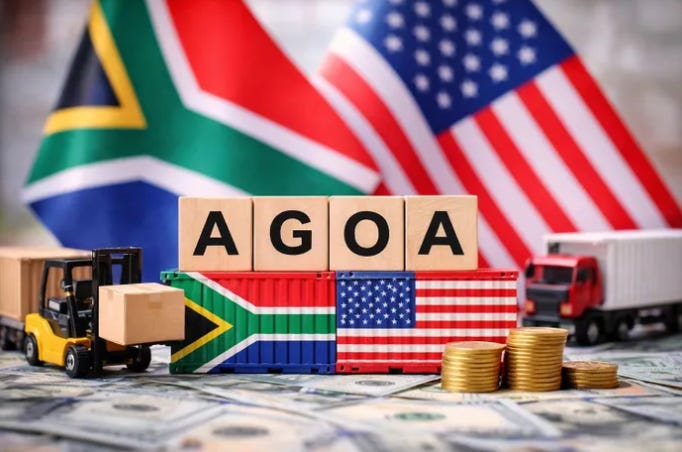
A concrete before-and-after example makes this real. A South African citrus
exporter shipping oranges to Newark previously paid zero tariff under AGOA.
That same exporter today pays 30%, with AGOA’s duty-free waiver now technically
applying to a tariff line that functionally no longer exists at zero.
AGOA still exists, and it’s still doing something — but that something has shrunk
from “duty-free market access” to “a roughly 3 percentage point discount on an
already punishing tariff.” That’s a fundamentally different value proposition than
the one that built entire industries in Lesotho, Kenya, and Madagascar over the
past 25 years.
The Myth vs. The Reality
| What people assume | What actually happened |
|---|---|
| AGOA’s 2026 extension means African exporters have regained meaningful duty-free access to the US market | AGOA’s waiver now applies to a baseline tariff that’s been overwhelmed by much larger reciprocal and Section 122 tariffs stacked on top |
| The 34.7% export decline represents a broad, even economic catastrophe across AGOA-eligible economies | The decline equates to just 1.1% of these countries’ total global exports, with aggregate GDP largely unchanged, though specific sectors were hit hard |
| AGOA’s duty-free benefit was always a major discount worth fighting to preserve | The underlying Most Favoured Nation rate it waives averaged just 3.3% — a modest benefit even before the current tariff regime |
| China’s new African trade policy is unrelated to the AGOA situation | It launched within months of AGOA’s practical value being confirmed as “effectively eliminated,” matching a warning delivered to Congress over a year earlier |
Why This Still Matters
This is the direct sequel to the AGOA lapse story already covered in this series.
The warning about ceding ground to China wasn’t rhetorical, and this study,
paired with China’s May 2026 zero-tariff rollout, shows exactly how that prediction
played out in real, measurable trade data.
AGOA surviving on paper into 2027 was never really the question that mattered.
The question was whether it would still be worth anything once it got there — and
this study gives a fairly clear answer.