
On February 20, 2026, in a 6-3 decision, the US Supreme Court told President
Trump plainly that he never had the legal authority to impose his sweeping
“reciprocal” tariffs in the first place.
That same day — hours later, not weeks — the White House issued a new tariff.
Then, the very next day, raised it again. The replacement tariff hit nearly every
country on earth, again.
The Supreme Court didn’t just strike down a policy. It ruled the President never
had the power to create it. The White House’s answer wasn’t to comply — it was to
go shopping for a different law that could do almost the same thing.
Here’s What Actually Happened
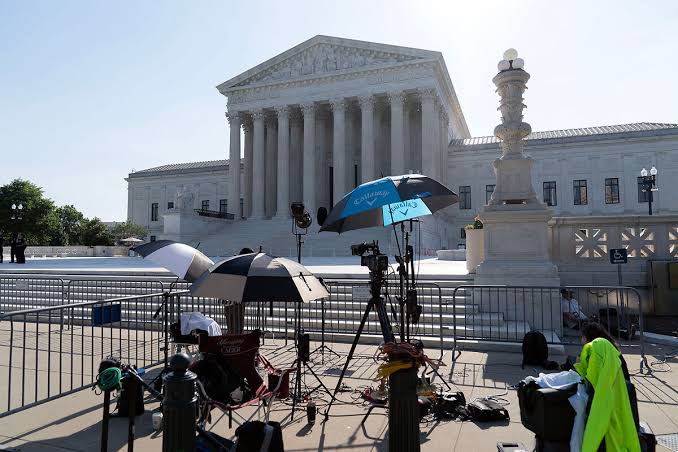
In Learning Resources, Inc. v. Trump and the related Trump v. V.O.S. Selections,
Inc., the Supreme Court held 6-3, in a decision authored by Chief Justice Roberts
and joined by a bipartisan mix of justices, that the International Emergency
Economic Powers Act (IEEPA) does not authorize a president to impose tariffs at
all.
This invalidated two things specifically: the “reciprocal tariffs” first imposed in
April 2025 on what the administration called “Liberation Day,” and separate
tariffs on China, Canada, and Mexico tied to fentanyl trafficking and immigration
concerns.
Practically, for businesses, the ruling opened the door to potential refunds for
tariffs already paid under IEEPA — though the actual refund process remained
genuinely uncertain.
Here’s the myth-check. This ruling didn’t end Trump-era tariffs altogether. Tariffs
imposed under other legal authorities, like Section 232 of the Trade Expansion
Act of 1962, remained fully in effect throughout. The ruling specifically targeted
IEEPA, not the administration’s tariff strategy as a whole.
The Scandal: A New Tariff Before the Old One Was Even Cold
Here’s the timeline, and the speed itself is the story. The same day as the ruling,
President Trump issued a proclamation under Section 122 of the Trade Act of
1974, imposing a 10% “temporary import surcharge” on goods from nearly every
country, effective February 24, 2026. The very next day, he announced on social
media that the rate would immediately rise to 15% — the maximum allowed under
that specific law.
It’s worth explaining what Section 122 actually is, and why using it here is legally
contested. This law lets a president impose a temporary surcharge, capped at
15% and limited to 150 days, specifically to address “large and serious”
balance-of-payments deficits. It’s a narrow, specific emergency tool — not a
general-purpose tariff authority.
Congress’s own research arm flagged the legal ambiguity directly. A
Congressional Research Service report noted plainly that “it is unclear whether
Section 122 authorizes tariffs in response to trade deficits” at all, since
economists and the government itself have never settled on a clear definition of
what actually counts as a genuine “balance-of-payments deficit” under this
statute.
Here’s the scandal’s core point, stated directly. The Supreme Court had just ruled,
in a bipartisan 6-3 decision, that the president lacked the power to impose
sweeping tariffs using one law — and within 24 hours, the administration reached
for a different, narrower law, of uncertain applicability, to reimpose nearly the
same policy anyway.
There’s one more detail that makes this land even harder. These new Section 122
tariffs don’t replace prior duties — they “stack” on top of them, meaning
importers face this new surcharge in addition to whatever other tariffs, like
Section 232 duties, were already in place.
A 150-Day Patch, Not a Real Fix
Here’s the built-in fragility of this new approach, and it matters for anyone trying
to plan around it. Section 122 tariffs are capped by law at 150 days, meaning this
new 15% surcharge is set to expire around July 24, 2026, unless modified,
terminated, or extended by Congress.
This uncertainty has a specific impact on African exporters, tying directly back to
the AGOA story already covered in this series. Countries that had just watched
AGOA get extended to December 2026 are now facing a separate, stacking 15%
surcharge under a completely different legal authority, with its own expiration
date — creating two independent layers of trade uncertainty running on two
different clocks.
The practical business impact is real too. Companies were advised to preserve
records of all IEEPA-related entries for potential refund claims, while
simultaneously assessing their exposure to the brand-new Section 122 surcharge.
That kind of administrative whiplash imposes real costs on businesses trying to
plan supply chains and pricing, regardless of how the underlying legal questions
eventually get resolved.
Here’s the deeper point worth making precisely. Whether or not Section 122
survives its own legal challenges, the pattern on display here — a major legal
setback answered within hours by a workaround under a different statute —
shows how little a single court ruling actually constrains a determined executive
branch when multiple overlapping tariff authorities exist to choose from.
The Myth vs. The Reality
| What people assume | What actually happened |
|---|---|
| The Supreme Court’s ruling ended Trump’s global tariff program | Tariffs under other authorities, including Section 232, remained fully in effect throughout |
| The February 2026 ruling brought clarity and relief to affected exporters | A new Section 122 surcharge was announced and escalated to its legal maximum within 24 hours of the ruling |
| The new Section 122 surcharge is a clearly lawful, uncontroversial replacement | Congress’s own research service has flagged genuine legal uncertainty about whether Section 122 even authorizes this kind of trade-deficit-based tariff |
| The new surcharge simply replaced the old IEEPA tariffs at a similar rate | The Section 122 tariffs stack on top of pre-existing duties rather than replacing them, and carry a built-in 150-day expiration |
Why This Still Matters
This is the same pattern already documented across this series in different forms
— a setback to one mechanism of control gets answered, almost immediately, by
a shift to a different mechanism that achieves nearly the same result.
For African exporters already navigating AGOA’s uncertain 2026 extension, this
ruling didn’t bring the clarity or relief it might have looked like on the surface. It
just replaced one uncertain tariff regime with a different uncertain tariff regime,
on a 150-day countdown clock.