
On November 11, 2025, Guinea’s President Mamadi Doumbouya stood at a port
ceremony in Forécariah prefecture alongside Rio Tinto’s CEO and Chinese
mining executives, marking the launch of Africa’s largest greenfield mining and
infrastructure project — a 600-plus-kilometer trans-Guinean railway, finally
operational.
Within days, the actual first shipment of ore — loaded onto a massive bulk
carrier — sat stuck at anchor for more than two weeks. Not because of the mine.
Because Guinea’s own government had turned away a shipment of locomotives
for violating the rules it had written itself.
The ribbon got cut on schedule. The actual iron ore didn’t move for two more
weeks — because the president of Guinea personally rejected the trains meant to
carry it.
Here’s What Actually Happened
On November 11, 2025, Guinea’s president joined project partners Winning
Consortium Simandou (WCS), Baowu, Chinalco, and Rio Tinto at a ceremony in
Forécariah to mark the formal start of Simandou operations, alongside a
handful of visiting heads of state, including Rwanda’s Paul Kagame.
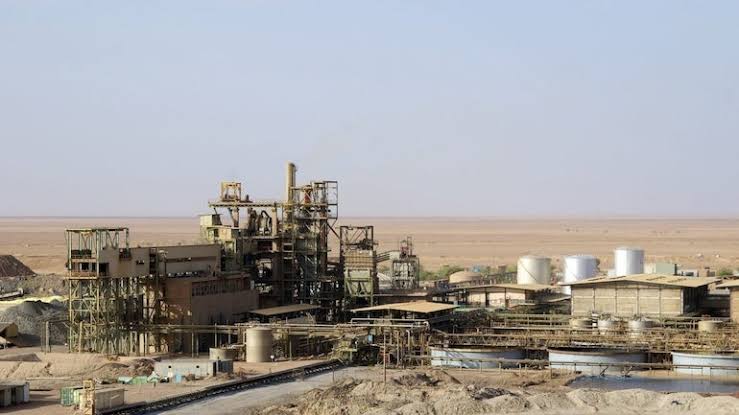
The infrastructure being celebrated is genuinely significant: the project delivers
more than 600 kilometers of new multi-use trans-Guinean rail, plus barge and
transhipment vessel port facilities, ultimately designed to support export of up to
120 million tonnes of iron ore per year once fully ramped up.
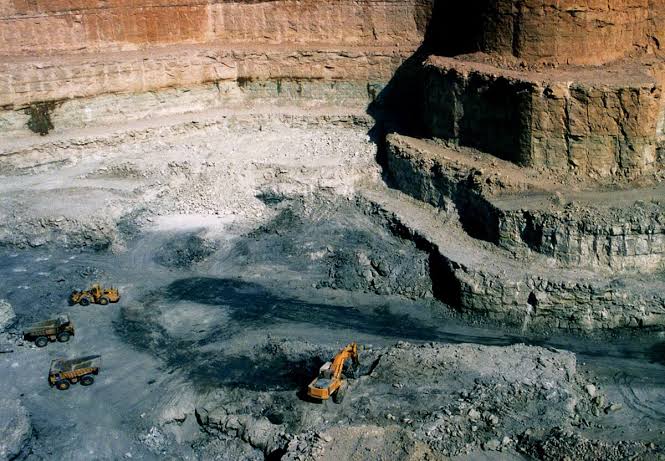
Two separate mining operations feed into this shared system. Simandou’s south
block is led by Rio Tinto and a Chinese consortium, while the north block is
controlled by Winning Consortium Simandou, made up of Winning International,
Shandong Weiqiao, and China Baowu Steel Group.
Here’s the myth-check. This single shared rail and port system wasn’t the
companies’ original plan. It was imposed directly by Doumbouya himself after his
2021 coup, when he told the competing companies plainly that he would not
accept two separate projects running through his small country, forcing them
into a joint venture called the Compagnie du TransGuinéen (CTG).
The Scandal: The President Turned Away His Own Country’s
Trains
Here’s the rule at the center of this dispute. The co-development agreement
negotiated between Guinea and the mining partners required that locomotives
for the shared railway be sourced exclusively from US-based Wabtec Corporation
— a deliberate move, according to reporting, to balance China’s otherwise
dominant role in the project’s supply chain.
Here’s the enforcement moment, and it’s the scandal’s core event. In September
2025, a shipment of 18 locomotives brought in by Winning Consortium was turned
away at the Port of Conakry for violating this agreement — locomotives sourced
from China’s CRRC Corporation instead of Wabtec, despite CRRC’s engines being
reported as cheaper and easier to maintain.
Here’s what this meant practically once operations began. Only four of the six
Wabtec locomotives Rio Tinto had expected by November actually arrived. That
meant when the first 9,850 tonnes of ore were loaded onto the bulk carrier
Winning Youth on November 11 — the same day as the celebration — the ship still
could not depart weeks later, because there simply weren’t enough approved
locomotives to move ore reliably along the line.
There’s a striking detail that shows how personally invested Doumbouya was in
this decision. According to reporting, when Winning Consortium acquired the
Chinese locomotives against his direct advice to buy American, Doumbouya had
the units returned outright — a level of hands-on intervention reinforced by his
own strategic committee monitoring project compliance “every 24 hours.”
Sovereignty Theater, or Sovereignty in Practice?
Both readings of Doumbouya’s approach deserve honest treatment here, since
it’s a genuinely contested interpretation.
Supporters frame this as a rare example of a West African government
successfully forcing multinational mining partners to follow rules it set, rather
than accepting whatever terms the companies proposed — genuine leverage
exercised in real time, not just rhetoric.
Critics see it differently. Guinea’s presidential election was scheduled for
December 28, 2025, just weeks after this ceremony, and Doumbouya — who took
power in a 2021 coup — was widely expected to formalize his own rule through the
vote, making Simandou’s high-profile launch a politically convenient moment to
project strength and national control just before an election.
There’s a governance transparency concern worth bringing in directly, because it
complicates any simple “sovereignty win” narrative. A Guinean civil society figure
noted that the actual terms of the contract between the government and its
mining partners are not sufficiently known publicly, even as unofficial reporting
suggests the government receives 15% of proceeds from both the mine and the
railway — meaning ordinary Guineans are being asked to celebrate a national
milestone whose actual financial terms haven’t been fully disclosed to them.
Forcing multinational companies to follow locally set rules is a genuine assertion
of sovereignty. But sovereignty exercised by an unelected leader, ahead of an
election he’s expected to win by default, over a contract whose terms remain
substantially opaque to the public, is a more complicated story than the
ribbon-cutting ceremony suggested.
The Myth vs. The Reality
| What people assume | What actually happened |
|---|---|
| The November 2025 inauguration marked the smooth, completed launch of Simandou operations | The first loaded shipment sat stuck at anchor for over two weeks after the ceremony due to a locomotive shortage |
| Guinea’s enforcement of the locomotive rule was purely a technical compliance matter | The rule enforcement was driven by a personal, hands-on intervention from President Doumbouya himself |
| The single shared railway system was the mining companies’ preferred, efficient design | It was imposed on the competing companies by Doumbouya, who refused to allow two separate rail systems |
| The financial terms of Guinea’s deal with its mining partners are publicly well understood | A Guinean civil society figure has stated the actual contract terms are not sufficiently known publicly |
Why This Still Matters
This is a genuinely different kind of story from the BSGR bribery scandal already
covered in this series — not corruption in the classic sense, but a case study in
how even a government actively asserting control over a foreign-financed
megaproject still operates inside layers of geopolitical pressure, election-timing
incentives, and limited public transparency.
Guinea’s government proved it could turn away a shipment of the wrong trains —
a real, tangible act of leverage over powerful multinational partners. But whether
that same government will ever fully disclose what it actually negotiated in return
remains an open question.
Sources and further reading.